Home/Curriculum resources/Exploring local Country: Places of importance/Case Study 11: Monuments and memorials
Learning Areas:
Humanities and Social Sciences, English, Mathematics
Year levels:
Foundation, Level 1, Level 2
Case Study 11: Monuments and memorials
This case study is a part of the Exploring local Country: Places of importance resource.
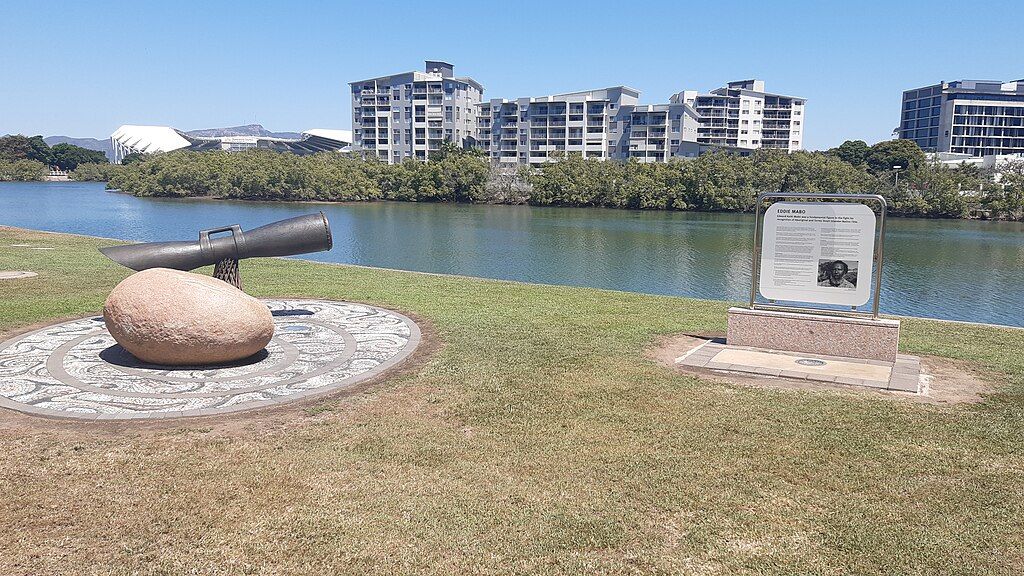
Eddie Mabo Monument. Location: Townsville, Queensland. Photographer: Ridiculopathy. Source: Wikimedia Commons. Used under licence: CC0.

Case Study 11: Monuments and memorials
Monuments and memorials are public places where communities remember people, events and ongoing stories on Country. They can be statues, plaques, landscape features and contemporary artworks, and may use traditional place names or languages. Some focus on service and remembrance, others on truth-telling, resilience, protest or reform. Many are used for learning and community gatherings; some meanings are shared publicly while other knowledge sits with custodians and families.
Table 1: Examples from across the country
Name & Location | Custodians | Details |
|---|---|---|
The Moreton Bay Fig Tree, Carlton Gardens, Carlton, VIC | Wurundjeri Woi-wurrung People | The Moreton Bay fig tree in Carlton Gardens was a meeting place where Aboriginal activists addressed public gatherings from the 1920s to the 1940s. Speakers such as Jack Patton, Bill Onus, William Cooper, Ebenezer Lovett, Martha Nevin and Margaret Tucker met here to advocate for reform and debate policies affecting Aboriginal communities. 0 |
Aboriginal and Torres Strait Islander War Memorial, Torrens Parade Ground, Adelaide, SA | Kaurna People | Bronze figures, message sticks and granite elements recognise the service of Aboriginal and Torres Strait Islander people across conflicts. Used for ceremonies and school learning. 0 |
Wave Hill Walk-off & Freedom Day memorial, Kalkarindji / Daguragu, NT | Gurindji People | Markers and annual Freedom Day celebrations commemorate the 1966 Walk-off led by Vincent Lingiari and community, a turning point in land rights. 0 |
Yagan statue and precinct, Heirisson Island / Matagarup, Perth, WA | Noongar People | Landmark statue and cultural precinct honouring Yagan, a respected Noongar leader; the heritage listing notes the place’s cultural significance within the river islands. 0 |
Wybalenna Historic Site, Flinders Island, TAS | Palawa People | Historic precinct with chapel and burial ground; key site in the story of removal, survival and community memory on Flinders Island. 0 |
ANZAC Park memorials, Thursday Island (Waiben), Torres Strait, QLD | Kaurareg People | Foreshore memorials and gathering spaces that honour Torres Strait service, including the Torres Strait Light Infantry Battalion; a focal point for community commemorations and local history on Kaiwalagal Country. 0 0 0 |
Redfern Park, Redfern, Sydney, NSW | Gadigal People | Redfern Park and the adjoining Oval are long-standing gathering places for Aboriginal community life, activism and sport. From the mid-twentieth century, the Oval was a meeting ground for ideas that led to the Aboriginal Medical Service and the Aboriginal Legal Service, while the Redfern All Blacks, Australia’s oldest Aboriginal rugby league club, built pride and connection through sport. On 10 December 1992, Prime Minister Paul Keating delivered the “Redfern Address” here, a defining moment in national truth-telling and reconciliation. The park also includes public artworks by Fiona Foley (such as Lotus Line and Bibles and Bullets), which embed words and stories in the landscape and honour continuing connections to Country, culture and community. 0 0 |
Eddie Koiki Mabo Memorial Sculpture, Central Park, Gurambilbarra / South Townsville, QLD | Bindal and Wulgurukaba Peoples | Public artwork by Matthew Harding, commissioned by Townsville City Council and unveiled on Mabo Day, 3 June 2007. Features include a pebble mosaic symbolising the ancestral octopus of Malo law, a playable bronze replica of a warup drum carved by Eddie Koiki Mabo, and a central granite boulder engraved with a fingerprint motif, together expressing enduring cultural connection to land and sea. Part of the city’s Pioneers Walk. Mabo, a Meriam man from Mer (Murray Island) in the Torres Strait, led the legal campaign that culminated in the 1992 High Court decision recognising native title and overturning terra nullius, and the work’s motifs honour that heritage and leadership. 0 |
Related case studies within this resources:
Case Study 1: Rock art
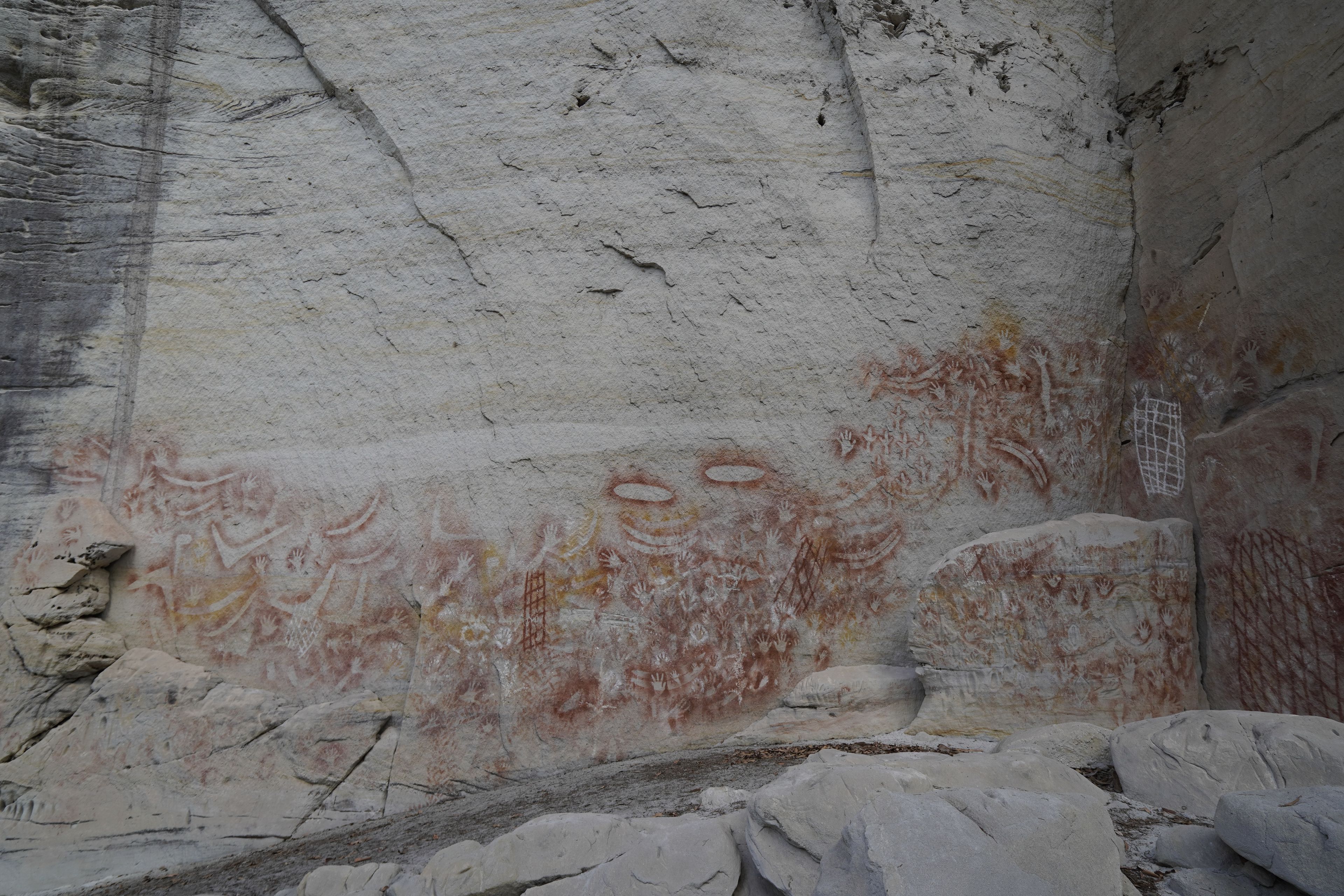
Aboriginal rock art, painted or engraved in sheltered rock places, marks living and ceremonial sites and, as some of the oldest art on Earth, needs ongoing care and respect.
Case Study 2: Stone arrangements
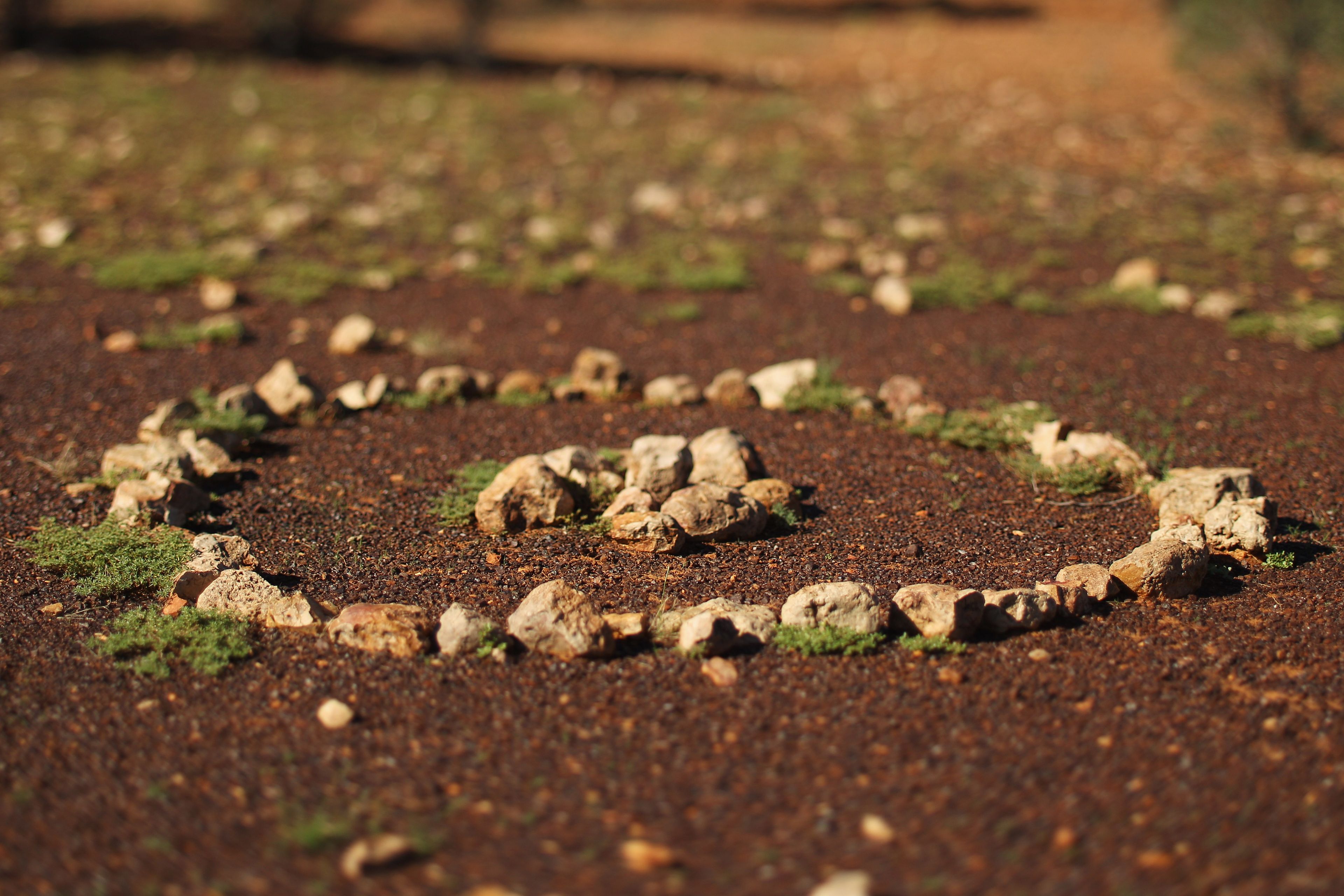
Aboriginal stone arrangements, carefully placed rocks for cultural, ceremonial or navigational purposes, are deeply significant; many meanings are not public, and most sites (often on private land) require protection and discretion.
Case Study 3: Middens
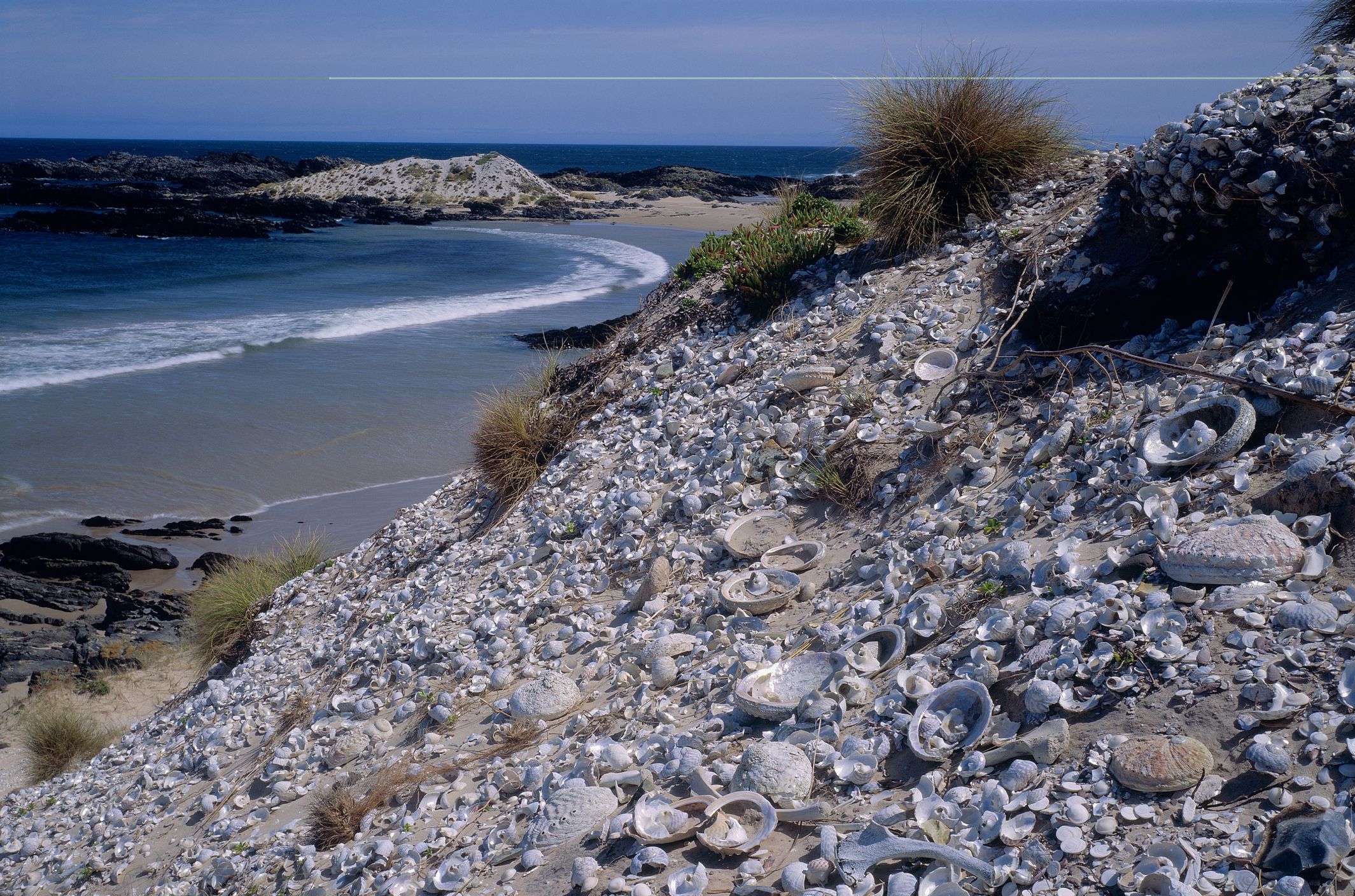
Middens are time capsules of everyday life; archaeologists study them to learn how Aboriginal and Torres Strait Islander Peoples lived and ate before and after colonisation.
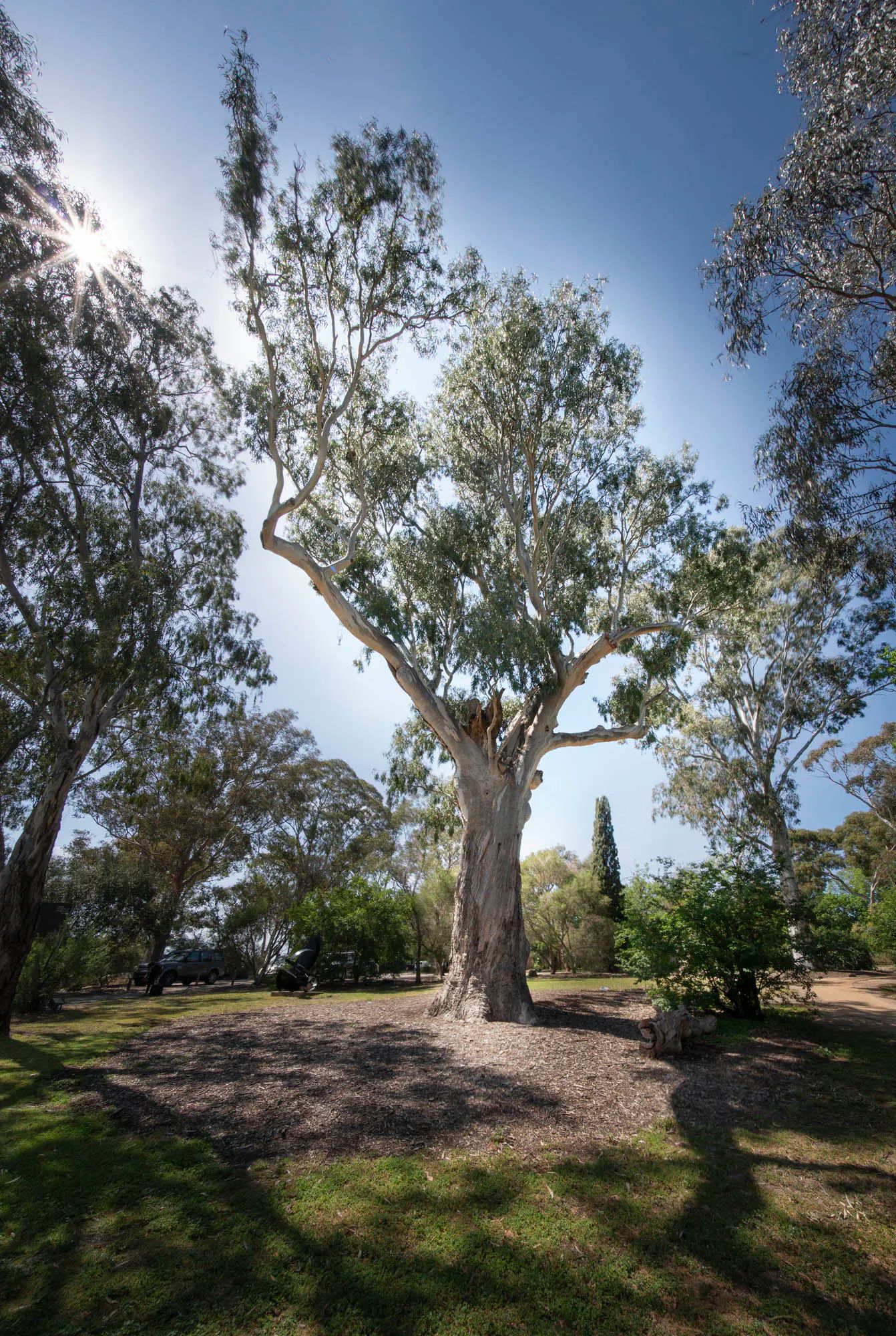
Case Study 4: Scarred trees
Scarred trees are living records where bark was carefully taken to make canoes, shields, coolamons and other items; they reveal deep knowledge and need careful identification and protection.
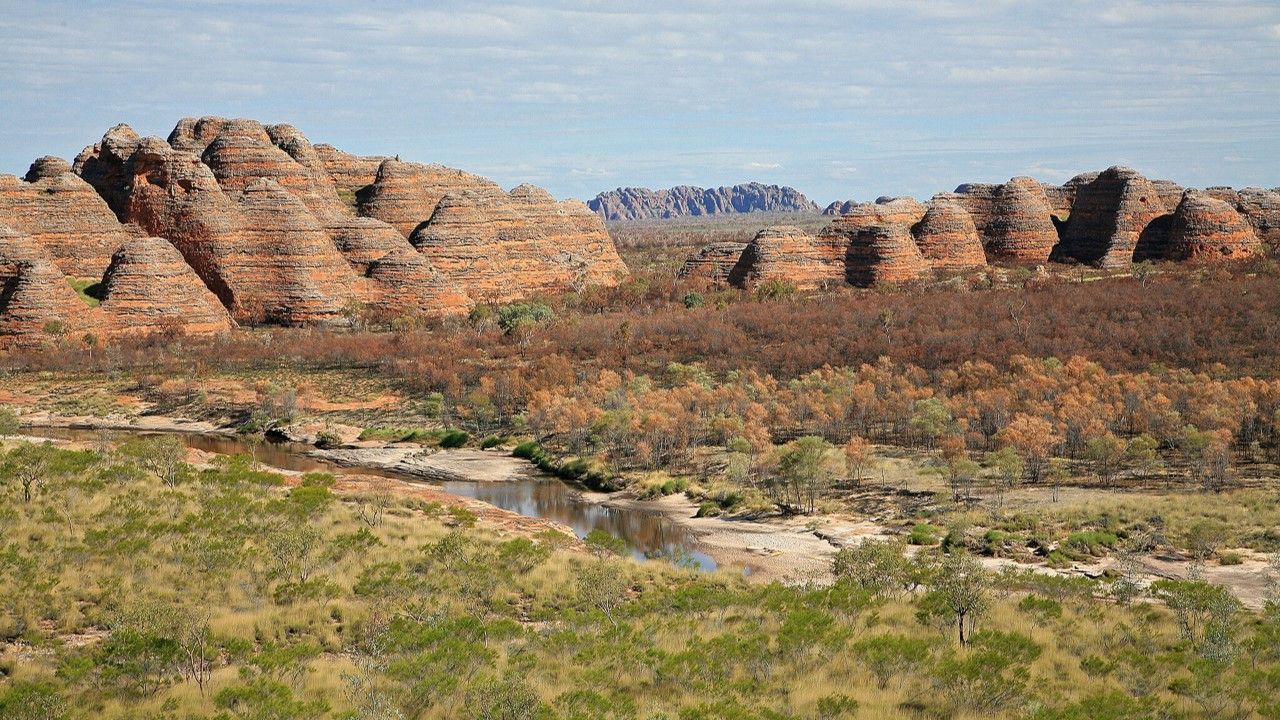
Case Study 5: National parks and named landforms
National parks and named landforms are public places to learn about and enjoy Country, supporting culture, nature and community.
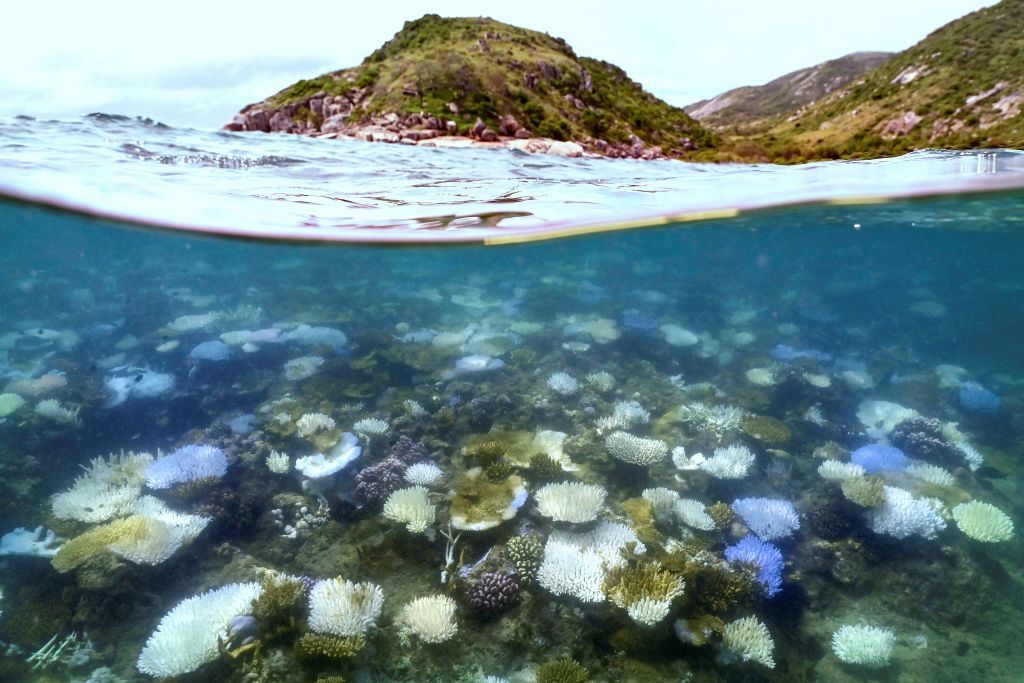
Case Study 6: Reefs and Sea Country
Reefs, islands and coastal places support rich life and long custodianship.
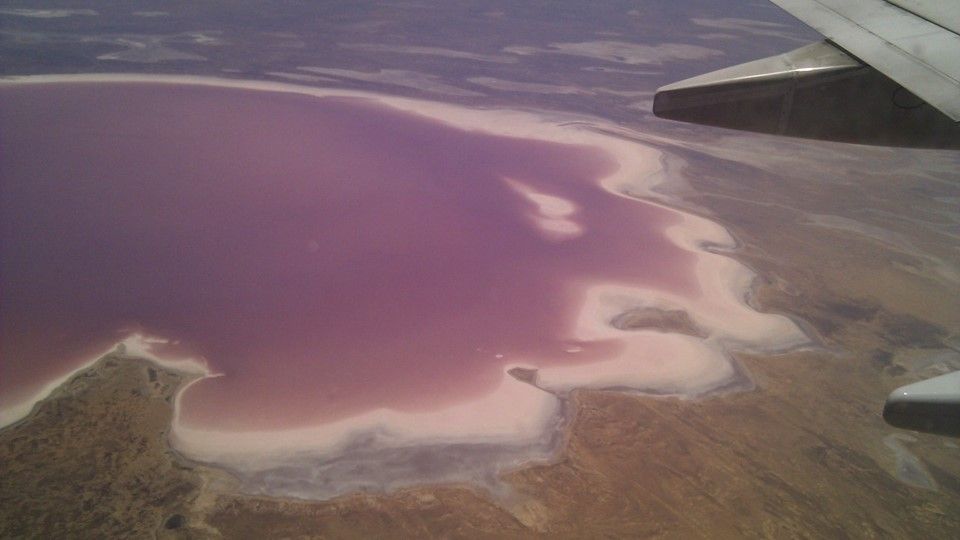
Case Study 7: Rivers, lakes and wetlands
Rivers, lakes and wetlands provide water, habitat and teaching places.
Case Study 8: Urban parks, gardens and native gardens
Urban parks and native gardens are everyday places to connect with Country in the city.
Case Study 9: Contemporary murals and public art by Aboriginal and Torres Strait Islander artists
Contemporary murals and public artworks share language, stories and community identity.
Case Study 10: Meeting places and community spaces
Meeting and community places support gathering, celebration and learning.
Case Study 12: Trails and cultural walks
Signed trails and cultural walks help people explore Country step by step.
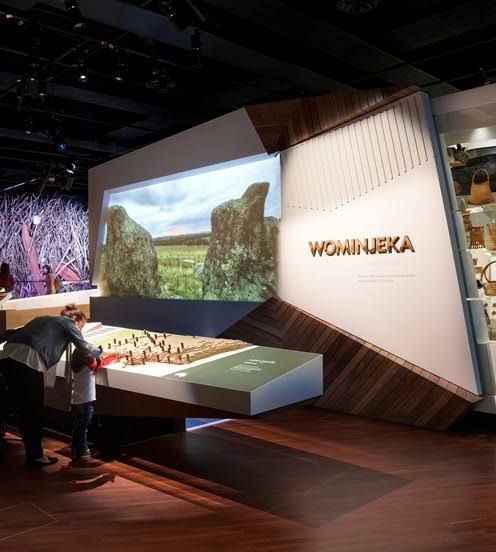
Case Study 13: Museums, galleries and cultural centres
Museums, galleries and cultural centres share publicly available knowledge and exhibits.
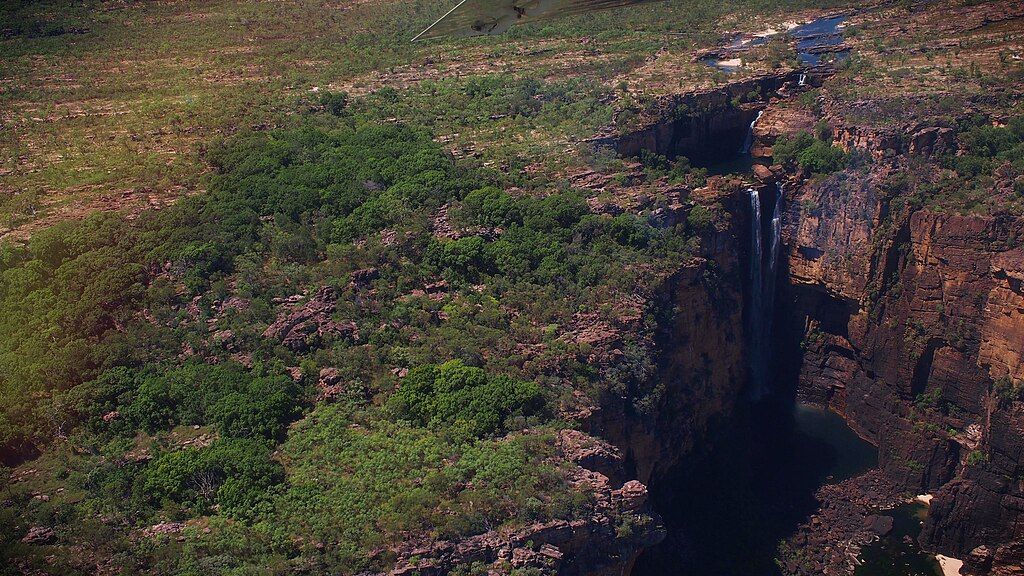
Case Study 14: The Rainbow Serpent
Across Australia, many Aboriginal communities share Rainbow Serpent stories, known by different names and sometimes described as female or male, that connect to water places and other important landscapes.