Home/Curriculum resources/Indigenous Ecological Knowledge and severe weather events/Case Study 1: Nature’s warnings for cyclone preparedness: Lardil People, Mornington Island
Learning Areas:
Science, Humanities and Social Sciences, English
Year levels:
Level 5, Level 6
Case Study 1: Nature’s warnings for cyclone preparedness: Lardil People, Mornington Island
This case study is a part of the Indigenous Ecological Knowledge and severe weather events resource.
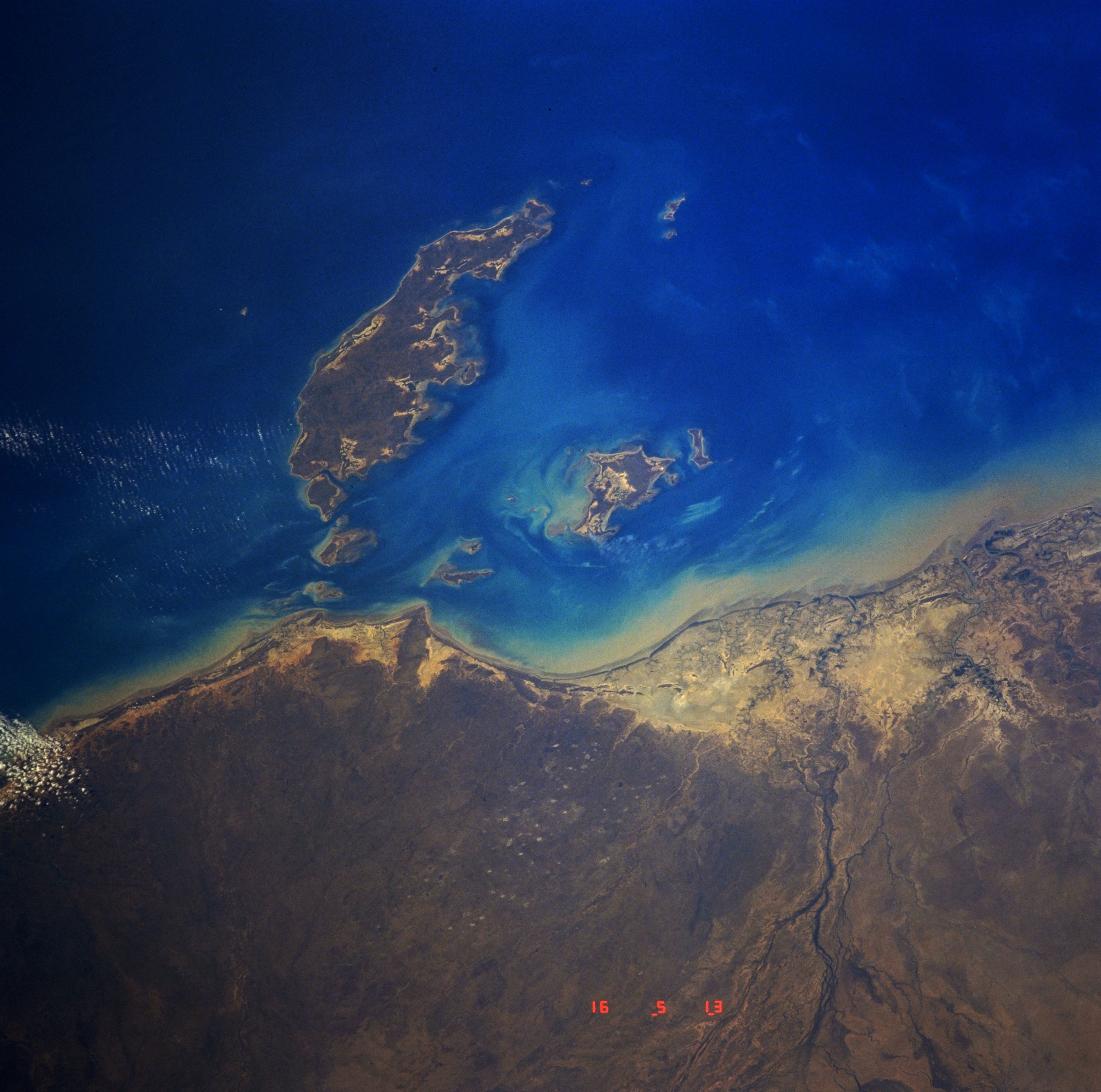
Mornington Island. Photographer: Image Science & Analysis Laboratory, NASA Johnson Space Center/Space Shuttle crew. Source: Wikimedia Commons. Used under licence: Public Domain.

Case Study 1: Nature’s warnings for cyclone preparedness: Lardil People, Mornington Island
Mornington Island, located in the Gulf of Carpentaria, is cared for by the Traditional Owners - the Lardil People. The island is in a relatively sheltered position, as it is in the southern part of the Carpentaria Gulf, however, it is consistently exposed to extreme weather conditions, including numerous tropical cyclones 0 .
The island is flat – there are no mountain ranges or other significant geographic features to face the full force of strong weather conditions. The vegetation is mainly grassland, open medium to dense scrub, and low open forests and woodlands 0 . This area of northern Australian is subject to cyclones and monsoon activity during the annual wet season. The Lardil People have a close association with their natural environment and maintain a deep understanding of the bushland, the surrounding seas of Mornington Island, and the local weather system.
Mornington Island Cyclones
Cyclones routinely hit Mornington Island. Some of the most devasting cyclones are listed below.
Cyclone Steve (2000) – this cyclone passed directly over Mornington Island, causing substantial damage.
Cyclone Bernie (2002) - Cyclone Bernie passed to the west of Mornington Island, resulting in heavy rain and gales.
Cyclone Fritz (2003) - this cyclone passed directly over Mornington Island, causing substantial damage.
Cyclone Ted (2009) – this was a Category 2 cyclone, it caused storms and heavy rainfall on the island and led to floods and power outages.
More recent cyclones, including Cyclone Imogen (2001) and Cyclone Megan (2024) were slightly weaker than those listed above, however, Mornington Island experienced heavy rainfall and strong winds. These events highlight the vulnerability of Mornington Island to tropical cyclones, underscoring the importance of preparedness and resilience in the face of such natural disasters.
"I grew up here…and I been through a lot of these things. I know how this cyclone season, this crisis of cyclone…if a severe one come, and if it isn’t a severe one, you gotta be prepared-act ready and be prepared, at all times. It’s life or death, you gotta be prepared." 0
These words, spoken by an Elder of the Lardil People of Mornington Island, reflect the deep knowledge Indigenous Peoples, emphasising the importance of preparing for the cyclone season and acknowledging the unpredictability of nature 0 .
Natural warnings
The Lardil People describe cyclones as a normal part of life on the island 0 , many Elders share their experiences of enduring numerous storms. The Elders emphasised that cyclones and storms are not inherently dangerous if people take the necessary precautions and prepare properly beforehand 0 .
Many Lardil People read warnings from nature of impending cyclones. During fieldwork conducted by McLachlan in 2003, a Lardil Elder was asked how he knew a cyclone was getting closer, he replied:
“When I saw the seagulls all flying in and landing on the airstrip." 0
He explained that this meant rough conditions at sea and along the island’s coast, caused by the approaching storm, forcing the birds to seek shelter inland. This exemplifies how Indigenous People in these regions use their observations of nature to predict events. Also, when birds called ‘manowar’, from an outlying island are observed flying over, many Lardil People know there is either a severe storm or a cyclone approaching.
Another Mornington Island resident stated that on one occasion, they noticed that when they went down to the local jetty fishing, the seawater and the caught fish were unusually warm, and the colour of the water was a deep green 0 .
“Well, another thing too that tells us we may have a cyclone – the sea, the temperature of the sea. It’s very hot, really hot. You’re pulling fish in and you feel them warm – even bait. And you can tell when a cyclone is approaching too – when going to have a cyclone – the sea turns green” - Cecelia Reid 0
Cecelia is referring to Cyclone Bernie, a Category 2 cyclone which caused strong winds and heavy rainfall on the island for several days. Warm sea temperatures play a crucial role in the formation of tropical cyclones, and by interpreting nature's signs, people can anticipate changes in the weather.
According to locals, another reliable natural indicator of impending rain is the flying ant, which is attracted to lights at night, and comes out in swarms a few days before the event 0 .
Cyclone Preparation
Many Lardil People make pre cyclone preparations. This includes clearing loose debris and trimming overhanging branches 0 . Their ancestors prepared for and coped with cyclones by digging large holes in the sheltered sides of sand dunes to seek refuge from cyclonic winds 0 . Lardil People would then cover the pit with branches, leaves, and paperbark or spinifex, then cover the structure with sand, leaving a small entry space 0 . Covering the roof in sand provided. weight to resist movement during cyclonic winds and also absorbed water from the heavy rains 0 . The location of homes and shelters away from the shoreline and elevated where possible, precludes the threat of tidal surges observed after cyclones and reduces the likelihood of mosquito attacks 0 .
While the majority of Lardil People on Mornington Island live in brick houses now, they can still utilise traditional knowledge shared by their ancestors. For example, one Lardil person interviewed during fieldwork conducted by McLachlan in 2003 shared that they know of shelters in low cliffs located on the north coast of the island, where Aboriginal Peoples from the past sought cover from severe weather conditions. This person shared that if the situation warranted it, these rock shelters could still be used to provide refuge. Even though they may never have to revert to such measures, the Lardil People still preserve and uphold this important survival knowledge.
Related case studies within this resources:
Case Study 2: Aboriginal tsunami knowledge, Yuin and Burragorang Peoples, New South Wales
Aboriginal oral traditions provide valuable insights into past cosmogenic events, helping inform research and strengthen future disaster preparedness.
Case Study 3: Aboriginal fire management, Martu People, Western Australia
Martu fire practices, grounded in cultural knowledge and ecological understanding, enhance biodiversity and reduce the risk of wildfires.
Case Study 4: Drought resilience, Anangu Pitjantjatjara Yankunytjatjara Lands, South Australia
Anangu knowledge of rock holes and underground water sources support sustainable land management and drought resilience in the Anangu Pitjantjatjara Yankunytjatjara Lands.
Case Study 5: Budj Bim Aquaculture Systems, Gunditjmara People, Victoria
Gunditjmara Ecological Knowledge at Budj Bim strengthens land and water management, supporting resilience to floods and bushfires.
Case Study 6: Monsoon preparation and seasonal knowledge, Yolngu People, Northern Territory
Yolngu seasonal knowledge enhances community preparedness and resilience to monsoons by aligning human activity with natural seasonal cycles.
Case Study 7: Torres Strait Islander sea caring culture
Torres Strait Islander communities draw on Traditional Ecological Knowledge such as seasonal wind patterns and stellar observations, to monitor environmental changes, anticipate severe weather events and adapt to the impacts of climate change.