Home/Curriculum resources/Caring for Country/Visual Art Activity: Seasons of Country collage
Learning Areas:
Humanities and Social Sciences, Science, English, The Arts
Year levels:
Foundation, Level 1, Level 2
Visual Art Activity: Seasons of Country collage
This activity is a part of the Caring for Country resource.
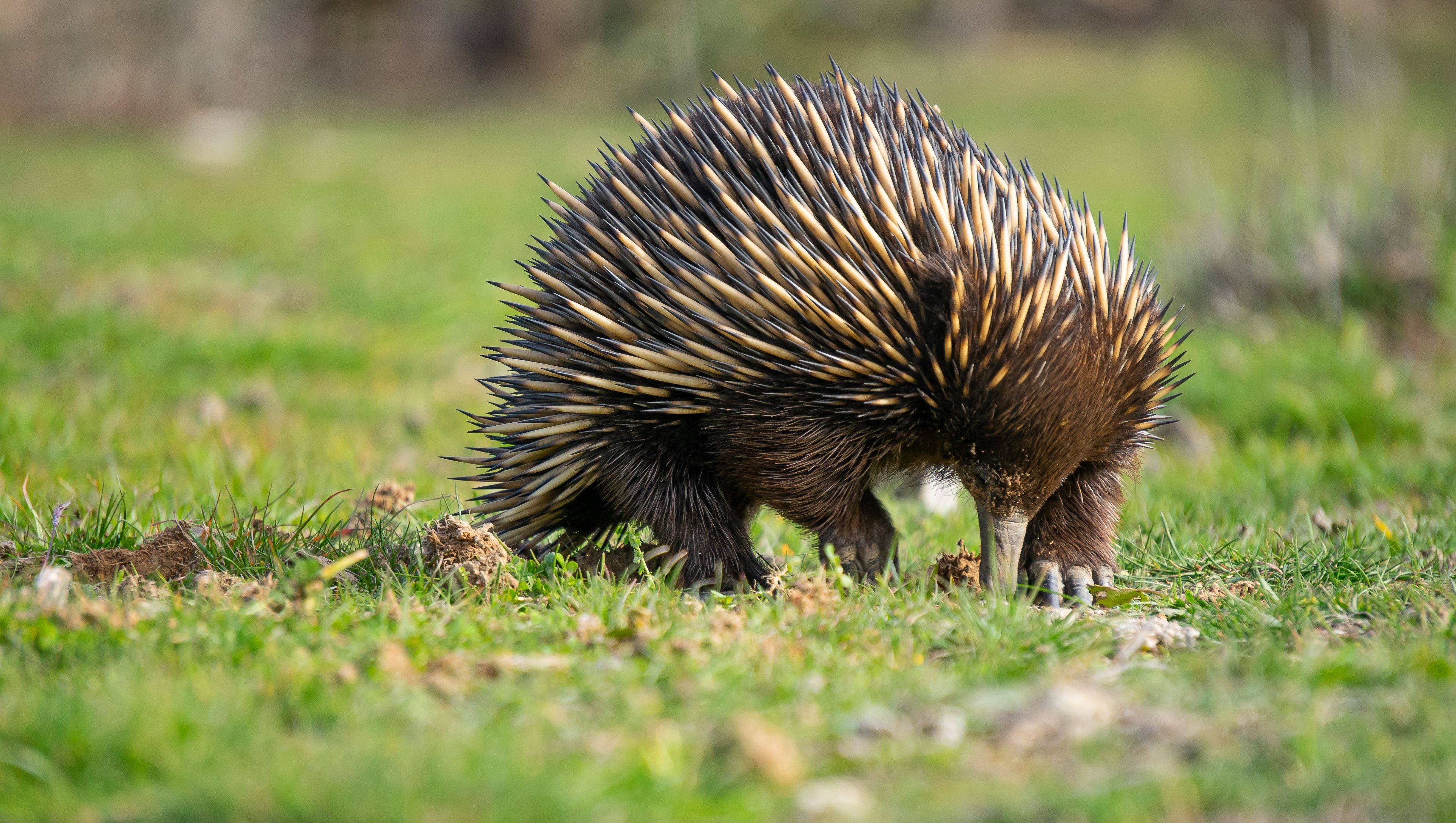
Echidna in the Bush. Photographer: Sara Carter. Source: Getty Images. Used under licence.

Visual Art Activity: Seasons of Country collage
NOTE: Specialist Art opportunity to occur from when students start engaging with Activity 4 (Part one) and before Activity 5 if possible. This activity could also occur after students have engaged with Activities 1 – 5.
Focus: interpreting local seasonal signs into colour, texture and shape by documenting materials, demonstrating that art making can be a medium to help and heal Country.
Possible overarching question: How can we create an artwork that shows our season and caring actions for Country?
Step by step guide
Step 1: Connecting to students’ prior learning
Step 2: Mini lesson – three exhibition artworks and Country talk
Step 3: Season study walk
Step 4: Teacher demonstration and design planning
Step 5: Collage construction
Step 6: Season ribbon gallery walk
Step 7: Reflection & sharing
Required Resources
A4 or A3 colour print outs of 65,000 Years Exhibition Pieces Ngangkari Ngura (Healing Country) – Betty Muffler & Maringka Burton; Limmen Bight River – My Mother Country – Ginger Riley Munduwalawala; Quarta-Tooma (Ormiston Gorge) – Albert Namatjira
Clipboards or hard-back sketch books, graphite/coloured pencils, wax crayons, thin paper for rubbings, and devices or cameras for photos
Small tubs of pre-cleaned recyclable textures (e.g. fabric off-cuts, cardboard, yarn) to use in the collage if students feel they need extra material
A3 recycled card or box lids
PVA glue, tape, optional paint/crayon
Captions/sticky labels for call to action statements
Step 1: Connecting to students’ prior learning
Start with letting the students know you are aware of their prior learning.
“I’ve heard you’ve been noticing and caring for Country in your classroom. Teach me what you know!”
The following questions could support if students have difficulties recalling what they know:
“What are the three big parts of Country you have talked about?”
“Can you give me one example of a change people cause and one change that happens by itself (naturally)?”
“What words did you use when a change hurts Country? What about when it helps or heals Country?”
“Which Indigenous season are we in today? How do you know?”
“What senses did you use outside to find those clues?”
Step 2: Mini lesson – three exhibition artworks & Country talk
Display the three paintings from the 65,000 Years Exhibition. Tell students these paintings come from a big exhibition and each one shows how an artist notices and cares for Country. The table below can support the facilitation of this mini lesson.
Artwork | Acknowledgement script (Country, artist, theme) | Possible prompts |
|---|---|---|
Limmen Bight River – My Mother Country Ginger Riley Munduwalawala | “Here is Ginger Riley’s Marra Country in south east Arnhem Land, Northern Territory. The red snake ancestor Garimala shelters the winding river, and the white sea eagle Ngak Ngak guards from above.” | What parts of Country can you spot? Can you point to Land, to Water, and to Sky? Which colours feel warm or cool? How might those colours tell us what season or time of day it is? Can you spot the red snake ancestor Garimala? What is he protecting? Can you see the white sea eagle Ngak Ngak? What role is he playing in this painting? |
Quarta-Tooma (Ormiston Gorge) Albert Namatjira | “This watercolour was painted outdoors by Albert Namatjira, a Western Aranda artist from Ntaria/Hermannsburg in Central Australia. He wanted everyone to feel the beauty of his Country.” | What parts of Country can you spot? Can you point to Land, to Water, and to Sky? Which colours feel warm or cool? How might those colours tell us what season or time of day it is? Notice how colour shifts from cool violet shadows to sun lit orange cliffs, showing rocky land and the warm sky light. The tall portrait shape makes the cliffs soar upward, linking ground to sky. |
Ngangkari Ngura (Healing Country) Betty Muffler & Maringka Burton | “This painting is by Betty Muffler and her niece Maringka Burton, Ngangkari healers from Pitjantjatjara and Yankunytjatjara lands in northern South Australia. Their painting shows lines, other shapes and symbols of energy that heal Land, Water and Sky Country.” | Find a shape that looks like it is moving. What is it doing for Country – hurting, helping or healing? Come up and trace a line with your finger. Where does that line travel and what does it connect with? How does this painting remind us that Country is alive – like a family member who needs looking after? |
Conclude with acknowledging “Each artist uses colour, shape and line to show Land, Water and Sky working together, and to remind us that caring or healing keeps those parts strong”.
Step 3: Season study walk
Let students know that we are going to make a collage that depicts the current season that we are in. Reconnect students with the current season and share some of the observations that they made from the noticing work in Activity 4 (Part 2). Explain expectations before going outside:
Everything we see, even fallen leaves and flowers, is part of Country. We look, listen, feel, smell and document, but we do not take.
Our job is to notice colours, shapes and textures.
Students may make leaf, bark or shell rubbings; quick observational sketches; take close-up photos; or write short descriptive notes.
In pairs or individually, students move through the school grounds with a clipboard, rubbing paper and device, documenting observations. Back in class, they translate these records into collage elements using recyclable supplies.
This step may not be required if students captured thorough documentation as part of Activity 4 (Part 2) that could be repurposed here.
Step 4: Teacher demonstration and design planning
Gather students around a blank A3 backing board and explain the brief:
“Just to remind everyone, we will build one collage that shows today’s Indigenous season on our School Country. It needs:
a Land part,
a Water or Sky part (or both), and
one clear seasonal clue we noticed on our walk, such as a particular flower blooming, bird chirping.
A statement “We help/heal Country by… (a call to action).”
Model a quick layout if the students need an exemplar, here are some ideas:
Place a strip of corrugated card for Land at the bottom.
Add two blue painted bottle top lids as Sky clouds.
Glue a photo of yellow wattle (captured from the ground) as the season indicator.
Emphasise overlapping and strong glue points.
Once expectations are clear, have students start with a plan drawing the aspects of their collage and labelling the materials they will use.
Step 5: Collage construction
Students engage in the collage construction; move around from student to student to ensure they are clear of the expectations. Run workshops for any skills students need support with.
Step 6: Season ribbon gallery walk
Line collages edge to edge along a corridor wall or hessian strip; conduct a slow class walk through, asking:
“Where do you see the season clue?”
“How did this artist link Land, Water and Sky?”
“What are the different calls for action to care for Country?”
Step 7: Reflection and sharing
In a circle have each student share their response to:
“One thing I re-used that helps Country is…”
“A new seasonal clue I learnt from someone else’s collage is…”
Further options:
Simple collagraph: use the collage plate to pull a ghost print next lesson.
Stop motion flip: photograph collages in order to animate the seasons.
QR-code audio tour: record students explaining how their work helps/heals Country.
Related activities within this resources:
Activity 1: Reconnecting with prior learning - What is Country, and why do we care for it?
Students revisit the idea that Country is a living system, land, water, sky, plants, animals and stories, by rotating through discovery stations. They notice, name and feel each part of Country, laying the groundwork for viewing caring for Country as an ongoing, relational responsibility.
Activity 2: How does Country change?
Building on their sensory noticing from Activity 1, students learn to distinguish natural change (created by Country itself) from human change (caused by people). After revisiting the anchor chart and tuning their senses with The River, they explore changes in either the school grounds or on a short neighbourhood walk, then sort their findings into a simple two column chart.
Activity 3: Changes that hurt, help and heal Country
Using observations from the Spotlight Zones in Activity 2, students apply a caring lens (help and heal) to decide how each natural or human change affects Country. They sort, debate and brainstorm small actions to move hurting changes toward helping or healing.
Activity 4 (Part one of two): Indigenous ways of noticing and caring
Students discover how Aboriginal and Torres Strait Islander Peoples use their senses to notice changes in Country and then act to care for it. They view a short “Did You Know?” resource, discuss which senses are at work, and finish with a quick reflection that links these examples to the local seasonal calendar, setting up part two of the activity.
Activity 4 (Part two of two): Noticing the current season
Students build on the slideshow from part one, by exploring a picture book about an Aboriginal seasonal calendar, comparing it with the four fixed Western seasons, then heading outside to spot real life indicators of their own local season. Teachers adapt the walk to the seasonal calendar for their region.
Activity 5: How can we care for our school or local community?
Students consolidate their learning about the unit, by designing and beginning a project or creative product that helps and/or heals Country. Choices include a hands-on caring for Country action project, a collaborative seasons storybook, a walking museum, or a senses soundscape including calls to action.