Home/Curriculum resources/Caring for Country/Activity 4 (Part two of two): Noticing the current season
Learning Areas:
Humanities and Social Sciences, Science, English, The Arts
Year levels:
Foundation, Level 1, Level 2
Activity 4 (Part two of two): Noticing the current season
This activity is a part of the Caring for Country resource.
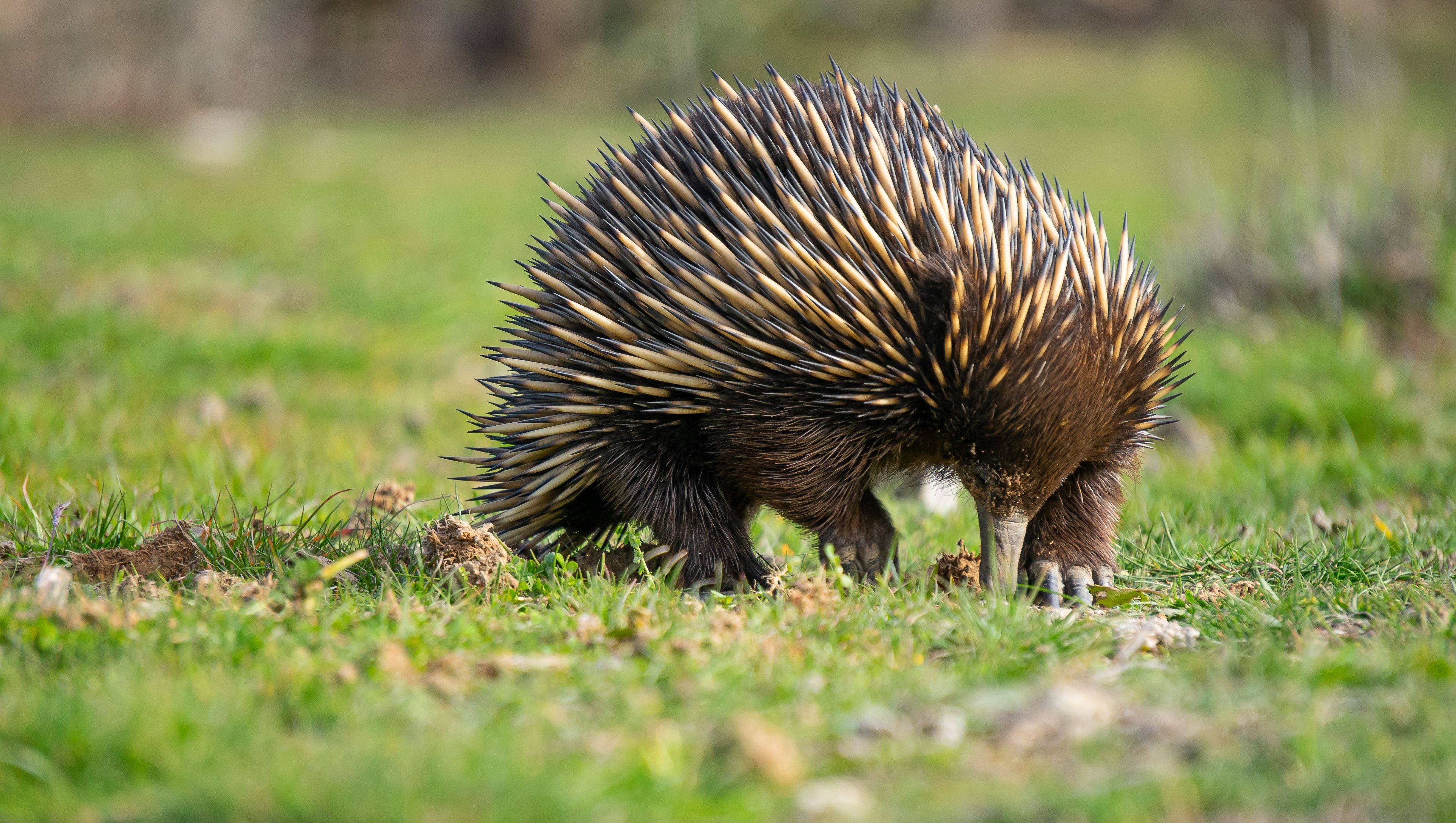
Echidna in the Bush. Photographer: Sara Carter. Source: Getty Images. Used under licence.

Activity 4 (Part two of two): Noticing the current season
NOTE: Because this resource is used Australia wide, teachers need to select the local Indigenous calendar for their school and adapt some of the activity including the walk to fit.
Focus: Noticing local signs (plants, animals, weather) that show which Indigenous season we are in.
Possible overarching question: What clues does Country give us to tell us which season it is?
Step by step guide
Step 1: Connecting to students’ prior learning
Step 2: Shared text and discussion
Step 3: Mini lesson – Western calendars and Aboriginal and Torres Strait Islander seasonal calendars
Step 4: Season spotter walk
Step 5: Reflection and sharing
Required Resources
Teacher Support Material
“Did You Know?” Resource from Activity 4 (Part one)
Djinang Bonar: Seeing Seasons by Ebony Froome; illustrated by Leanne Zilm
Four Western season props (e.g. Hat (Summer), red paper leaf (Autumn), Scarf (Winter), Flower (Spring))
Local Aboriginal or Torres Strait Islander seasonal calendar
Season spotter scaffolds (choose one that fits any calendar – ideas below)
Clipboards
Devices or cameras for photos
Seasons wheel
Step 1: Connecting to students’ prior learning
Using the “Did you know?” resource move through the examples to reconnect students with the senses and caring actions.
Step 2: Shared text and discussion
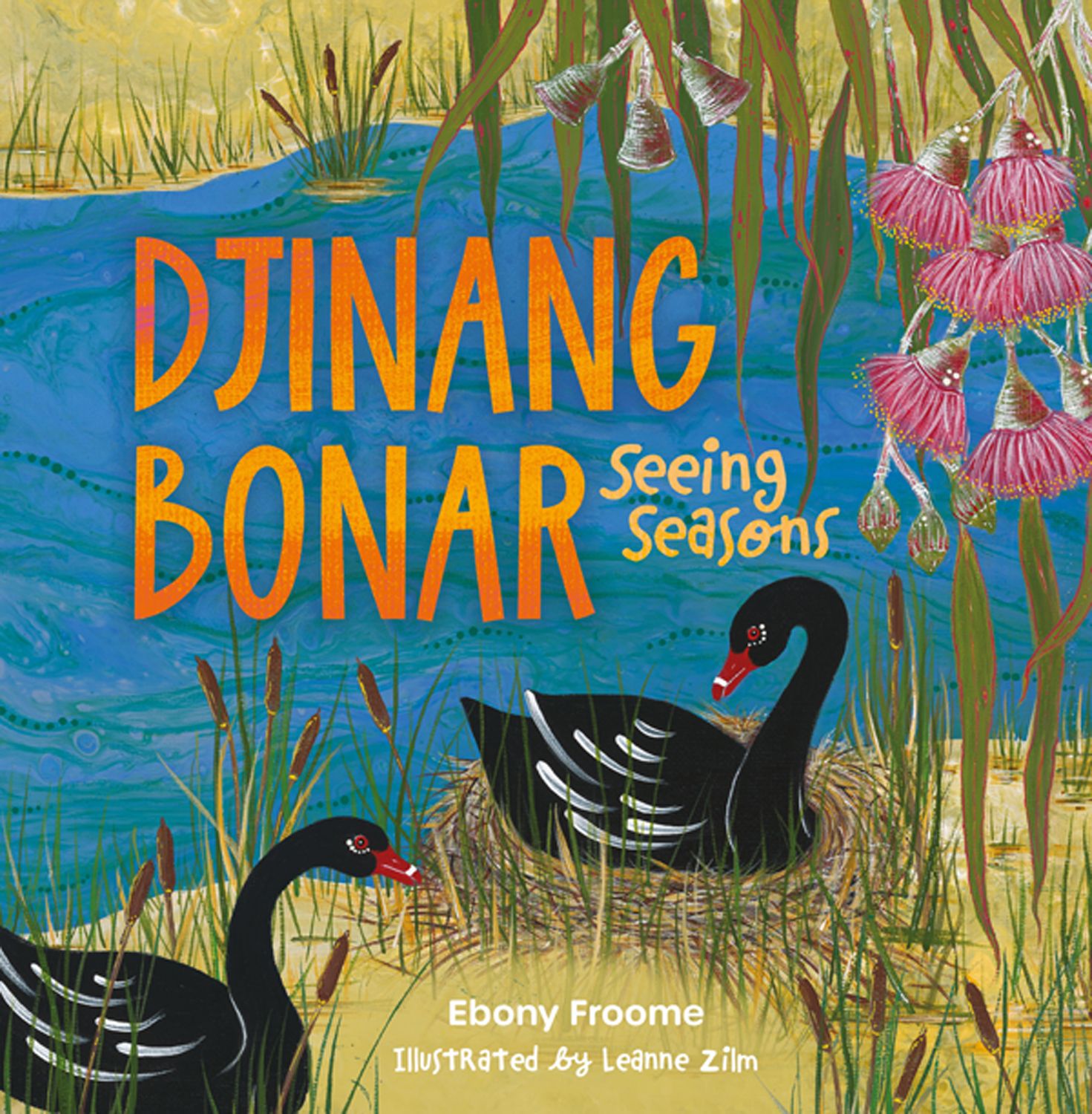
Djinang Bonar: Seeing Seasons. Ebony Froome. Illustrator Leanne Zilm. Fremantle Press. © Ebony Froome and Leanne Zilm. Used with permission.
Let students know that you will now be reading Djinang Bonar: Seeing Seasons by Ebony Froome; illustrated by Leanne Zilm. This story highlights the six seasons of the Noongar calendar. Return to the “Did you know?” example from Noongar Country and let students know, “We are going to learn more about Noongar seasons”.
Pause at each Noongar season page so students can call out “I spy” details in the illustrations (warm wind blowing, eucalyptus leaves, gum trees with white flowers, salmon, etc.). Highlight the Noongar words for those signs. You may wish to model the “I spy” and pronunciation for the first season.
Step 3: Mini lesson – Western calendars and Aboriginal and Torres Strait Islander seasonal calendars
Invite four students to the front of the room. Hand out the Western season props (hat, red paper leaf, Scarf, Flower) and ask the class:
“What are our volunteers representing?”
“What order should they be in?”
Explain that these seasons always stay in this order, follow the calendar months and never change. Provide an example, “Summer always starts on 1 December; Winter always ends on 31 August.”
Thank the volunteers and reconnect students with your local Indigenous seasonal calendar. Say “Let’s look closely at this calendar and see what makes it special.” Unpack the features with your students tailoring this to the local calendar:
Number of seasons: “How many slices/sections can we see? Is it the same four, or different?”
Season names in language: Practise saying each name.
Indicator artwork or images: Ask, “What living things do we see? I spy a wattle bush in one season and a baby turtle in another.” Note plants, animals, weather cues and sky signs. Emphasise that each picture is an indicator showing the season is changing.
Season length: “Do all the sections look the same size? Some are skinny, some wide. That tells us some seasons last longer; others might come and go quickly if the signs change fast.”
Senses: “If we are looking for that yellow wattle flower, which sense do we need? Eyes. If we are waiting for frogs to call, which sense? Ears.”
Caring actions: Point to one icon (e.g., a flowering grass tree) and ask, “When this grass tree flowers, what might the (refer to the Traditional Custodians) people do? They could gather nectar carefully or leave space for birds to feed. The calendar links noticing to caring.”
Finish with a quick recap:
“This calendar is different from the four season calendar of Summer, Autumn, Winter and Spring. It listens to Country, plants, animals, weather, even the stars, to decide when one season ends and the next begins. We are going to head outside to see which of these signs we can find right here at school or in our local neighbourhood.”
Step 4: Season spotter walk
Explain that the class will search the school grounds (or local community area) for clues that match today’s Indigenous season. Provide printed mini calendars if helpful and handout clipboards. Students document observations with sketches, notes or photos.
At the first location, repeat the grounding pause from Activity 2: thirty silent seconds with eyes closed, focusing on one sound, smell or feeling. Remind students to keep their senses switched on as they explore.
As students spread out, float between them, asking, “What seasonal clue have you found? What sense helped you?”.
Step 5: Reflection and sharing
Facilitate a short discussion linking observations back to the seasonal calendar. Explain that not every indicator will appear during one walk, but each cue belongs to this season.
Give students the season wheel (circle divided into three). They draw one plant, one animal and one weather sign they saw, then share in small groups.
Related activities within this resources:
Activity 1: Reconnecting with prior learning - What is Country, and why do we care for it?
Students revisit the idea that Country is a living system, land, water, sky, plants, animals and stories, by rotating through discovery stations. They notice, name and feel each part of Country, laying the groundwork for viewing caring for Country as an ongoing, relational responsibility.
Activity 2: How does Country change?
Building on their sensory noticing from Activity 1, students learn to distinguish natural change (created by Country itself) from human change (caused by people). After revisiting the anchor chart and tuning their senses with The River, they explore changes in either the school grounds or on a short neighbourhood walk, then sort their findings into a simple two column chart.
Activity 3: Changes that hurt, help and heal Country
Using observations from the Spotlight Zones in Activity 2, students apply a caring lens (help and heal) to decide how each natural or human change affects Country. They sort, debate and brainstorm small actions to move hurting changes toward helping or healing.
Activity 4 (Part one of two): Indigenous ways of noticing and caring
Students discover how Aboriginal and Torres Strait Islander Peoples use their senses to notice changes in Country and then act to care for it. They view a short “Did You Know?” resource, discuss which senses are at work, and finish with a quick reflection that links these examples to the local seasonal calendar, setting up part two of the activity.
Activity 5: How can we care for our school or local community?
Students consolidate their learning about the unit, by designing and beginning a project or creative product that helps and/or heals Country. Choices include a hands-on caring for Country action project, a collaborative seasons storybook, a walking museum, or a senses soundscape including calls to action.
Visual Art Activity: Seasons of Country collage
Students revisit the parts of Country and seasonal cues they have been exploring. After a deep dive into three works from the 65,000 Years: A Short History of Australian Art exhibition, students observe, sketch, photograph or create rubbings of natural materials in the school environment and create a mixed media collage that shows the current Indigenous season of their school’s Country. The finished collages may form a long “Season Ribbon” display outside the art room to support the whole class Caring for Country projects in Activity 5.