Home/Curriculum resources/Exploring local Country: Places of importance/Activity 5 (Part 3 of 3): Share findings from visit to local place of importance
Learning Areas:
Humanities and Social Sciences, English, Mathematics
Year levels:
Foundation, Level 1, Level 2
Activity 5 (Part 3 of 3): Share findings from visit to local place of importance
This activity is a part of the Exploring local Country: Places of importance resource.
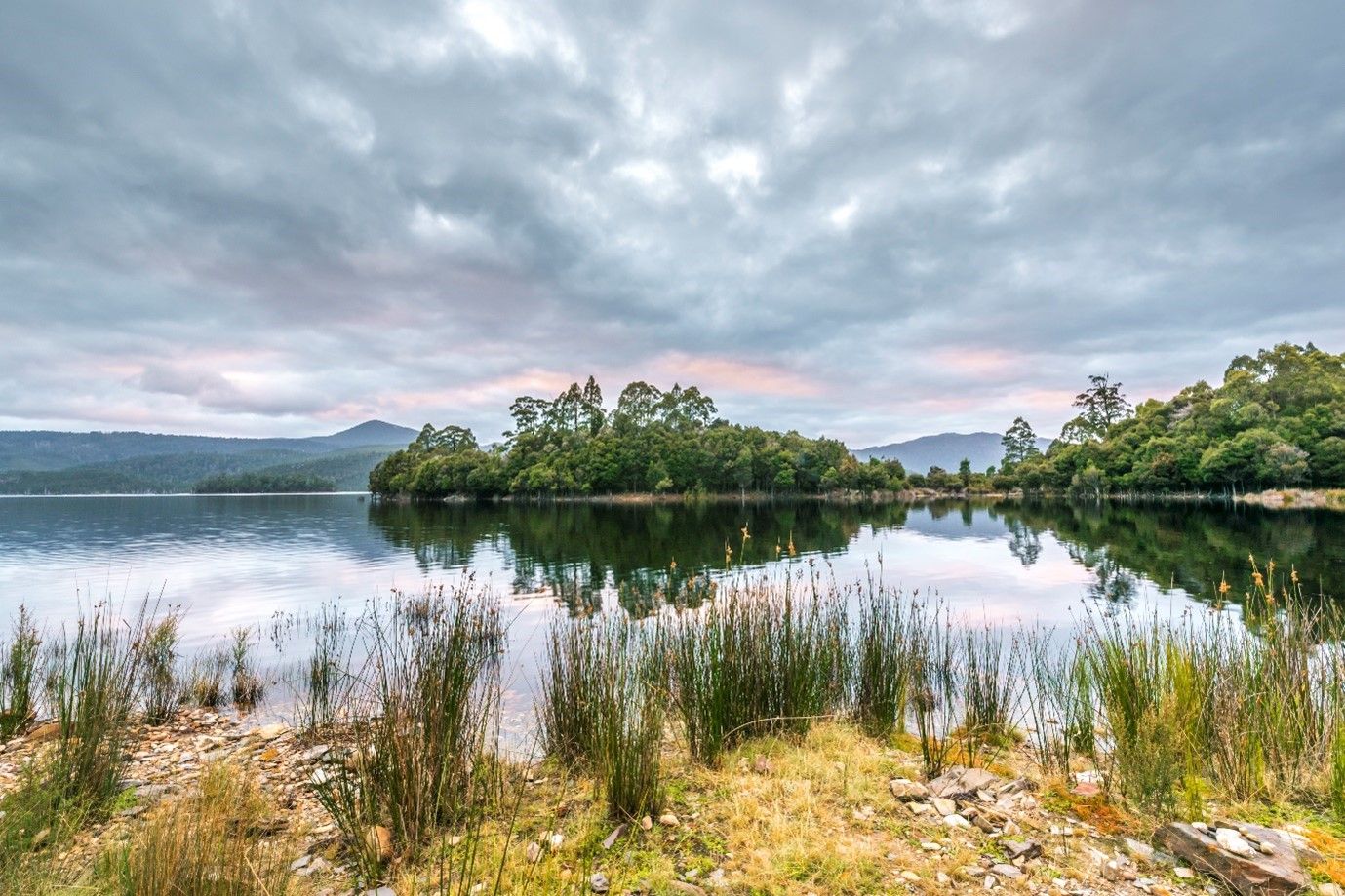
Savage River, The Tarkine, Palawa Country. Tiffany Garvie. Source: Ngarrngga. © Tiffany Garvie 2023. Used under licence.

Activity 5 (Part 3 of 3): Share findings from visit to local place of importance
Focus: Apply learning from the unit, in a local context by visiting an important places respectfully, following agreements/protocols, noticing seen/unseen clues, and using words like “might” and “could.”
Possible overarching question: How can we learn from local places and how should people behave there?
Step by step guide
Step 1: Connecting to students’ prior learning
Step 2: Set the scene & co-construct success criteria
Step 3: Plan (draft and teacher conference)
Step 4: Make (create, then midpoint check)
Step 5: Reflection and sharing
Required Resources:
Teacher Support Material
Student observations from part 2
Step 1: Connecting to students’ prior learning
Have students share in pairs or small groups their observations from the visit. Allow time to make any adjustments or additions to notes based on what others recorded.
Step 2: Set the scene & co-construct success criteria
Set the scene for students:
“We are preparing something to teach others about the local places of importance we visited so they can learn about it and care for it respectfully.”
Possible audiences: another class, families, school website/newsletter (as permitted).
Product possibilities: diorama, place portrait, poster, info sheet, PowerPoint, short audio tour etc.
The product must include (link to this when co-creating success criteria) what was documented from the visit:
Snapshot (sketch, photos, words, recordings)
Seen and unseen clues
Types of importance and evidence
Care and attribution
Work with students to co-construct the success criteria. Some possibilities are:
Name the place
Describe the place
Show the types of importance with evidence words/images drawn from seen/unseen clues.
Include at least one caring for Country action that fits this place.
Use tentative language: might, could, we may not know.
Add a thank you and source box (Country/people as advised; guides; public sources).
Follow protocols & consent (no faces without consent; share only what’s agreed).
Clear design: headings, labels, and readable text.
Step 3: Plan (draft and teacher conference)
Students sketch or storyboard their product and check the four “must haves” above.
Teacher conference with students against the success criteria:
“Where is your description of the important place?”
“Which types of importance are you showing, and what evidence supports each?”
“What care action will your audience learn?”
“Where is your thank you and source box?”
Step 4: Make (create, then midpoint check)
Students create their product. Midway, run a peer mini-audit using the success criteria.
Step 5: Reflection and sharing
To prepare for the audience you could undertake the following:
Gallery with sticky notes (one star, one question)
Micro-presentations using the following sentence starters:
This place is…
I think it might be important for… because we saw…
One way to care for this place is…
Thank you to…
Post a class thank you to the Elders, Traditional Owners, rangers, or people who guided your tour and share the examples of learning from the visit. If it was self-guided, you can still undertake this acknowledgement.
Related activities within this resources:
Activity 1: Creating a place that is important to me
Students use loose parts/materials to build a labelled model of a place that is important to them. They explain why it matters and keep the model (or a photo) to revisit in later activities.
Activity 2: Defining importance – social, cultural, spiritual, ecological
Students learn four ways a place can be important (social, cultural, spiritual, ecological) and practise using tentative language (“might…”, “could…”, “we may not know”). They then apply the types of importance to their model from Activity 1, adding a short “because” statement.
Activity 3: Exploring important places across Australia – seen & unseen clues
Students view a short clip and explore image sets to notice the diversity of important places across Australia. They learn the idea of seen (tangible) and unseen (intangible) clues, then use types of importance icons (social, cultural, spiritual, ecological) to place tokens on images, adding a short justification that names what we can see and what we can’t see yet. The teacher then reveals pre-prepared possible types of importance for each image and the class compares respectfully.
Activity 4: The Rainbow Serpent – learning more about spiritual and cultural importance
Students engage with a Rainbow Serpent story to explore how stories connect places across Country and why those places hold spiritual and cultural importance. Using a Noticing Template, they identify seen and unseen clues, write a character description, create a portrait, and share reflections.
Activity 5 (Part 1 of 3): Preparing for a visit to places of importance in our local community
Students prepare for, undertake, and share findings from a visit to one or more local places of importance. In part 1, they learn and practise protocols (OK / Check / Don’t Do) and co-create agreements for the visit.
Activity 5 (Part 2 of 3): Visiting places of importance in our local community
Students prepare for, undertake, and share findings from a visit to one or more local places of importance. In part 2, they visit the place(s), notice seen & unseen clues, and record respectful evidence.