Home/Curriculum resources/Exploring local Country: Places of importance/Activity 1: Creating a place that is important to me
Learning Areas:
Humanities and Social Sciences, English, Mathematics
Year levels:
Foundation, Level 1, Level 2
Activity 1: Creating a place that is important to me
This activity is a part of the Exploring local Country: Places of importance resource.
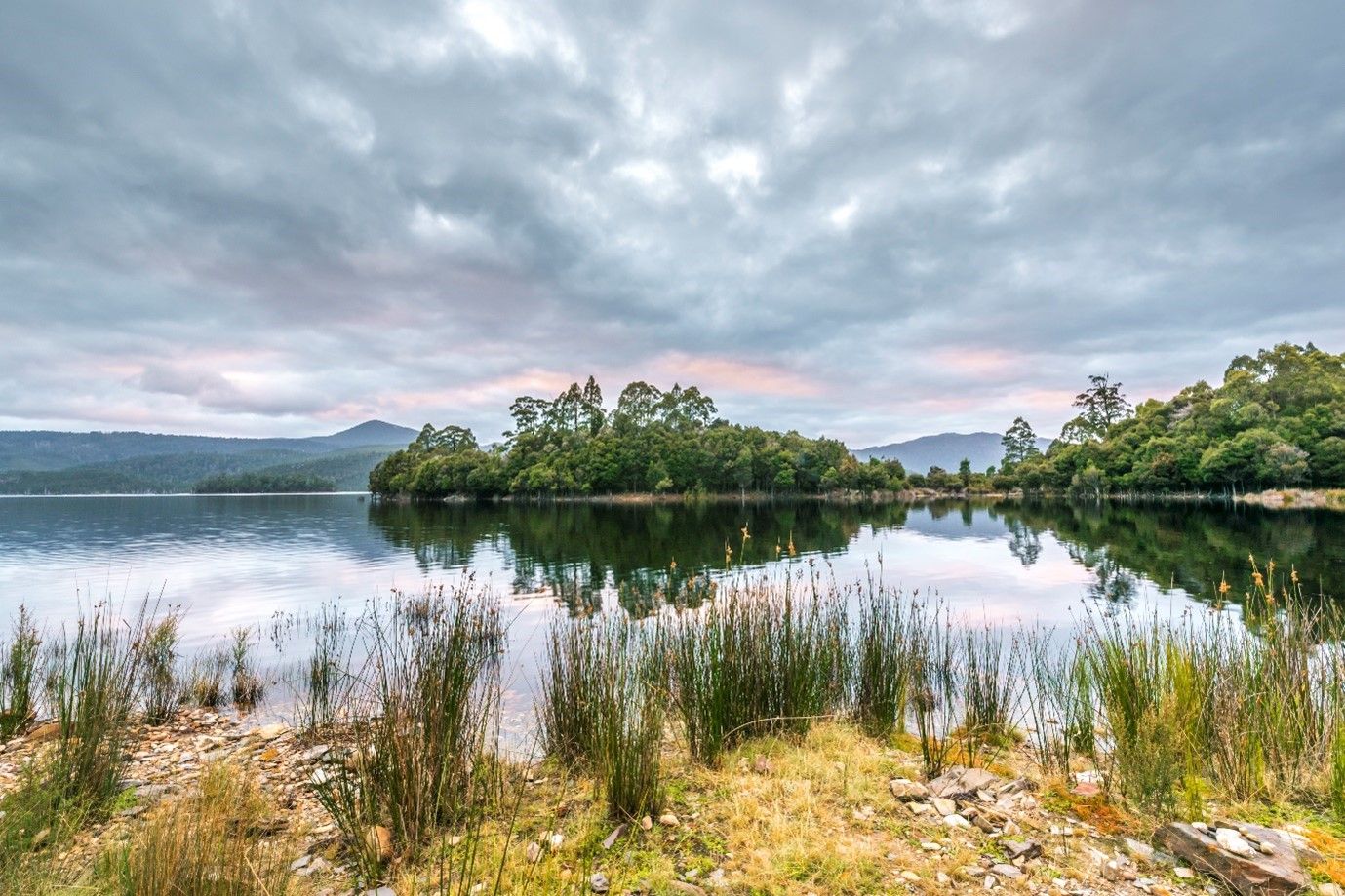
Savage River, The Tarkine, Palawa Country. Tiffany Garvie. Source: Ngarrngga. © Tiffany Garvie 2023. Used under licence.

Activity 1: Creating a place that is important to me
Focus: Students will identify a personally important place, represent it using labels, and justify its importance with one way to show Caring for Country.
Possible overarching question: What makes a place important to me?
Step by step guide
Step 1: Connecting to students’ prior learning
Step 2: Identify important places
Step 3: Introduce building an important place
Step 4: Build and label
Step 5: Add an explanation sentence
Step 6: Reflection and sharing
Required Resources:
Teacher Support Material
What is Country poster
Picture Story Book "Why I Love Australia" by Bronwyn Bancroft
Loose-parts kit: LEGO/blocks, fabric, paper shapes, string/rope, trays/containers
Heading/label cards for place names and features (make prior to lesson)
Sentence stem cards
Camera/tablet to photograph models with cards
Definition of important places poster
Step 1: Connecting to students’ prior learning
Gather students as a whole class and display the What is Country? poster used in Foundation and Year 1. Facilitate a brief recap. If it does not arise, remind students:
Country is everything working together – land, water, sky, plants, animals and people. It is all family.
Let students know you will be reading Why I Love Australia by Bronwyn Bancroft. Explain that the story highlights diverse landscapes and living things across Australia.
Encourage students to pay close attention to the depicted environments/landscapes, natural features, and plants/animals (flora and fauna). As you read, pause at selected pages to notice and name these features; optionally have students record observations (words or quick sketches).
After reading, discuss the variety of landscapes and elements presented. Invite students to share what they noticed, including any feelings the illustrations evoke, linking visual and textual elements to deepen comprehension.
Step 2: Identify important places
Ask students to move to a quiet independent space in the classroom with note-taking material. Invite them to brainstorm as many places that feel important (or special) to them as they can. These may be real or imaginary (e.g., “a calm garden by a creek”, “the football oval where I train”, “a local park where I walk my dog”).
Prompt with:
“What happens there that makes it important?”
“Who or what is there?”
“How do you feel in this place?”
Let students know they will return to this list shortly.
Step 3: Introduce building an important place
Explain that students will build a model of one place from their list that is important to them. The model should:
Have a name/label for the place.
Include at least 2–3 labelled features (e.g., path, water, trees, animals, grass).
Be ready to explain why it is important to them (at least one clear reason).
Suggest one (or more) ways people can care for this place (caring for Country).
Give students time to revisit their list and select the place that is most suitable for modelling in this activity.
Step 4: Build and label
Provide loose parts and other materials (LEGO/blocks, fabric, paper shapes, string/rope, cups/trays, sticky notes, label cards).
Remind students about the components they need to include.
During construction, visit students using prompts:
“What happens here that makes it important?”
“Which feelings do you experience at this place?”
“How can people care for this place?”
Step 5: Add an explanation sentence
Students create an explanation using one of these options:
Written card: “This place is important to me because ______.” Optional second card: “If this place could talk, it would ask us to ______ so it stays healthy.”
Oral/recorded option: A short audio or oral response using the same sentence stems (teacher can scribe for emerging writers).
Provide sentence stems on the board, or the cards provided and scribe as needed. Photograph each model with its card(s) for later use.
Step 6: Reflection and sharing
Use the 50/50 strategy for a quick share. Invite half the class to stay with their creation while the other half visit.
Each sharer gives a 30–60 second micro-share:
Name the place
Point to one labelled feature
Read or say their “because” sentence.
Swap when most students have visited.
Two whole-class prompts to close:
“What patterns did we hear about why places matter?”
“What kind actions help us look after places we care about?”
Close with the following definition of place (a poster is provided):
For many Aboriginal and Torres Strait Islander Peoples, a place is an area, big or small, where important things come together. It might be a meeting place or park, a creek or beach, a mountain range, or a special feature like a stone arrangement or scarred tree. A place can hold stories, lessons, memories and responsibilities, even when we can’t see them. We treat important places with care and respect.
Explain that you will keep the models/photos because students will build on them in upcoming activities.
The Teacher Support Material outlines further possibilities in Mathematics and Literacy that can complement this activity.
Related activities within this resources:
Activity 2: Defining importance – social, cultural, spiritual, ecological
Students learn four ways a place can be important (social, cultural, spiritual, ecological) and practise using tentative language (“might…”, “could…”, “we may not know”). They then apply the types of importance to their model from Activity 1, adding a short “because” statement.
Activity 3: Exploring important places across Australia – seen & unseen clues
Students view a short clip and explore image sets to notice the diversity of important places across Australia. They learn the idea of seen (tangible) and unseen (intangible) clues, then use types of importance icons (social, cultural, spiritual, ecological) to place tokens on images, adding a short justification that names what we can see and what we can’t see yet. The teacher then reveals pre-prepared possible types of importance for each image and the class compares respectfully.
Activity 4: The Rainbow Serpent – learning more about spiritual and cultural importance
Students engage with a Rainbow Serpent story to explore how stories connect places across Country and why those places hold spiritual and cultural importance. Using a Noticing Template, they identify seen and unseen clues, write a character description, create a portrait, and share reflections.
Activity 5 (Part 1 of 3): Preparing for a visit to places of importance in our local community
Students prepare for, undertake, and share findings from a visit to one or more local places of importance. In part 1, they learn and practise protocols (OK / Check / Don’t Do) and co-create agreements for the visit.
Activity 5 (Part 2 of 3): Visiting places of importance in our local community
Students prepare for, undertake, and share findings from a visit to one or more local places of importance. In part 2, they visit the place(s), notice seen & unseen clues, and record respectful evidence.
Activity 5 (Part 3 of 3): Share findings from visit to local place of importance
Students prepare for, undertake, and share findings from a visit to one or more local places of importance. In part 3, they choose a mode (e.g., diorama, place portrait, poster, information sheet, PowerPoint, audio tour) to teach others what the place is, why it may be important, and how to behave respectfully, with attribution.