Home/Curriculum resources/Exploring local Country: Places of importance/Activity 5 (Part 2 of 3): Visiting places of importance in our local community
Learning Areas:
Humanities and Social Sciences, English, Mathematics
Year levels:
Foundation, Level 1, Level 2
Activity 5 (Part 2 of 3): Visiting places of importance in our local community
This activity is a part of the Exploring local Country: Places of importance resource.
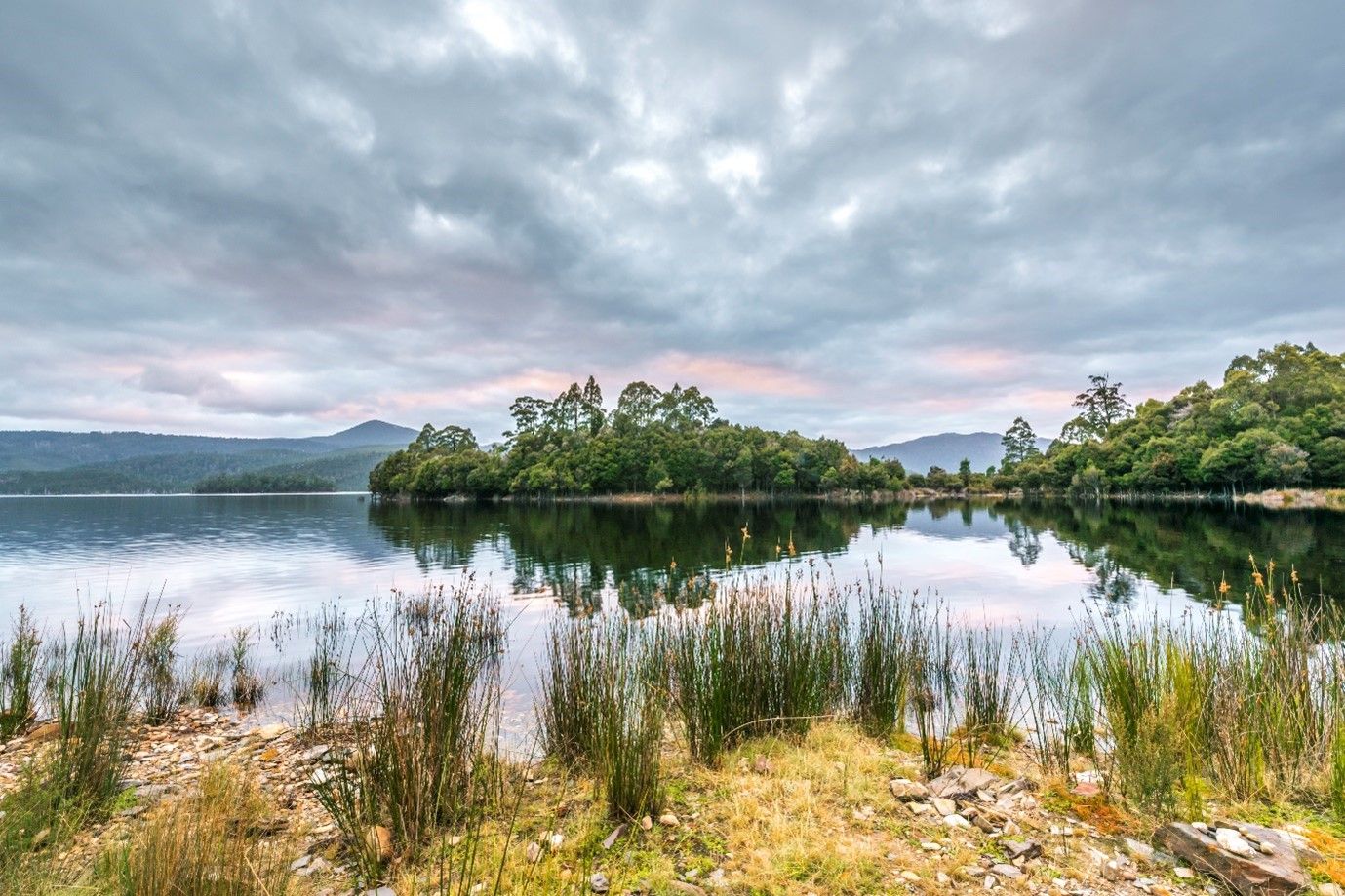
Savage River, The Tarkine, Palawa Country. Tiffany Garvie. Source: Ngarrngga. © Tiffany Garvie 2023. Used under licence.

Activity 5 (Part 2 of 3): Visiting places of importance in our local community
Focus: Apply learning from the unit, in a local context by visiting an important places respectfully, following agreements/protocols, noticing seen/unseen clues, and using words like “might” and “could.”
Possible overarching question: How can we learn from local places and how should people behave there?
This visit is a real-life chance to apply classroom learning with guidance from Elders, Traditional Owners, rangers or hosts. If this is not possible, you may be able to engage with content online to support the visit, self-guided tours or engage with informative signage during the visit. Students will practise protocols, look for seen and unseen clues, and document their visit, directly feeding this into the Part 3 task (sharing findings for an audience). Keep methods non-extractive (look, listen, sketch) and use tentative language (“might/could/we may not know”), because some meanings are private or held by custodians.
What students need to document for Part 3
By the end of the visit, each student should have:
Place snapshot: a sketch, photos, short written or recorded description.
Seen and unseen clues: at least 2–3 seen clues and 1–2 unseen possibilities, phrased tentatively.
Types of importance and evidence: 1–2 types of importance (social, cultural, spiritual, ecological) with a because statement using concrete clues.
Care and attribution notes: Examples of caring for Country, What Country did your visit take place on? Who do you need to acknowledge and thank for your visit?
These four items are the inputs for the Part 3 product (poster, place portrait, audio tour, etc.). A booklet has also been provided for students to document these aspects.
Possible pathways for visit
Pathway One: Self-guided Visit
Natural features visit (river, wetland, lake, grasslands, etc.)
Share the information you have about this location (either sourced online prior to the visit or from the information provided at the place). Possibilities for students:
Spend time undertaking a silent notice: eyes/ears/body.
Document: what they noticed through words, sketches, recording or photos.
Seen/Unseen: list at least two seen and one unseen clues (use “might/could”).
Possible types of importance and evidence: pick at least one type of importance and finish: “One type that might apply is ___ because we can see ___.”
Care note: one action that shows caring for Country here.
Human influence feature (e.g., meeting area, path, marker, mural)
Repeat the same process as the natural features.
Each student returns with at least two complete sets of observations ready to transfer into Part 3.
Pathway Two: Guided Visit
Have students document the same areas as the self-guided visit. Further considerations:
Listen first: only record if permission is given; otherwise paraphrase respectfully.
Live mapping: as students listen, jot seen clues they can verify and unseen meanings they may hear (note “shared by (person)”).
Types of importance and evidence: after the talk, choose the types of importance lenses that might fit and write one because statement based off the tour guides information.
Care and attribution: note one care action mentioned or modelled; write thanks/acknowledgement details (as advised).
Each student returns with at least one rich set of observations that includes an unseen insight (if shared) by the tour guide.
Ready for Part 3? Student check before leaving
☐ Snapshot done (sketch, photo, recording or short description)
☐ 2–3 seen clues and 1–2 unseen possibilities
☐ 1–2 types of importance with because evidence
☐ One care action and who/which Country to thank/acknowledge
Related activities within this resources:
Activity 1: Creating a place that is important to me
Students use loose parts/materials to build a labelled model of a place that is important to them. They explain why it matters and keep the model (or a photo) to revisit in later activities.
Activity 2: Defining importance – social, cultural, spiritual, ecological
Students learn four ways a place can be important (social, cultural, spiritual, ecological) and practise using tentative language (“might…”, “could…”, “we may not know”). They then apply the types of importance to their model from Activity 1, adding a short “because” statement.
Activity 3: Exploring important places across Australia – seen & unseen clues
Students view a short clip and explore image sets to notice the diversity of important places across Australia. They learn the idea of seen (tangible) and unseen (intangible) clues, then use types of importance icons (social, cultural, spiritual, ecological) to place tokens on images, adding a short justification that names what we can see and what we can’t see yet. The teacher then reveals pre-prepared possible types of importance for each image and the class compares respectfully.
Activity 4: The Rainbow Serpent – learning more about spiritual and cultural importance
Students engage with a Rainbow Serpent story to explore how stories connect places across Country and why those places hold spiritual and cultural importance. Using a Noticing Template, they identify seen and unseen clues, write a character description, create a portrait, and share reflections.
Activity 5 (Part 1 of 3): Preparing for a visit to places of importance in our local community
Students prepare for, undertake, and share findings from a visit to one or more local places of importance. In part 1, they learn and practise protocols (OK / Check / Don’t Do) and co-create agreements for the visit.
Activity 5 (Part 3 of 3): Share findings from visit to local place of importance
Students prepare for, undertake, and share findings from a visit to one or more local places of importance. In part 3, they choose a mode (e.g., diorama, place portrait, poster, information sheet, PowerPoint, audio tour) to teach others what the place is, why it may be important, and how to behave respectfully, with attribution.