Home/Curriculum resources/Exploring local Country: Places of importance/Activity 4: The Rainbow Serpent – learning more about spiritual and cultural importance
Learning Areas:
Humanities and Social Sciences, English, Mathematics
Year levels:
Foundation, Level 1, Level 2
Activity 4: The Rainbow Serpent – learning more about spiritual and cultural importance
This activity is a part of the Exploring local Country: Places of importance resource.
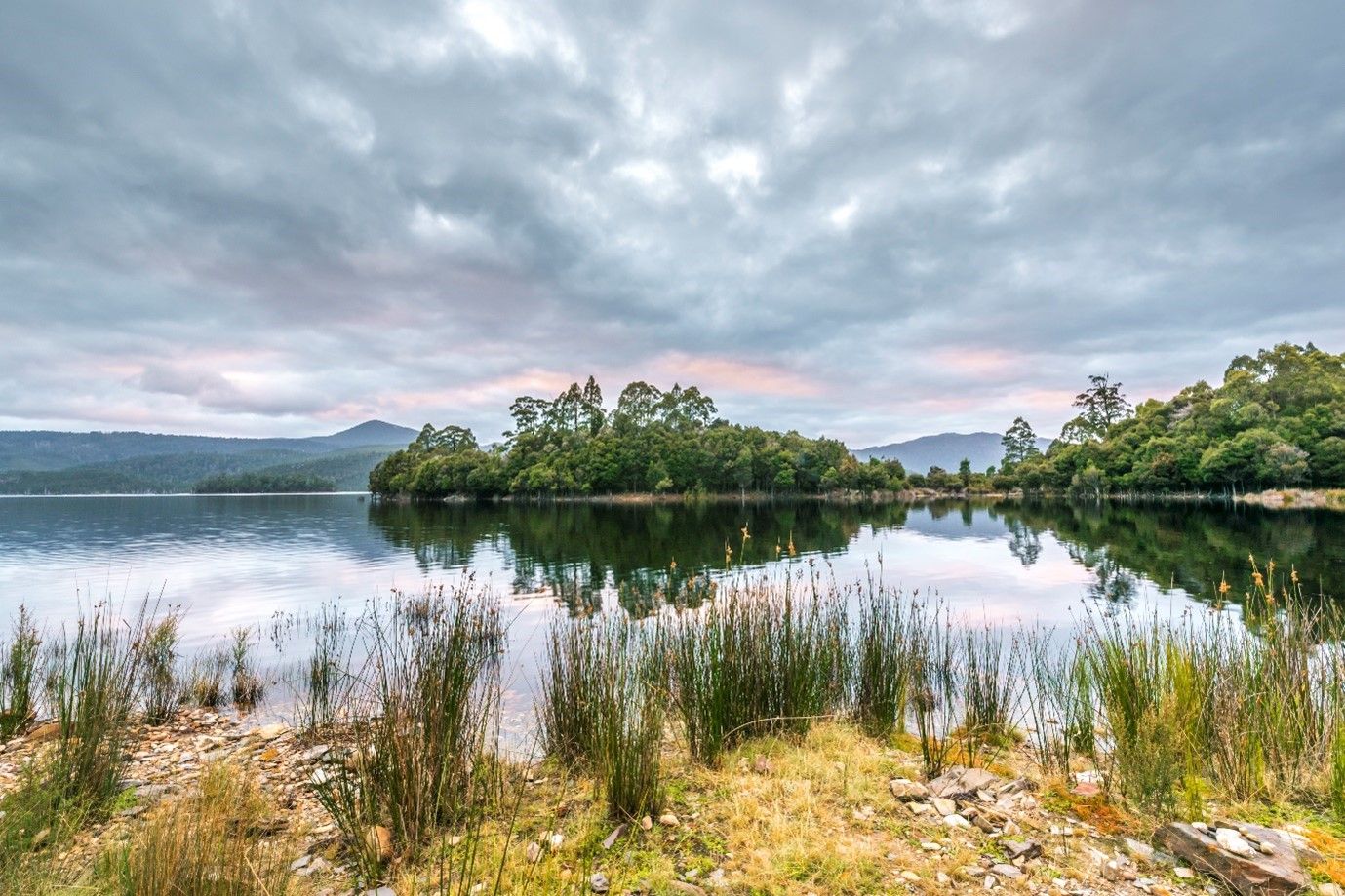
Savage River, The Tarkine, Palawa Country. Tiffany Garvie. Source: Ngarrngga. © Tiffany Garvie 2023. Used under licence.

Activity 4: The Rainbow Serpent – learning more about spiritual and cultural importance
Focus: Understanding that stories can connect places across Country and offer reasons why locations may be important.
Possible overarching question: How can a story connect different places, and what seen and unseen clues tell us why they might be important?
Step by step guide
Step 1: Connecting to students’ prior learning
Step 2: Setting the scene of The Rainbow Serpent
Step 3: Shared reading of the Rainbow Serpent
Step 4: Write a character description
Step 5: Create a character portrait
Step 6: Reflection and sharing
Required Resources:
Teacher Support Material
Four types of importance posters
Definition of important places poster
Map of Australia showing Rainbow Serpent (publicly shared examples)
The Rainbow Serpent text or clip e.g. https://www.youtube.com/watch?v=vjTM-MJKccg
Noticing Template – Rainbow Serpent
Picture Quilt template
Step 1: Connecting to students’ prior learning
Recap the four types of importance (social, cultural, spiritual, ecological) and place definitions, using the provided posters or your anchor chart.
Explain that the lesson will focus on spiritual and cultural importance by engaging with a Dreaming story, the Rainbow Serpent.
Step 2: Setting the scene of The Rainbow Serpent
Set the scene using the following script:
“Aboriginal and Torres Strait Islander Peoples share many songs and stories. These stories can be told out loud and passed from one generation to the next.
Some stories name important places on Country, like rocks, cliffs, rivers, waterholes, or a certain tree. Sometimes you can see signs that a place is important, like rock art or scarred trees. However, not every important place has a sign you can see.
A story can have more than one version, and different families or communities may look after different parts of the same story.
Stories can link places that are far apart and help explain why those places are important.
Across Australia, many Aboriginal communities have Rainbow Serpent stories. The stories are not all the same, each community may tell it in its own way and use its own name.
Let’s look at this map. It shows some places where communities have shared Rainbow Serpent stories with the public. This is not a full list; there are more stories we do not see here.
Some knowledge is private or sacred. That means only certain people can know or share it, or it is told at special times. We respect that and learn from the parts that communities choose to share.”
Step 3: Shared reading of the Rainbow Serpent
Select one interpretation to share with your class (ideally connected to the Country your school is on, or otherwise age-appropriate). See the Teacher Support Material for options.
Provide each student with the Noticing Template – Rainbow Serpent to record:
Places mentioned or shown (e.g. mountains, rocks, ponds, lakes, rivers).
How Country changed during the story (e.g. water filled tracks; plants/animals woke).
Examples of Caring for Country (e.g. care for land; follow rules; don’t take what is not ours).
Words to describe the Rainbow Serpent.
Step 4: Write a character description
Using the Noticing Template, students write a text (from a sentence to paragraphs, depending on ability) describing the Rainbow Serpent. They may include its appearance and behaviour, its significance, and the role it plays in important places.
In pairs, students read each other’s writing and add one sentence using metalanguage to give feedback (e.g. “Your use of the adjectives ‘large and colourful’ helps the reader imagine the Rainbow Serpent.”).
Step 5: Create a character portrait
Students use the Picture Quilt template to draw their interpretation of the Rainbow Serpent and add descriptive words around the border. Display as a whole-class Picture Quilt.
Step 6: Reflection and Sharing
3 – 2 – 1: Students work in pairs to write or voice record three words describing the Rainbow Serpent, two places mentioned in the story, and one way to show caring for Country.
Related activities within this resources:
Activity 1: Creating a place that is important to me
Students use loose parts/materials to build a labelled model of a place that is important to them. They explain why it matters and keep the model (or a photo) to revisit in later activities.
Activity 2: Defining importance – social, cultural, spiritual, ecological
Students learn four ways a place can be important (social, cultural, spiritual, ecological) and practise using tentative language (“might…”, “could…”, “we may not know”). They then apply the types of importance to their model from Activity 1, adding a short “because” statement.
Activity 3: Exploring important places across Australia – seen & unseen clues
Students view a short clip and explore image sets to notice the diversity of important places across Australia. They learn the idea of seen (tangible) and unseen (intangible) clues, then use types of importance icons (social, cultural, spiritual, ecological) to place tokens on images, adding a short justification that names what we can see and what we can’t see yet. The teacher then reveals pre-prepared possible types of importance for each image and the class compares respectfully.
Activity 5 (Part 1 of 3): Preparing for a visit to places of importance in our local community
Students prepare for, undertake, and share findings from a visit to one or more local places of importance. In part 1, they learn and practise protocols (OK / Check / Don’t Do) and co-create agreements for the visit.
Activity 5 (Part 2 of 3): Visiting places of importance in our local community
Students prepare for, undertake, and share findings from a visit to one or more local places of importance. In part 2, they visit the place(s), notice seen & unseen clues, and record respectful evidence.
Activity 5 (Part 3 of 3): Share findings from visit to local place of importance
Students prepare for, undertake, and share findings from a visit to one or more local places of importance. In part 3, they choose a mode (e.g., diorama, place portrait, poster, information sheet, PowerPoint, audio tour) to teach others what the place is, why it may be important, and how to behave respectfully, with attribution.