Home/Curriculum resources/Exploring local Country: Places of importance/Activity 2: Defining importance – social, cultural, spiritual, ecological
Learning Areas:
Humanities and Social Sciences, English, Mathematics
Year levels:
Foundation, Level 1, Level 2
Activity 2: Defining importance – social, cultural, spiritual, ecological
This activity is a part of the Exploring local Country: Places of importance resource.
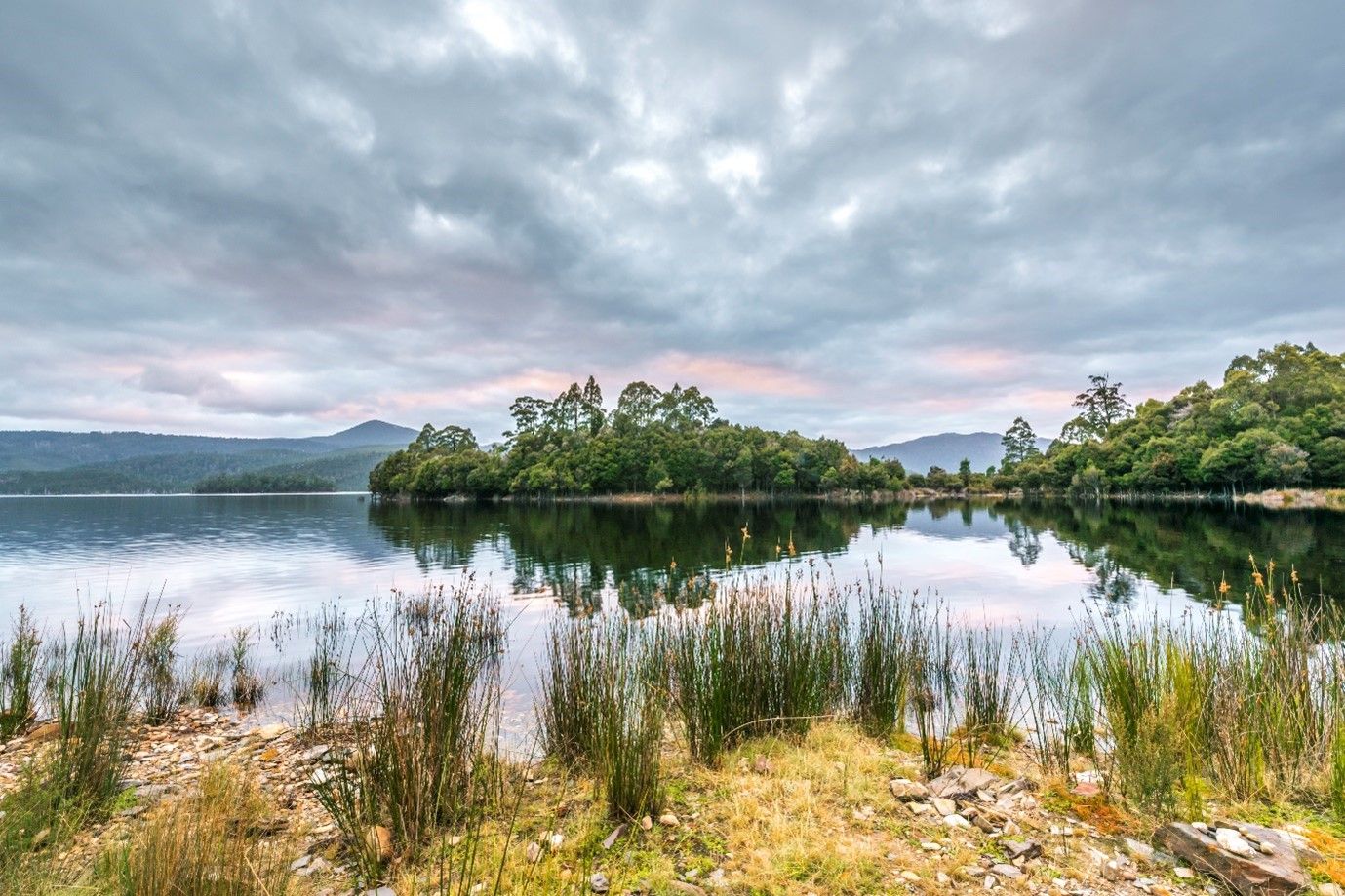
Savage River, The Tarkine, Palawa Country. Tiffany Garvie. Source: Ngarrngga. © Tiffany Garvie 2023. Used under licence.

Activity 2: Defining importance – social, cultural, spiritual, ecological
Focus: Understanding that importance can have different meanings (social, cultural, spiritual, ecological) and applying this thinking to students’ own important place.
Possible overarching question: Why might a place be important, and how can we show that respectfully?
Step by step guide
Step 1: Connecting to students’ prior learning
Step 2: Mini-lesson – four types of importance
Step 3: Small group sort and discussion
Step 4: Revisit and annotate model
Step 5: Create a “Ways a place can be important” anchor chart (optional)
Step 6: Reflection and sharing
Required Resources:
Teacher Support Material
Students’ models/photos from Activity 1
Mini-lesson Resource: Four types of importance & using tentative language
Four types of importance posters
Icon cards (social, cultural, spiritual, ecological) – class set and small stickers/cards
Types of importance statement cards with images for sorting
Question prompt cards to guide decision-making
Sentence stem cards
Word bank
Chart paper/markers for class anchor chart
Step 1: Connecting to students’ prior learning
Gather the class around several models/photos from Activity 1. Prompt:
“We each built a place that is important to us. Can anyone remember some of the reasons why they were important to others?”
Ask students to record their reason/s for importance on a sticky note. If possible, see if they can capture this in a few words (example: Netball court – this is important to me because I get to play with my friends - could be captured as “playing with friends”).
Facilitate a whole-class sort of these reasons; help students distil longer sentences into a few words if needed. Work together to group similar ideas and name the groups. Point out where there may be different perspectives of the same place and how we can each share the same place as important, but it may be for a different reason.
Introduce today’s focus:
There are different kinds of importance. A place can be important to people and to Country in more than one way, and we will not always know for sure.
Let students know we have a special visitor that is going to teach us more about the types of importance.
Step 2: Mini-lesson - the four types of importance
Use the provided Mini-lesson Resource to set shared language and expectations.
Step 3: Small group sort and discuss - “Which types of importance might fit?”
In small groups, give each group a set of statement cards and types of importance icon cards. (Question prompts, word banks and sentence stem cards have also been provided to support differentiation). For each card, students place one or more icon(s) to show which type(s) of importance might apply. Encourage respectful tentative language.
Statements to sort (with images):
Quiet space for remembering
Fish thrive in this creek
This mural shows important events and memories from the past
This seating area is a place for people to come together and talk
Important rock art about stories of the past
Native grasses are looked after so birds can nest.
Teacher prompts while circulating:
“What about this card tells you that type of importance?”
“Could another type also apply? What makes you think that?”
“If we may not know, what would we need to find out – and who would we ask?”
Encourage use of the word bank to support vocabulary.
Step 4: Annotate your model place
Revisit the whole class chart from Step 1 (categorisation of important places) and connect it with the four types just introduced. Have students start to think about which of the four types of importance their sticky note could align with.
Students return to their Activity 1 models/photos and:
Select at least one type of importance that might apply (add matching icon/sticker).
Record a because statement using non-absolute language (possible format):
Icon sticker and written or scribed sentence: “One type of importance for my place is _____ because _______.”
Audio recordings (15–20 s): same sentence stem, recorded.
Small “because” card: as the icon sticker is on the card students can just write the because section of the same sentence stem and place it with the model/photo.
Optional: If appropriate, students can add a second lens with a second “because” statement.
Step 5: Create a class anchor chart – “Types of importance” (optional)
Note: Posters have also been provided if you choose to not undertake this step.
As a class, co-construct a poster/anchor chart with four columns (Social, Cultural, Spiritual, Ecological). For each column:
Add the icon, a student-friendly definition, and 2–3 example phrases drawn from student work (use the word bank).
Add tentative language at the top: might, could, we may not know.
Include one respect reminder: Different people may experience a place in different ways; some meanings are not for us to know.
Display the chart for use in upcoming activities.
Step 6: Reflection and sharing
Silent Gallery: display models/photos with icons and “because” statements. Students walk, read, and notice patterns.
Close with two prompts (whole class or pair share):
“What patterns did we see in the types of importance?”
“How does using might, could, we may not know help us be respectful?”
Close with the following:
“Some meanings of places are private or not shared publicly. Using tentative language shows respect. In our next learning, we’ll look at important places across Country and notice how these ideas connect.”
Related activities within this resources:
Activity 1: Creating a place that is important to me
Students use loose parts/materials to build a labelled model of a place that is important to them. They explain why it matters and keep the model (or a photo) to revisit in later activities.
Activity 3: Exploring important places across Australia – seen & unseen clues
Students view a short clip and explore image sets to notice the diversity of important places across Australia. They learn the idea of seen (tangible) and unseen (intangible) clues, then use types of importance icons (social, cultural, spiritual, ecological) to place tokens on images, adding a short justification that names what we can see and what we can’t see yet. The teacher then reveals pre-prepared possible types of importance for each image and the class compares respectfully.
Activity 4: The Rainbow Serpent – learning more about spiritual and cultural importance
Students engage with a Rainbow Serpent story to explore how stories connect places across Country and why those places hold spiritual and cultural importance. Using a Noticing Template, they identify seen and unseen clues, write a character description, create a portrait, and share reflections.
Activity 5 (Part 1 of 3): Preparing for a visit to places of importance in our local community
Students prepare for, undertake, and share findings from a visit to one or more local places of importance. In part 1, they learn and practise protocols (OK / Check / Don’t Do) and co-create agreements for the visit.
Activity 5 (Part 2 of 3): Visiting places of importance in our local community
Students prepare for, undertake, and share findings from a visit to one or more local places of importance. In part 2, they visit the place(s), notice seen & unseen clues, and record respectful evidence.
Activity 5 (Part 3 of 3): Share findings from visit to local place of importance
Students prepare for, undertake, and share findings from a visit to one or more local places of importance. In part 3, they choose a mode (e.g., diorama, place portrait, poster, information sheet, PowerPoint, audio tour) to teach others what the place is, why it may be important, and how to behave respectfully, with attribution.