Home/Curriculum resources/Protecting sites of significance/Activity 4: Exploring engagement - Case Studies in cultural preservation
Learning Area:
Humanities and Social Sciences
Year levels:
Level 7, Level 8
Activity 4: Exploring engagement - Case Studies in cultural preservation
This activity is a part of the Protecting sites of significance resource.
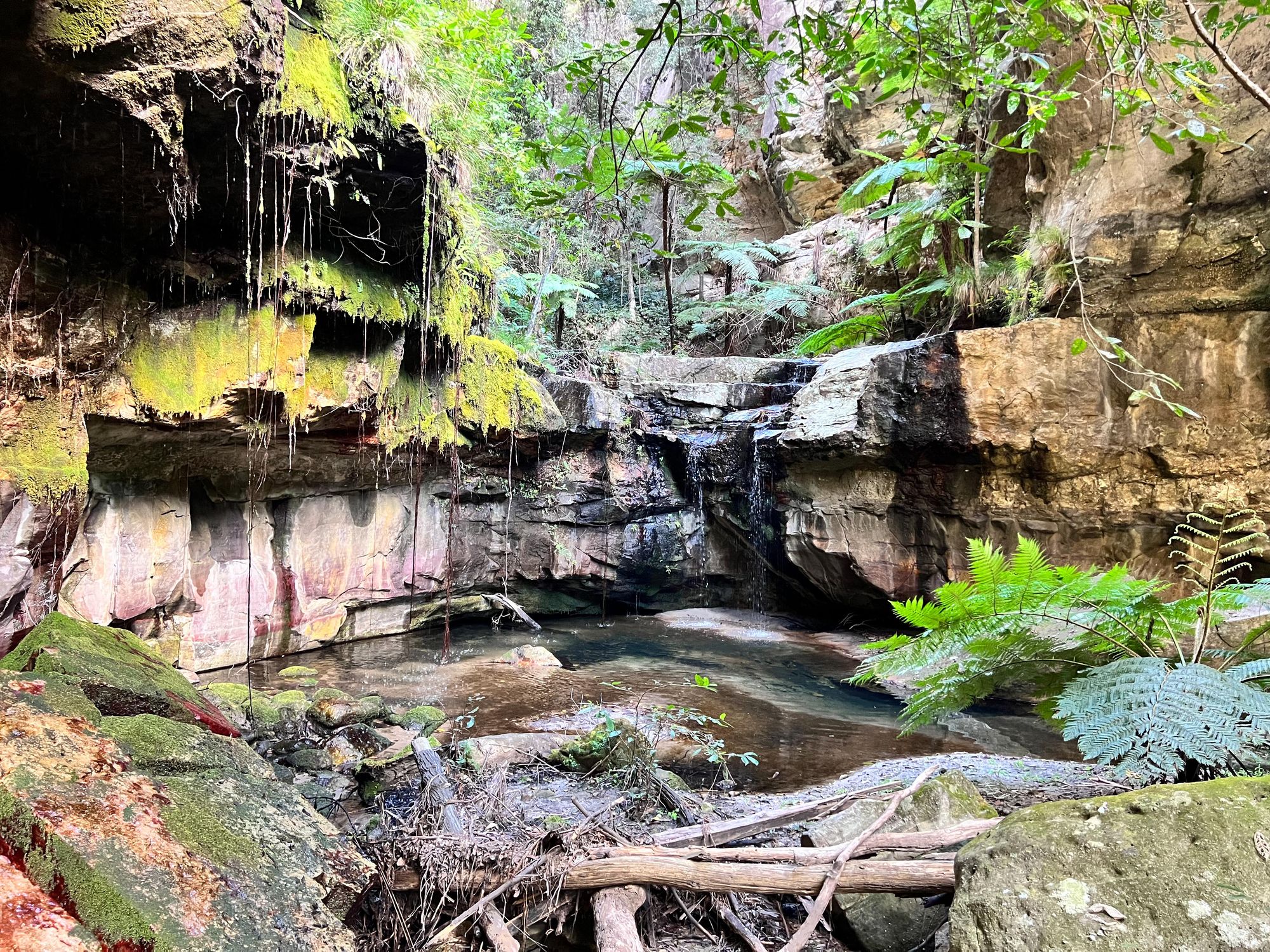
Moss Garden in Carnarvon National Park, Queensland. Location: Southern Brigalow Belt bioregion in the Maranoa Region in Central Queensland. Photographer: Rafael Ben-Ari. Source: Getty Images. Used under licence.

Activity 4: Exploring engagement- Case Studies in cultural preservation
NOTE: This activity is comprehensive and includes several components which can span multiple lessons. The Teacher Support Material provides in depth guidance, and it is recommended to read this prior implementation of the activity.
Focus: Examining varying depths and styles of engagement with Aboriginal and Torres Strait Islander Peoples regarding the protection of sites of significance.
Possible overarching questions:
What are some of the ways governing bodies have worked collaboratively with Traditional Owners to manage cultural sites effectively?
What can we learn from past and present examples of collaboration with Aboriginal and Torres Strait Islander Peoples in protecting and preserving cultural heritage sites?
Step by step guide
Step 1: Connecting to students' prior learning
Step 2: Case study exploration
Step 3: Case study discussion
Step 4: SWOT Analysis
Step 5: Creating a collaborative data chart
Step 6: Discussion and reflection
Required Resources:
Teacher Support Material
Case Study Student Texts
Case Study Student Research Cards
Note-taking Template (including exemplar)
SWOT Analysis Template (including exemplar)
Step 1: Connecting to students’ prior learning
Briefly summarise the issues surrounding the protection of sites of significance at Carnarvon Gorge that students explored in the previous session.
This would include the following points:
Cultural significance and custodianship: Carnarvon Gorge is a sacred meeting place for many Aboriginal peoples, with ancient rock art depicting Dreaming stories and cultural practices. Bidjara Elder Uncle Fred Conway has dedicated his life to protecting the site and mentoring Aboriginal youth.
Conservation vs. mismanagement: While Carnarvon National Park was created to protect landscapes and cultural sites, infrastructure projects have damaged significant cultural sites due to a lack of consultation with Traditional Owners.
The importance of Traditional Ecological Knowledge: Excluding Traditional Owners from land and fire management has led to environmental damage, their knowledge of the land is essential for sustainable conservation.
Let students know that in the final activity they will return to Carnarvon Gorge to revisit some of the issues identified and develop possible solutions. Explain that to help with this, they will now explore case studies from across Australia that show different levels of collaboration with Traditional Owners. These examples will provide ideas and inspiration they can apply when thinking about how Carnarvon Gorge might be better cared for into the future.
Step 2: Case study exploration
The following eight case studies are available for this activity. Each one introduces students to a unique site of significance across Australia and how it is being cared for.
Tidbinbilla Nature Reserve, ACT – Focuses on wildlife conservation and cultural heritage, including the Murumbung Rangers.
Arthur-Pieman Conservation Area, TAS – Explores Aboriginal land connection and the impact of public access and heritage management.
Gariwerd (Grampians National Park), VIC – Highlights extensive rock art and Traditional Owner co-management efforts.
Mutawintji National Park, NSW – A powerful example of land returned to Aboriginal people and community-led management.
Ikara-Flinders Ranges National Park, SA – Showcases co-management arrangements and Adnyamathanha cultural significance.
Warddeken Indigenous Protected Area (IPA), NT – Managed by Indigenous rangers blending traditional and scientific approaches.
Murujuga (Burrup Peninsula), WA – Home to significant rock art, facing pressure from nearby industry
Ancient Trackways of Mer, Murray Islands, Torres Strait
Allocate two case studies from the same group to each student or pair of students. The groupings are designed to support differentiation and offer points of comparison. Each case study includes:
case study text: Offers deeper insight and background into the site's history, management, and challenges.
research card: Highlights key details including Traditional Owners, cultural significance, management partners, and preservation actions.
Students can:
Read the case study texts and complete a guided comparison
Use the research cards to conduct deeper exploration through linked videos and articles (if more time is available).
Suggested guiding questions:
Why is this place considered a site of significance?
What are the issues or concerns surrounding its protection?
Has the site been damaged? If so, how?
How is this site currently managed?
You may choose to provide the note-taking template for students to record their thinking.
Step 3: Case study discussion
Form small discussion groups. If students worked independently, pair them up. If they worked in pairs, combine two pairs into a group of four.
Invite students to summarise their case studies using the questions from Step 2 and their notes.
Prompt discussion around the value of Indigenous Knowledge and inclusive decision-making with the following:
Why is collaboration with Traditional Owners important when managing sites of significance?
What are some examples of successful co-management?
How can Traditional Ecological Knowledge help protect cultural heritage and the environment?
What challenges arise when Traditional Owners are excluded from management decisions?
Further advice and prompts for students during this discussion are detailed in the Teacher Support Material. If you are breaking this activity into more than one lesson you may pause here.
Step 4: SWOT Analysis
If you have separated this activity into multiple lessons, you may want to start with a brief discussion summarising the previous lesson.
Have students work independently or in pairs to create a SWOT analysis (Strengths, Weaknesses, Opportunities and Threats) for one or more of the case studies they explored.
If needed, model the SWOT process before students begin. An exemplar is also provided.
Encourage students to focus on what is working well and where improvements could be made in the collaborative management and preservation of sites of significance alongside Traditional Owners.
Step 5: Creating a collaborative data chart
Explain to students that they will be comparing the management strategies of the different case studies they have explored. This chart can be created on a whiteboard, large poster paper or a digital collaborative tool (eg. Google Docs, Google Jamboard, Padlet). Since students explored different case studies, working together will help share knowledge and perspectives.
As a group, decide on the criteria to compare the case studies. Below are some examples of features students might choose to include (more detail is provided in the Teacher Support Material):
Co-management with Traditional Owners
Use of Traditional Ecological Knowledge
Indigenous ranger programs
Cultural education or youth engagement
Public access and tourism impact
Step 6: Discussion and reflection
Facilitate a reflective discussion to support students with consolidating their learning and thinking deeply about the complexities of managing sites of significance. Some possible questions to facilitate this discussion are:
Personal Connection and Insights
How has your understanding of cultural heritage and environmental conservation evolved through this lesson?
Did any case study challenge or change your perspective? If so, how?
Critical Thinking and Complexities
Were there any criteria you found difficult to evaluate? What made it challenging?
Is it always possible to balance environmental protection and public access? Why or why not?
Future Action and Responsibility
What can communities and individuals do to better support the protection of sites of significance?
How can learning from Traditional Owners shape future environmental management practices?
Related activities within this resources:
Activity 1: What are sites of significance
This activity helps students explore what makes a site significant to Aboriginal and Torres Strait Islander Peoples and why these places should be protected. Through discussion, investigation, and reflection, students learn about different types of significant sites and how to engage with them respectfully. Using real-world examples and scenarios, they consider cultural protocols and the impact of actions on Country.
Activity 2: Ways sites of significance are protected
Building on their understanding of what makes a site significant, this activity guides students to explore how Aboriginal and Torres Strait Islander Peoples have long protected Country through cultural knowledge, storytelling, and land management. Through a Knowledge Building Walk, students examine both Indigenous-led and legal protections, such as ranger programs, co-management, and Native Title, and reflect on their strengths and limitations. They compare these approaches and consider the ongoing role of Aboriginal and Torres Strait Islander Peoples in caring for Country.
Activity 3: Carnarvon Gorge Case Study
Building on their understanding of sites of significance and how they are cared for, students now explore Carnarvon Gorge as a focused case study. Through note-taking, annotation, and engagement with resources, students investigate how the site is being managed and where improvements might be made. They reflect on the cultural and environmental importance of the site and consider respectful ways it can be protected and sustained into the future.
Activity 5: Future possibilities for Carnarvon George
In this final activity, students return to the Carnarvon Gorge case study and apply what they’ve learned about cultural site protection and collaboration with Traditional Owners. Drawing on insights from previous case studies, students propose strategies to enhance cultural preservation, Indigenous leadership, and environmental care. Through planning, creating, and sharing their proposals, students reflect on respectful and sustainable approaches to managing sites of significance.