Home/Curriculum resources/Protecting sites of significance/Activity 1: What are sites of significance
Learning Area:
Humanities and Social Sciences
Year levels:
Level 7, Level 8
Activity 1: What are sites of significance
This activity is a part of the Protecting sites of significance resource.
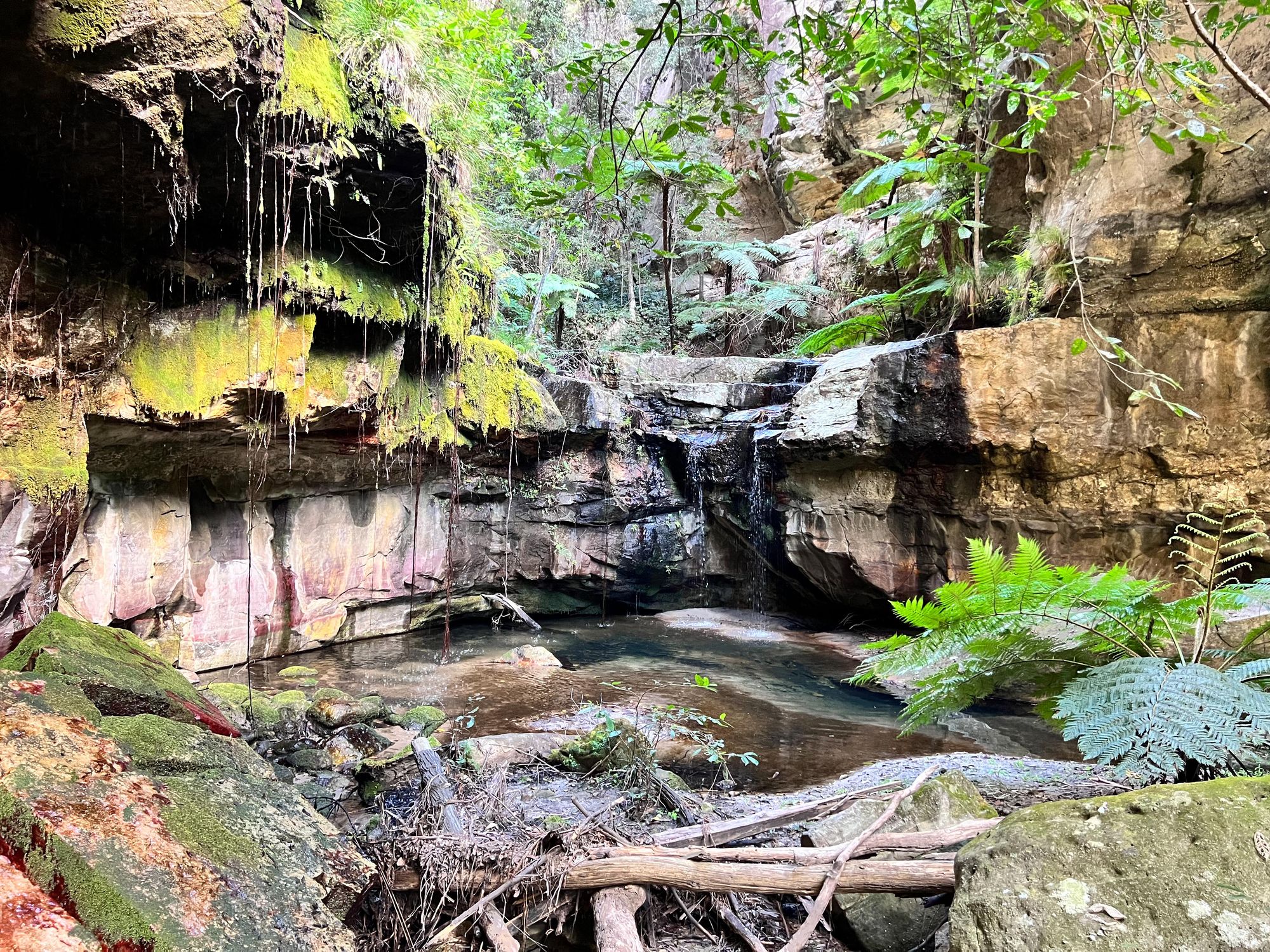
Moss Garden in Carnarvon National Park, Queensland. Location: Southern Brigalow Belt bioregion in the Maranoa Region in Central Queensland. Photographer: Rafael Ben-Ari. Source: Getty Images. Used under licence.

Activity 1: What are sites of significance
Focus: Students will explore the concept of sites of cultural significance to Aboriginal and Torres Strait Islander Peoples, why they deserve protection, and how to engage respectfully with them.
Possible overarching question: What makes a site significant, and why is it important to protect it?
Step by step guide
Step 1: Whole class discussion
Step 2: Exploring different types of significant sites
Step 3: How to interact with significant sites
Step 4: Reflection
Required Resources:
Teacher Support Material
Fact Sheets
Scenario Card
Step 1: Whole class discussion
Introduce the overarching question and let students know that this will be explored over the next two lessons. Begin with a discussion using the possible question prompts:
What places are important to you? Why?
How would you feel if those places were damaged or disrespected?
What might make a place sacred or significant to a community?
Introduce the concept of sites of significance using key points from the Teacher Support Material.
Explain that significance can be cultural, spiritual, historical, or environmental.
Discuss contextual examples that students may already be aware of like Uluru, Budj Bim, and the Great Barrier Reef.
Step 2: Exploring different types of significant sites
A suite of fact sheets has been provided on the Victorian Government’s First Peoples – State Relations website about the types of significant sites required for this activity. You can choose the best way to engage students with these resources. Below are some suggested methods.
Types of significant sites:
Rock art
Stone arrangements
Freshwater middens
Coastal shell middens
Artefacts
Quarries
Ideas for exploring the fact sheets:
Jigsaw Groupings: Students are divided into groups, each becoming experts on one type of significant site. They then regroup to share their findings with peers, ensuring all students learn about each type of significant site.
Discussion Circles: Similar to jigsaw groupings. Each group learns about one type of significant site then shares their findings with the whole class. This method is ideal if students need more support and scaffolding in comparison to the Jigsaw Groupings.
Individual Research: Students select a type of significant site to research and decide how to present their findings (e.g., report, poster, PowerPoint).
Mind Map: Students present their knowledge through a mind map, allowing for connections and comparisons between the type of significant site.
Some possible questions to support exploration:
Where is this type of site found?
Why is it significant?
How should visitors interact with it?
What threats does it face?
Step 3: How to interact with significant sites (optional activity)
If you would like to engage your students in an activity about interacting with sites of significance, there is a Scenario-Based Group Discussion option.
Present the scenario card showing different ways people may interact with Uluru. Students read each person’s perspective and discuss the scenario (this can be done as a whole class, in small groups or in pairs), considering:
Who they agree with and why.
What they might say to each of the people in the scenario to help them to understand the protection of sites or significance.
Groups then share their responses with the class, prompting a broader discussion on respectful and responsible interactions.
The second page of the scenario card outlines each person’s perspective and offers guidance on correct and incorrect responses.
An option to extend the learning from here is for students to create their own scenario cards. They could use some of these example scenarios or think of their own.
Example Scenarios:
1. Respecting rock art
Scenario: A group of hikers comes across an ancient Aboriginal rock art site. One person suggests touching the artwork to "feel history," another wants to take a photo with flash, while a third insists they should respect the site by keeping their distance. Consider:
How should visitors interact with rock art?
What impact could touching or using flash photography have on the site?
2. Protecting middens
Scenario: A family is having a picnic at the beach near a midden site (ancient shell and artefact deposit). One child wants to collect shells, while another family member explains why that’s inappropriate. Consider:
Why are middens significant?
What should people do if they find one?
3. A new development on a sacred site
Scenario: A company plans to build a road through an area that is a known Bora (ceremonial) site. Traditional Owners voice their concerns, while the company argues that the road is necessary for the town’s growth. Consider:
What are the cultural and historical considerations?
How can development and cultural preservation be balanced?
4. Artefacts in a museum vs. returning to Country
Scenario: A museum has a collection of Aboriginal artefacts. Some visitors argue that the artefacts should remain in the museum for educational purposes, while others believe they should be returned to the Aboriginal community they came from. Consider:
Why might Aboriginal and Torres Strait Islander communities want artefacts returned?
How can museums honour Aboriginal and Torres Strait Islander perspectives while educating the public?
Step 4: Reflection
Exit Ticket Reflection:
What did you learn about the importance of these sites?
How can you apply this understanding in real life?
Related activities within this resources:
Activity 2: Ways sites of significance are protected
Building on their understanding of what makes a site significant, this activity guides students to explore how Aboriginal and Torres Strait Islander Peoples have long protected Country through cultural knowledge, storytelling, and land management. Through a Knowledge Building Walk, students examine both Indigenous-led and legal protections, such as ranger programs, co-management, and Native Title, and reflect on their strengths and limitations. They compare these approaches and consider the ongoing role of Aboriginal and Torres Strait Islander Peoples in caring for Country.
Activity 3: Carnarvon Gorge Case Study
Building on their understanding of sites of significance and how they are cared for, students now explore Carnarvon Gorge as a focused case study. Through note-taking, annotation, and engagement with resources, students investigate how the site is being managed and where improvements might be made. They reflect on the cultural and environmental importance of the site and consider respectful ways it can be protected and sustained into the future.
Activity 4: Exploring engagement - Case Studies in cultural preservation
Building on their investigation of Carnarvon Gorge and the importance of collaborative site management, students now explore a range of case studies across Australia that highlight different approaches to cultural preservation. Through research, discussions, analysis, and comparison tasks, students examine how individuals or groups and Traditional Owners work together to care for sites of significance. They reflect on the role of Indigenous Knowledge, co-management, and conservation strategies, considering both successes and challenges. This activity deepens students’ understanding of the complexities and responsibilities involved in protecting Country.
Activity 5: Future possibilities for Carnarvon George
In this final activity, students return to the Carnarvon Gorge case study and apply what they’ve learned about cultural site protection and collaboration with Traditional Owners. Drawing on insights from previous case studies, students propose strategies to enhance cultural preservation, Indigenous leadership, and environmental care. Through planning, creating, and sharing their proposals, students reflect on respectful and sustainable approaches to managing sites of significance.