Home/Curriculum resources/Protecting sites of significance/Activity 2: Ways sites of significance are protected
Learning Area:
Humanities and Social Sciences
Year levels:
Level 7, Level 8
Activity 2: Ways sites of significance are protected
This activity is a part of the Protecting sites of significance resource.
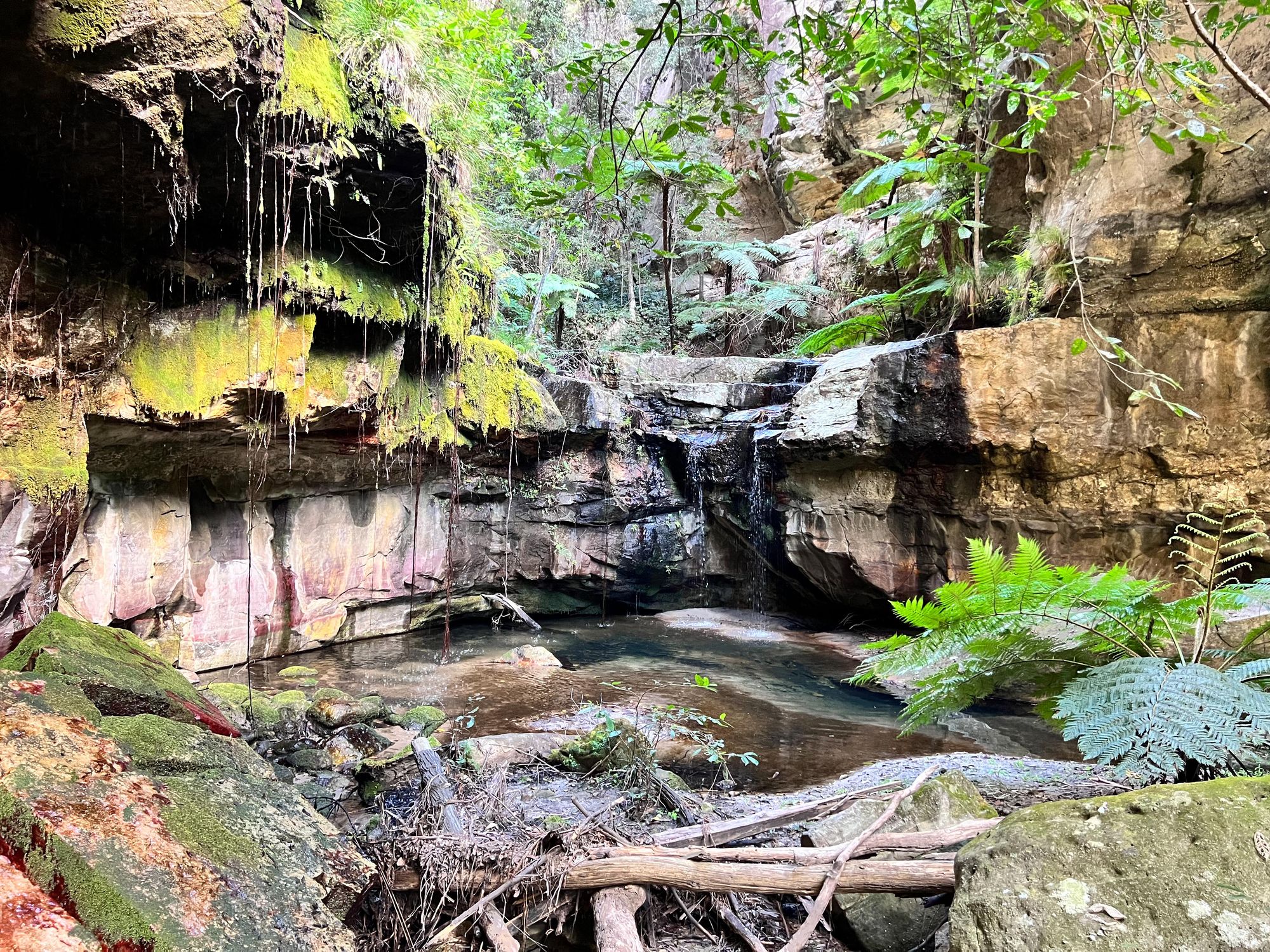
Moss Garden in Carnarvon National Park, Queensland. Location: Southern Brigalow Belt bioregion in the Maranoa Region in Central Queensland. Photographer: Rafael Ben-Ari. Source: Getty Images. Used under licence.

Activity 2: Ways sites of significance are protected
Focus: Students will consider how Aboriginal and Torres Strait Islander Peoples have always protected Country through cultural knowledge, storytelling, and land management, and how these approaches work alongside (or outside of) government protections.
Students will explore Indigenous-led and legal protections for sites of significance, with a focus on Indigenous Cultural and Intellectual Property (ICIP), Native Title, National Parks, co-management, and Indigenous-led conservation efforts such as ranger programs.
Possible overarching question: How do Aboriginal and Torres Strait Islander Peoples protect sites of significance, and how does this compare to legal protections?
Step by step guide
Step 1: Connecting to students’ prior learning
Step 2: Introduction and Knowledge Building Walk
Step 3: Reflection and Sharing
Required Resources:
Teacher Support Material
Knowledge Building Walk Materials (setup prior to lesson)
Sites of significance quiz
Step 1: Connecting to students’ prior learning
Begin with a recap from the previous lesson using the following questions and recording student responses on a board.
What makes a site significant?
Why do these places need protection?
What challenges do these sites face?
Introduce the idea that Aboriginal and Torres Strait Islander Peoples have always protected Country, even before formal legal protections existed.
Display the quote
"The Australian government’s recognition of these ancient knowledge systems and environmental conservation and management practices has led to greater awareness of the need to involve Indigenous people in protecting our natural resources." Marcia Langton (2018)
Ask students:
What does this quote tell us about how Aboriginal and Torres Strait Islander Peoples have always protected sites? (Reinforces the idea that Indigenous people have always protected Country through knowledge and practice, even before legal systems existed.)
Why do you think governments have only recently recognised Indigenous Knowledge in protecting Country? (Helps students understand the impact of colonisation and the shift toward recognising Indigenous management.)
Step 2: Introduction and Knowledge Building Walk
Note: Using the provided materials, setup the Knowledge Building Walk stations prior to the lesson. The stations may include the following:
A summary of the method of protection
A link to a video or website for students to learn more (students will need devices to access these).
A guiding question for students to discuss.
Seven Knowledge Building Stations
Station 1: Indigenous Cultural and Intellectual Property (ICIP)
Station 2: Native Title
Station 3: Protection through Heritage Acts
Station 4: National Parks and Co-management
Station 5: UNESCO World Heritage Status
Station 6: Indigenous Protected Areas (IPAs)
Station 7: Caring for Country and Indigenous Rangers
Let students know that they will be exploring different ways that sites of significance are protected, including laws, Indigenous governance, and conservation efforts.
Possible questions to activate prior knowledge:
Who do you think should be responsible for protecting sites of significance? Why?
What do you already know about laws or policies that protect cultural sites?
Explain how the Knowledge Building Walk works:
Students will work in small groups and rotate through all stations.
They should read the description, watch the video (if available), and discuss the guiding question.
Each group will record key points in their workbook or you can setup paper and markers so students can record their responses to the questions (Graffiti Wall Thinking Routine).
Group students and provide enough time for active discussion and engagement with the material.
Step 3: Reflection and sharing
Whole class share: After all groups have visited each station, discuss:
Which protection methods seemed most effective?
Which ones had the biggest challenges?
What surprised you about these protection efforts?
It is important to discuss the following point with students:
Although there are ways to protect land and sites of significance, some Indigenous Peoples feel these legal processes do not give them full control over their land or the ability to manage it in their own way.
This will be explored in greater depth in Years 9 and 10 when students explore land rights.
Kahoot Quiz or Mentimeter Review: Explain to students to check their understanding, they will play a quick quiz using Kahoot or Mentimeter. The teacher support material provides possible questions that you can use.
Final Reflection: Ask students, which protection method they think is the most important and why. This could again be recorded as an exit ticket for assessing current understanding and any misconceptions.
Related activities within this resources:
Activity 1: What are sites of significance
This activity helps students explore what makes a site significant to Aboriginal and Torres Strait Islander Peoples and why these places should be protected. Through discussion, investigation, and reflection, students learn about different types of significant sites and how to engage with them respectfully. Using real-world examples and scenarios, they consider cultural protocols and the impact of actions on Country.
Activity 3: Carnarvon Gorge Case Study
Building on their understanding of sites of significance and how they are cared for, students now explore Carnarvon Gorge as a focused case study. Through note-taking, annotation, and engagement with resources, students investigate how the site is being managed and where improvements might be made. They reflect on the cultural and environmental importance of the site and consider respectful ways it can be protected and sustained into the future.
Activity 4: Exploring engagement - Case Studies in cultural preservation
Building on their investigation of Carnarvon Gorge and the importance of collaborative site management, students now explore a range of case studies across Australia that highlight different approaches to cultural preservation. Through research, discussions, analysis, and comparison tasks, students examine how individuals or groups and Traditional Owners work together to care for sites of significance. They reflect on the role of Indigenous Knowledge, co-management, and conservation strategies, considering both successes and challenges. This activity deepens students’ understanding of the complexities and responsibilities involved in protecting Country.
Activity 5: Future possibilities for Carnarvon George
In this final activity, students return to the Carnarvon Gorge case study and apply what they’ve learned about cultural site protection and collaboration with Traditional Owners. Drawing on insights from previous case studies, students propose strategies to enhance cultural preservation, Indigenous leadership, and environmental care. Through planning, creating, and sharing their proposals, students reflect on respectful and sustainable approaches to managing sites of significance.