Home/Curriculum resources/Protecting sites of significance/Activity 3: Carnarvon Gorge Case Study
Learning Area:
Humanities and Social Sciences
Year levels:
Level 7, Level 8
Activity 3: Carnarvon Gorge Case Study
This activity is a part of the Protecting sites of significance resource.
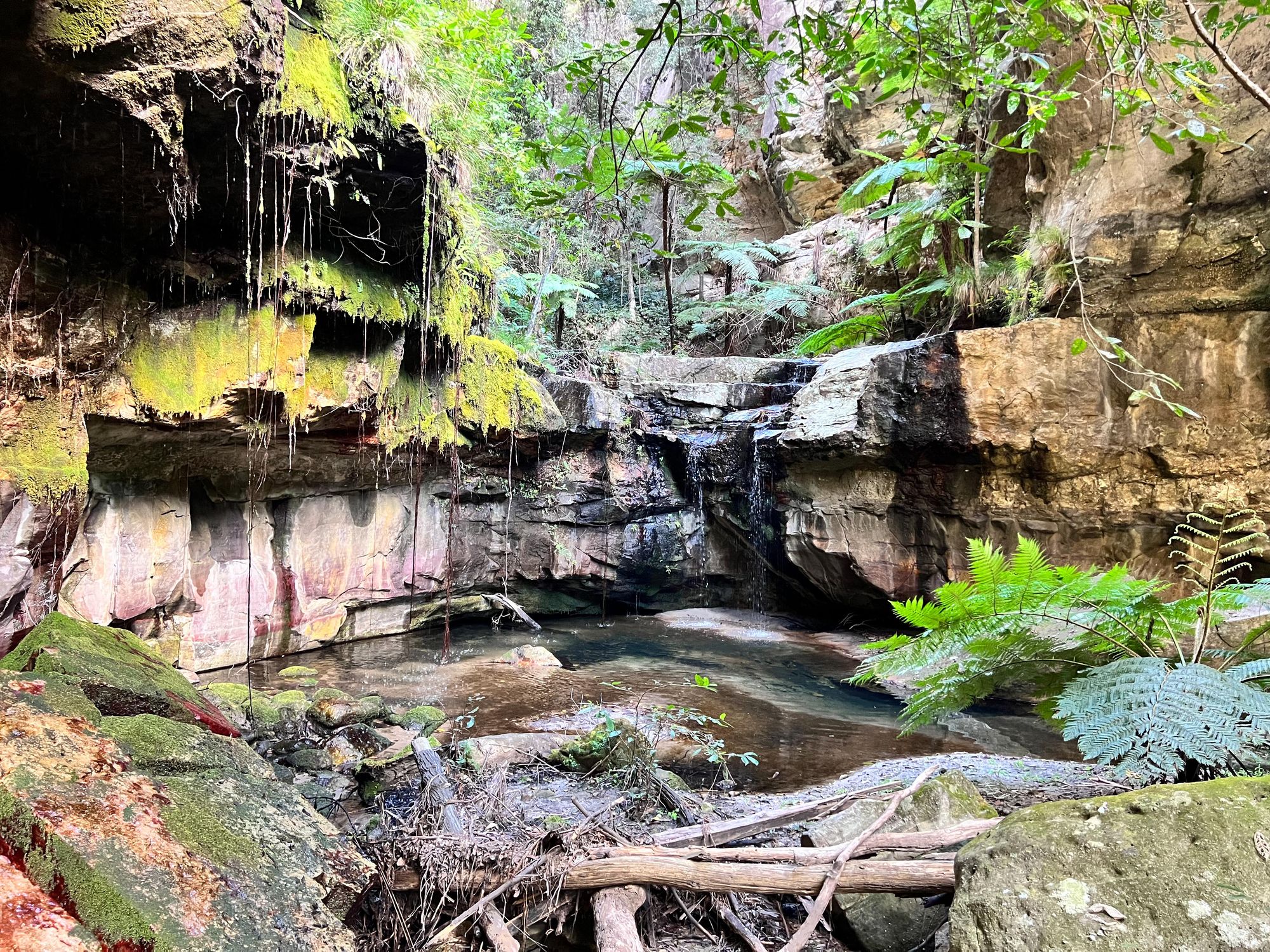
Moss Garden in Carnarvon National Park, Queensland. Location: Southern Brigalow Belt bioregion in the Maranoa Region in Central Queensland. Photographer: Rafael Ben-Ari. Source: Getty Images. Used under licence.

Activity 3: Carnarvon Gorge Case Study
Focus: This activity invites students to closely examine Carnarvon Gorge as a culturally and environmentally significant site. By investigating how it is currently managed, students consider how cultural values, conservation practices, and respectful engagement can work together to care for significant places.
Possible overarching question: What can Carnarvon Gorge teach us about the challenges and possibilities of caring for significant cultural and natural sites?
Step by step guide
Step 1: Connecting to students’ prior learning
Step 2: Carnarvon Gorge case study – Setting the scene
Step 3: Students explore the Carnarvon Gorge case study
Step 4: Reflection and sharing
Required Resources:
Teacher Support Material
Carnarvon Gorge student Case Study text
Carnarvon Gorge Student Research Card
Note taking Template (including exemplar)
SWOT Analysis Template (including exemplar)
Carnarvon Gorge Guided Annotation
Note-taking Quadrant Template
Note-taking Table Template
Exhibition Curation Student Card
Marking Country Website Guide
Step 1: Connecting to students’ prior learning
Begin the lesson by recapping the types of significant sites and how they can be managed and protected.
Follow-up from the final reflection in Activity 2, where students were asked to consider which protection method, they believe is the most important and why. Facilitate the following:
Stand by your choice: Invite students to move to different parts of the room based on the protection method they chose. Each area of the room represents one option.
Small group discussion: Students discuss their reasoning with others who chose the same method. Allow a few minutes for this. If some students are alone in their choice, group them together so everyone has someone to talk to.
Whole-class discussion: Facilitate a respectful discussion/debate where each group shares their reasons for choosing their method. Encourage active listening and thoughtful responses.
Changing minds: At key moments during the discussion, invite students to move to a different group if their opinion has changed. Ask them to explain what influenced their change of mind.
This activity helps students reflect deeply, consider different perspectives, and practice respectful dialogue and critical thinking.
Step 2: Carnarvon Gorge case study – Setting the scene
Introduce Carnarvon Gorge as a site of significance, setting the scene for students. A possible script has been provided in the Teacher Support Material.
Step 3: Students explore the Carnarvon Gorge case study
Now that students are familiar with Carnarvon Gorge as a site of cultural and environmental significance, they will undertake a deeper investigation using a range of resources provided. The goal is for students to develop a well-rounded understanding of how the site is currently being managed and where improvements could be made – preparing them to consider addressing these concerns within Activity 5.
You may choose to implement one or more of the following approaches depending on your time, student needs, or learning goals.
Possibilities for classroom implementation
Note-taking and SWOT Analysis | Provide students with the Note-taking template and accompanying exemplar to help them organise key information about Carnarvon Gorge. Once students have gathered background knowledge, they use the SWOT Analysis thinking routine (Strengths, Weaknesses, Opportunities, Threats) to identify: 1) Effective strategies currently in place 2) Challenges or concerns 3) Missed opportunities 4) Areas for future improvement |
Guided Annotation of the Case Study | Give students highlighters or coloured pens (or set up digital annotation tools). Ask them to read the Carnarvon Gorge Case Study and annotate the text using four different colours: 1) Types of Significant Sites located in Carnarvon National Park 2) Protection or conservation methods used 3) Problems or threats to the site 4) Examples of collaboration with Traditional Owners After annotation, lead a discussion or small group comparison of the different insights students observed in the text. |
Note-taking Four Quadrants or Table | Provide students with the 4-box grid or table that have the following headings: 1) Types of Significant Sites 2) Protection or conservation methods 3) Problems or threats to the site 4) Collaboration with Traditional Owners Students engage with the case study material and organise their notes in either template or create their own in a workbook. |
Exhibition Curation | Invite students to take on the role of a curator creating a mini exhibit about Carnarvon Gorge. Using information gathered from the case study materials, students select 3–4 key features to include in their exhibit. These should cover: 1) A significant site within Carnarvon Gorge 2) A protection or conservation effort 3) A problem or threat 4) An example of collaboration with Traditional Owners For each feature, students summarise what it is, why it’s important, and what message they want to communicate. This can be completed in writing, digitally or as a simple visual with labels or annotations. Exhibits can be shared in pairs or small groups. |
Exploration of the Marking Country website | Invite students to explore the interactive Marking Country: Walking deep history- Carnarvon Gorge website. Encourage students to pay close attention to: 1) The rock art gallery, including damage caused by infrastructure 2) Insights shared by Uncle Fred Conway and Professor Jackie Huggins 3) The different types of significant sites Students can use this exploration to supplement their notes, SWOT analysis, or reflections. |
Step 4: Reflection and sharing
Facilitate a class or small group discussion where students share key takeaways from their investigation.
Guide the class in co-creating a visual summary (e.g. poster, whiteboard chart, or digital mind map) using the following three focus areas:
What types of significant sites are present at Carnarvon Gorge? (e.g. rock art shelters, ceremonial areas, ecological zones)
What types of management and protection are currently in place? (e.g. ranger programs, infrastructure, advisory roles, visitor education)
What areas need improvement or further consideration? (e.g. co-management, fire management, consultation practices)
Let students know that their contributions to this summary will be important for Activity 5, when they revisit Carnarvon Gorge to develop informed proposals for protecting the site.
Related activities within this resources:
Activity 1: What are sites of significance
This activity helps students explore what makes a site significant to Aboriginal and Torres Strait Islander Peoples and why these places should be protected. Through discussion, investigation, and reflection, students learn about different types of significant sites and how to engage with them respectfully. Using real-world examples and scenarios, they consider cultural protocols and the impact of actions on Country.
Activity 2: Ways sites of significance are protected
Building on their understanding of what makes a site significant, this activity guides students to explore how Aboriginal and Torres Strait Islander Peoples have long protected Country through cultural knowledge, storytelling, and land management. Through a Knowledge Building Walk, students examine both Indigenous-led and legal protections, such as ranger programs, co-management, and Native Title, and reflect on their strengths and limitations. They compare these approaches and consider the ongoing role of Aboriginal and Torres Strait Islander Peoples in caring for Country.
Activity 4: Exploring engagement - Case Studies in cultural preservation
Building on their investigation of Carnarvon Gorge and the importance of collaborative site management, students now explore a range of case studies across Australia that highlight different approaches to cultural preservation. Through research, discussions, analysis, and comparison tasks, students examine how individuals or groups and Traditional Owners work together to care for sites of significance. They reflect on the role of Indigenous Knowledge, co-management, and conservation strategies, considering both successes and challenges. This activity deepens students’ understanding of the complexities and responsibilities involved in protecting Country.
Activity 5: Future possibilities for Carnarvon George
In this final activity, students return to the Carnarvon Gorge case study and apply what they’ve learned about cultural site protection and collaboration with Traditional Owners. Drawing on insights from previous case studies, students propose strategies to enhance cultural preservation, Indigenous leadership, and environmental care. Through planning, creating, and sharing their proposals, students reflect on respectful and sustainable approaches to managing sites of significance.