Home/Curriculum resources/Indigenous Ecological Knowledge and celestial objects/Case Study 1: The Celestial Emu
Learning Areas:
Science, English, Mathematics
Year levels:
Level 5, Level 6
Case Study 1: The Celestial Emu
This case study is a part of the Indigenous Ecological Knowledge and celestial objects resource.
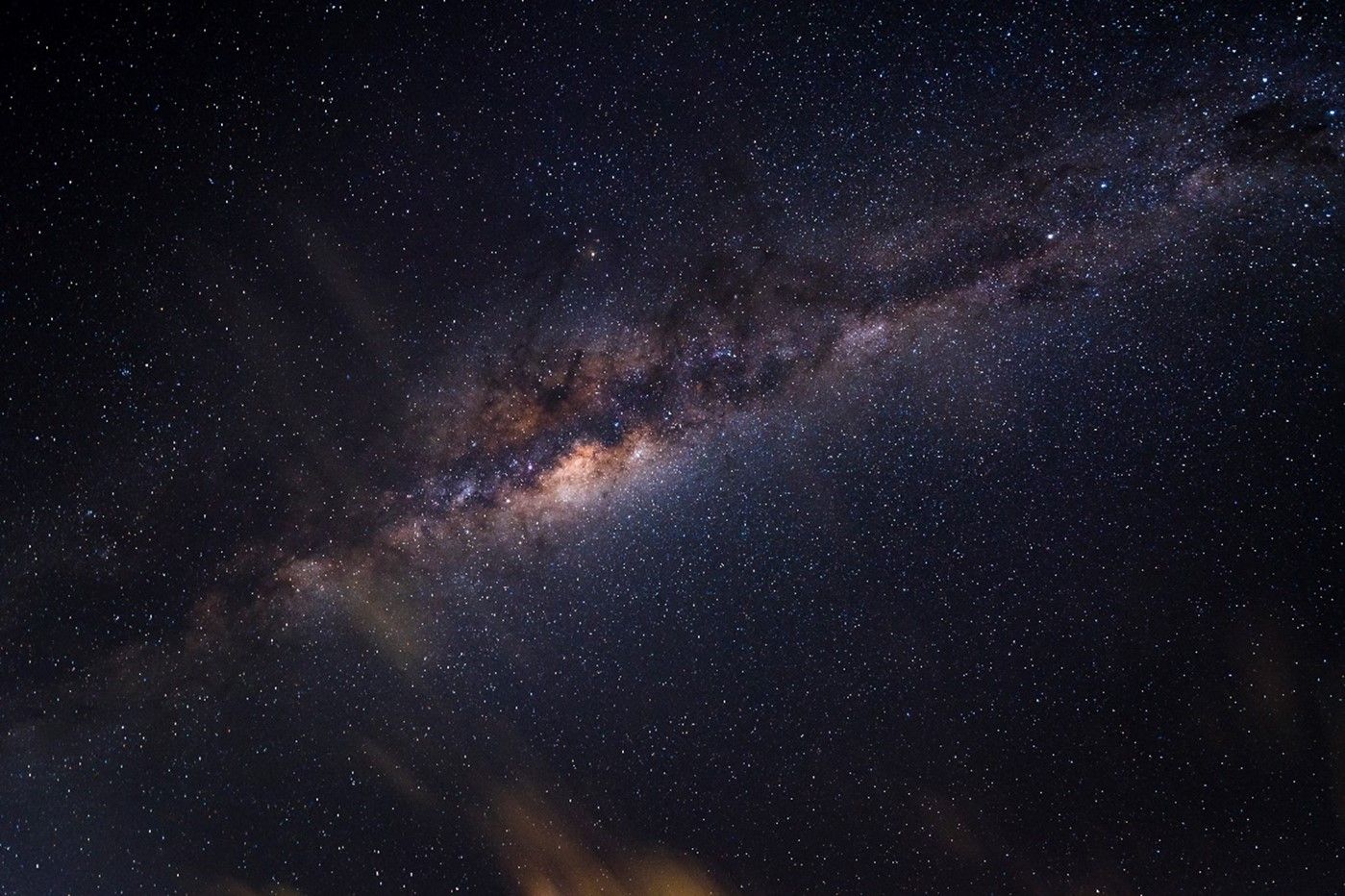
Stars at Night, Malmsbury, Dja Dja Wurrung country. Tiffany Garvie. Source: Ngarrngga. © Tiffany Garvie 2023. Used under licence

Case Study 1: The Celestial Emu (Dark constellations & stars; Emu behaviour breeding and eggs)
This case study on the Celestial Emu has been drawn primarily from the Kamilaroi and Euahlayi peoples from Northern NSW, and Wiradjuri Central NSW respectively. It is important to note that the Celestial Emu is a common and shared story between groups, often with slight differences.
The seasonal calendar relates to the changing orientation of the Celestial Emu (Gugurmin in Wiradjuri, Gawarrgrgy/Gawarghoo in Kamilaroi/Euahlayi) through the year, and its links to the breeding cycle of the terrestrial emu (Dhinawan).
Dark Constellations
Figure 1: Dark Constellations – a different way of viewing the sky
An alternate way of viewing the sky is through dark constellations, which means considering the dark spaces as much as the stars, constellations, planets and the Moon. This is how we come to view the Dark Emu, as a dark constellation. The dark spaces are considered as a constituent part of the constellation alongside dark nebulae (opaque clouds of dust and gas in outer space).
In Western conception, constellations are almost exclusively formed by connecting the light elements of the night sky together with imagined lines. Torres Strait Islander astronomy also connects light formations into constellations of human’s animals and objects, such as Tagai, the creator. Dark constellations require a high degree of clarity when viewing the sky, something that has been actively challenged by light pollution.
The Celestial Emu
Figure 2: Emu in the Sky
The Celestial Emu is an Aboriginal constellation shared by many communities across Australia. In Kamilaroi and Euahlayi traditions of northern New South Wales, the Celestial Emu is made up of the dark spaces in the Milky Way between the Coalsack Nebula (next to the Southern Cross) - which is the emu’s head – down to the body in the Western constellations of Scorpius and Sagittarius. The legs extend down through the constellations of Ophiuchus and Aquila (Fig. 3) 0 . The position of the emu in the sky after sunset throughout the year informs people about the bird’s behaviour, including when it lays eggs. The representation of the emu in the sky can change throughout the year, depending on where it is positioned in the sky at dusk 0 .
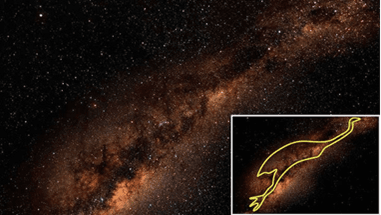
Figure 3: The Celestial Emu seen in the dark bands of the Milky Way. Image: Ray Norris, Barnaby Norris. Used with permission.
The Celestial Emu (called Gawarrgrgy in the Kamilaroi and Euahlayi languages) links to the breeding cycle of the terrestrial emu (called Dhinawan). When it rises in the sky at dusk in April and May (Fig. 4 – Section A), it signals the start of the emu breeding season. At this time, the Celestial Emu is perceived as a female running as she chases a male to mate. Once they mate, the male sits on the nest and incubates the eggs. This is the best time to harvest emu eggs for food.
In June and July, the Celestial Emu begins to shift so it appears horizontal high in the sky at dusk. By June, most eggs have chick embryos in them, so the people stop collecting them for food. At this time, the Celestial Emu is seen as a male sitting on the nest. Come August and September, the emu in the Milky Way is vertical to the horizon at dusk, with the emu’s head pointing downward. The people now see the male emu getting up from the nest as the chicks hatch, which the males then rear and care for. Later in the year, the Celestial Emu shifts around, and is seen sitting in waterholes in the sky.
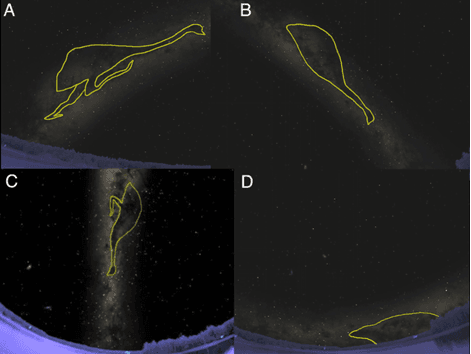
Figure 4: The Celestial Emu through the Year. Fuller, 2014. Source: Journal of Astronomical History and Heritage. Used with permission.
The changing perspective of the Celestial Emu through the year, each connected to a particular aspect of an overall dreaming narrative connected to the lifecycle of the terrestrial emu and its link to ceremony. (A) April-May, when the female terrestrial emu chase males and pairing up for mating. (B) June-July, when the male emus are sitting on the nest. (C) August, when the chicks begin hatching. (D) October-November, when it is seen ‘sitting in the billabong’ encouraging the summer rains. Image: Ghillar Michael Anderson and Robert Fuller (Journal of Astronomical History and Heritage), reproduced with permission.
Related case studies within this resources:
Case Study 2: The Seven Sisters (The Pleiades)
The Seven Sisters (Pleiades) star cluster is used by different Aboriginal groups across Australia to track seasonal changes, including whale migration along the East Coast, the dingo breeding cycle in the Central Desert, the onset of winter frosts in Pitjantjatjara Country, and the best time to find emu eggs among the Yamaji people.
Case Study 3: Torres Strait Islander Star Knowledge: Baidam the Shark
Torres Strait Islander star knowledge, such as Baidam the Shark, demonstrates how Torres Strait Islander Peoples observe celestial objects to interpret seasonal changes, weather patterns, and the behaviours of living things, guiding practices like harvesting, planting, and animal breeding.
Case Study 4: Kulama Festival, Tiwi Island
The Kulama Festival is a three-day coming-of-age ceremony on the Tiwi Islands, signalled by halos around the Moon, which mark the end of the monsoon season and the start of yam harvesting.
Case Study 5: Yolngu / North-East Arnhem Land Star Knowledge
Yirrkala people of East Arnhem Land in the Northern Territory share a complex foreknowledge of environmental changes, they note the correlation between the rising and setting of stars at dusk and dawn and how it relates to the seasonal supply of food.
Case Study 6: The Boorong People
The Boorong tribe was a part of the Wergaia speakers of northwest Victoria alongside the Wotjobaluk, and Dja Dja Wurrung peoples within the Kulin Nation who share this language.