Home/Curriculum resources/Indigenous Ecological Knowledge and severe weather events/Activity 4: Reflection and discussion
Learning Areas:
Science, Humanities and Social Sciences, English
Year levels:
Level 5, Level 6
Activity 4: Reflection and discussion
This activity is a part of the Indigenous Ecological Knowledge and severe weather events resource.
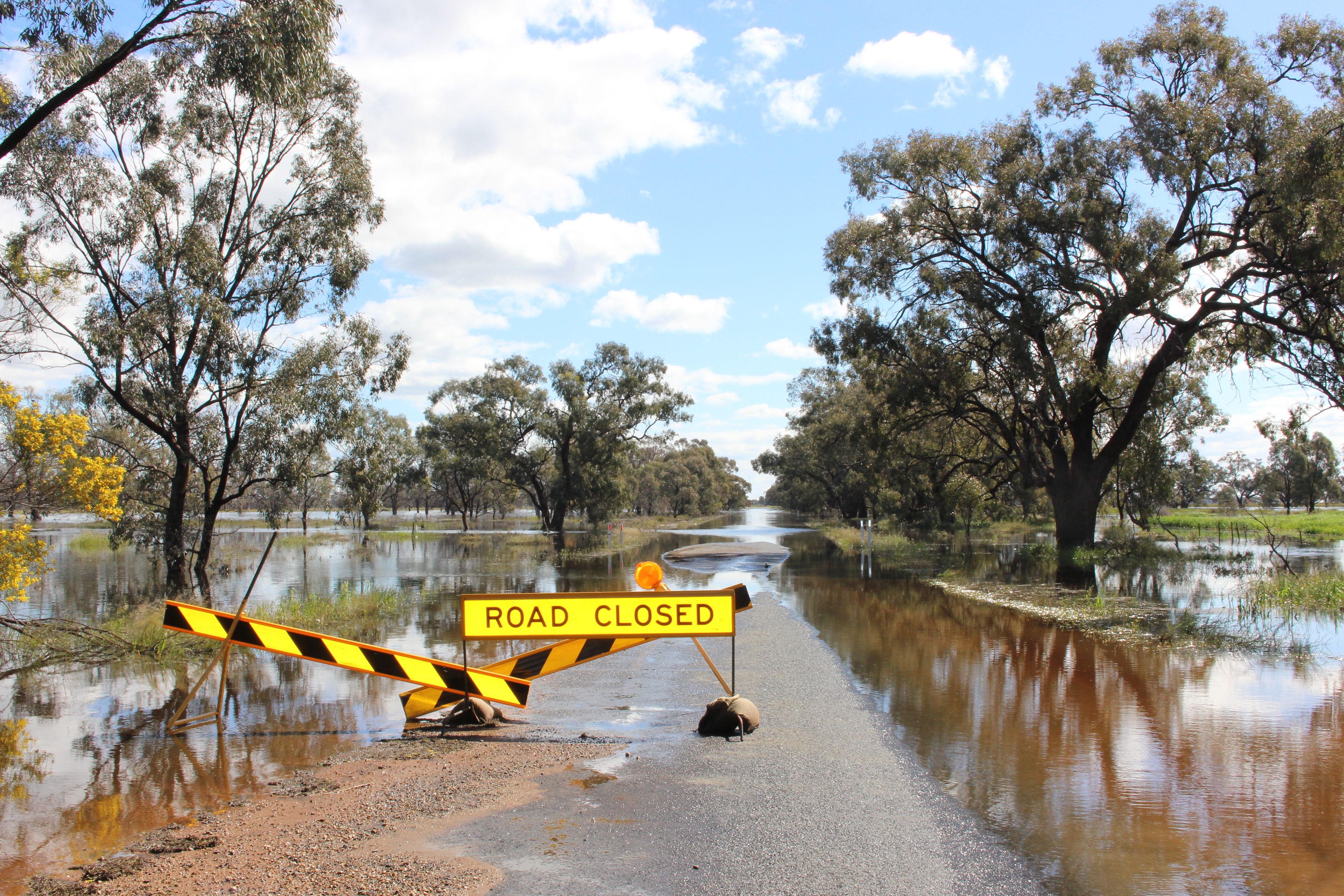
Road Flooded at Condobolin, New South Wales. Photographer: Theo Clark. Source: Getty Images. Used under Licence.

Activity 4: Reflection and discussion
Focus: Students consolidate their learning by reflecting on how Aboriginal and Torres Strait Islander Peoples learn from Country to understand, prepare for, and respond to severe weather events, and how this knowledge builds community resilience today.
Possible overarching question: What can Country teach us and how can this knowledge keep communities safe today and in the future?
Step by step guide
Step 1: Turn and Talk
Step 2: Looking Back, Looking Forward Thinking Routine
Required Resources
Large pieces of paper
Sticky notes
Step 1: Turn and talk
After engaging with the case studies in Activity 3, students reflect on their learning together as a group. Ask the prompting questions below and students briefly ‘turn and talk’ with a partner to share their ideas, compare observations, and clarify their thinking.
What is something new you learned about the severe weather event you researched?
How did the case study help you understand how Aboriginal and Torres Strait Islander Communities respond to this type of severe weather event?
How can listening to Country help us care for the environment and our communities today?
Step 2: ‘Looking Back, Looking Forward’ thinking routine
Set out three large pieces of paper, labelled looking back, looking inward and looking forward. Give students some sticky notes.
Write the following on the pieces of paper:
Page 1: Looking back: What have I learned about severe weather events and how Aboriginal and Torres Strait Islander Peoples use Traditional Ecological Knowledge to understand and prepare for it? What did I learn about Country as Teacher?
Page 2: Looking inward: How did I learn it? What helped me most? How has my understanding changed?
Page 3: Looking forward? What do I want to keep exploring or do next time? How can I continue to learn from Country? How might this knowledge help communities in the future?
Invite students to consider their answers for each of the three categories, record them on a sticky note, and place them on the corresponding piece of paper.
Students can share in pairs, small groups, or with the class. You might use a ‘gallery walk’ where students walk around, reading each other's responses independently. Highlight a few student reflections (with permission) and affirm importance of recognising growth and setting future intentions.
Related activities within this resources:
Activity 1: Connecting with prior learning about Country/Place
The purpose of this activity is to provide students with an opportunity to connect with prior learning about Country/Place. Through shared texts, images, and a Yarning Circle, students reflect on their own knowledge and experiences, while also listening to others. This activity connects with prior, highlights growth in understanding, and sparks curiosity for the next stage of the unit on Country as teacher.
Activity 2: Traditional Ecological Knowledge is scientific knowledge
This is a short provocation and discussion about what is considered scientific knowledge. It aims to broaden students’ perspectives and encourage them to think beyond a Western lens - considering how science builds on different ways of knowing, including the role of Indigenous Ecological Knowledge in contemporary scientific understandings. This discussion leads into the next activity: Country as Teacher.
Activity 3: Country as teacher and severe weather events
This activity is an opportunity for students to explore examples of Country as Teacher by learning about Indigenous Ecological Knowledge around severe weather events including cyclones, floods, monsoons, bushfires, tsunamis and drought. Students work in groups to explore one case study about Indigenous Ecological Knowledge around a particular severe weather event. They then come together to share their findings, building a collective understanding of how Aboriginal and Torres Strait Islander Peoples observe, prepare for, and respond to natural hazards.