Home/Curriculum resources/Indigenous Ecological Knowledge and severe weather events/Activity 1: Connecting with prior learning about Country/Place
Learning Areas:
Science, Humanities and Social Sciences, English
Year levels:
Level 5, Level 6
Activity 1: Connecting with prior learning about Country/Place
This activity is a part of the Indigenous Ecological Knowledge and severe weather events resource.
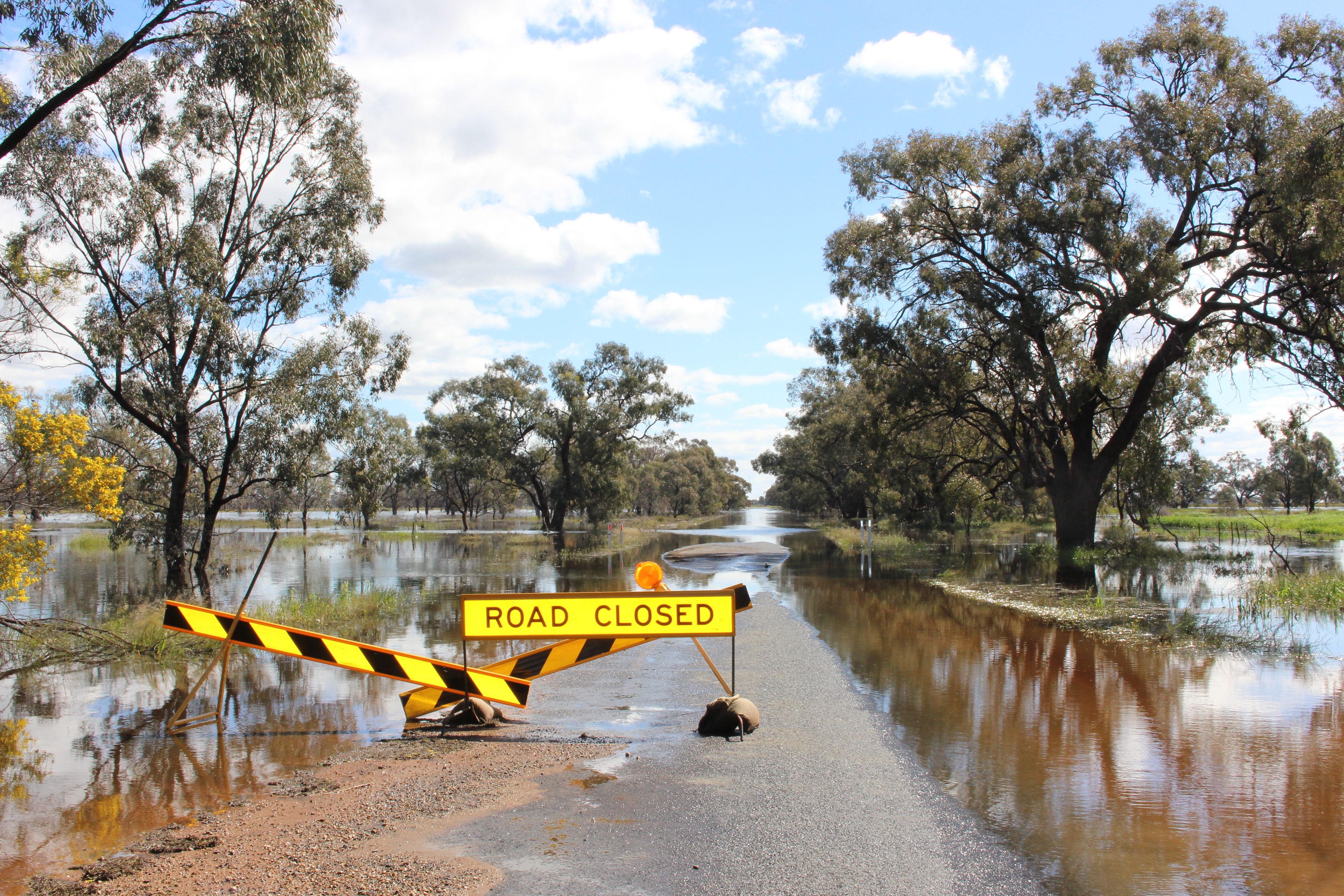
Road Flooded at Condobolin, New South Wales. Photographer: Theo Clark. Source: Getty Images. Used under Licence.

Activity 1: Connecting with prior knowledge about Country/ Place
Focus: Explore students’ current ideas and understandings about Country/ Place to build a starting point for introducing the concept of Country as Teacher.
Possible overarching question: What do we already know and what do we need to learn about Aboriginal and Torres Strait Islander Peoples’ connection to Country and Place?
Step by step guide:
Step 1: Shared text
Step 2: Yarning circle
Step 3: ‘Connect, Extend, Challenge’ visible thinking routine
Required Resources
Book or video clip (options listed in Step 1)
Country and Place images
AITSIS map (printed or shown on a screen for students to see)
Connect, Extend, Wonder thinking routine template
Step 1: Shared Text
Begin by reading a picture book or watching a short video on Country/Place. Here are some options:
Book: Welcome to Country by Aunty Joy Murphy and Lisa Kennedy (particularly relevant to those on Wurundjeri Country).
Book: Wiradjuri Country by Larry Brandy (particularly relevant to those on Wiradjuri Country)
Book: My Country by Ezekiel Kwaymullina and Sally Morgan (particularly relevant to those on Palkyu Country)
Book: Country by Aunty Fae Muir and Sue Lawson, illustrations by Cheryl Davison
Video: Connection To Country - Why is it important to Aboriginal and Torres Strait Islander people? By Evolve Communities (1.14 minutes)
Video: The beautiful connection between people and Country | Back To Nature, ABC iView (5.43 minutes)
Step 2: Yarning Circle
In a Yarning Circle, learning is supported through observation, listening and participation in the discussion. The aim is to create a space to share understandings of Country/Place and for students to speak without interruption.
In some yarning circles, a wooden stick or object is held by one speaker at a time. It is returned to the centre of the circle to signify the end of a speaker’s contribution 0 . Sitting in a circle fosters eye contact, shared focus, and equal participation, helping children develop awareness of others and build shared understanding.
Begin with students seated in a circle and place some of the following items in the centre to stimulate ideas for discussion around Country and Place:
The printed Connection to Country and Place images
The AIATSIS map (either printed or projected onto a screen for students to see)
The picture book used in Step 1
Natural items found in your local area can also be included here, for example leaves and flowers.
Optional: play a soundscape of wildlife sounds (preferably of your local area, if available)
Explain the expectations of the Yarning circle: equal participation, respectful listening and curiosity.
Model by choosing an item from the centre first and sharing a short reflective comment to set the tone. Students then choose an item and share what it might tell us about what Country/Place means and connection to Country/Place.
If discussion needs prompting, questions to ask include:
What do you notice first when you look at this image/item?
How might this image/item relate to Country and Place and show people’s connection to Country and Place?
How do these images/ items relate to different parts of Country – land, water and sky?
Do any of the items in the circle remind you or places in your own life?
What questions does this image/item make you wonder about Country and Place and Aboriginal and Torres Strait Islanders’ connections to it?
Step 3: ‘Connect, Extend, Wonder’ thinking routine
After the Yarning Circle, invite students to pause and reflect individually on what they heard and shared. This routine helps them notice connections to their prior knowledge, recognise how their thinking has grown, and identify questions that remain.
Students could use the ‘Connect, Extend, Wonder’ template, or complete the activity in their books.
Connect: students reflect on how the images, natural items, books, or peers’ ideas connect with what they already know about Country and Place - ‘what connections can you make to your own experiences of things you know about Country and Place?’
Extend: students consider how their understanding has been extended or deepened by listening to others in the Yarning Circle - ‘what ideas or perspectives did you hear that added to your understanding of Country and Place?’
Wonder: students identify what questions they now have – ‘what is something you now wonder about?’
Please note, this thinking routine will be referred back to in Activity 2 and can also be used for reflection in Activity 4.
Related activities within this resources:
Activity 2: Traditional Ecological Knowledge is scientific knowledge
This is a short provocation and discussion about what is considered scientific knowledge. It aims to broaden students’ perspectives and encourage them to think beyond a Western lens - considering how science builds on different ways of knowing, including the role of Indigenous Ecological Knowledge in contemporary scientific understandings. This discussion leads into the next activity: Country as Teacher.
Activity 3: Country as teacher and severe weather events
This activity is an opportunity for students to explore examples of Country as Teacher by learning about Indigenous Ecological Knowledge around severe weather events including cyclones, floods, monsoons, bushfires, tsunamis and drought. Students work in groups to explore one case study about Indigenous Ecological Knowledge around a particular severe weather event. They then come together to share their findings, building a collective understanding of how Aboriginal and Torres Strait Islander Peoples observe, prepare for, and respond to natural hazards.
Activity 4: Reflection and discussion
In this activity, students reflect on how Indigenous Ecological Knowledge enriches our scientific understanding and supports community resilience in the context of severe weather events.