Home/Stories and news/Reframe to Repair: Ngarrngga’s Call for Relational Education Grounded in Indigenous Knowing
Reframe to Repair: Ngarrngga’s Call for Relational Education Grounded in Indigenous Knowing
Professor Melitta Hogarth
Professor Melitta Hogarth is a Kamilaroi woman and the Director of Ngarrngga. She is Professor of Indigenous Ed...
Ngarrngga’s latest paper marks a special milestone: it is Glen Hayres’ first peer‑reviewed publication and was led by emerging researchers Glen Hayres and Sara Tajima. Associate Professor Abbey MacDonald and myself are genuinely excited to have collaborated with them, having witnessed the depth of thinking, careful reflection and sustained commitment that shaped this contribution. In this blog, I introduce some of the key themes and ideas explored in the paper.
Reframing relationality’s boundaries: engagement with Indigenous relationalities towards reparative praxis in education
Ngarrngga’s new paper, Reframing relationality’s boundaries: engagement with Indigenous relationalities towards reparative praxis in education, issues a timely challenge. If education is to move beyond polite inclusion and towards genuine repair, relationality must be reimagined not as a technique but as an ethical way of being grounded in Indigenous onto‑epistemologies.
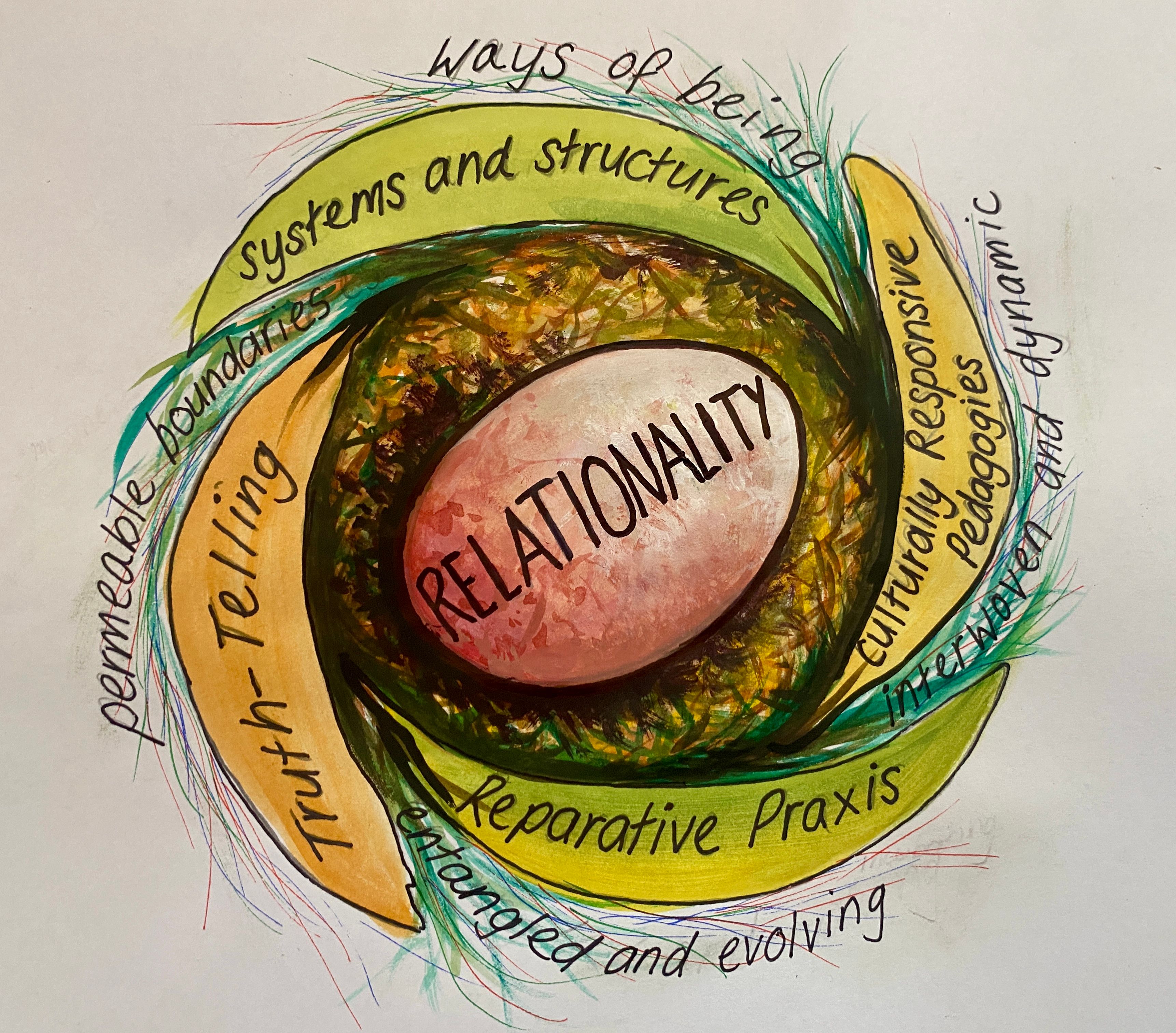
To do so, we explored and unpacked three principles that inform our work in relation to showcasing Indigenous knowledge.
Relationality here means more than friendly classroom relationships or better teacher–student rapport. We ask you to think about relationships as the foundations of how knowledge, responsibilities and belonging are formed. Grounded in Indigenous ways of knowing, relationality becomes an ethical anchor for truth‑telling, accountability and long‑term repair.
Reparative praxis is set apart from culturally responsive teaching and restorative practices. While those approaches have value, reparative praxis focuses on historical and structural injustice; it asks institutions to do the slow, often uncomfortable work of changing how power, authority and knowledge are organised. This is not quick work. It requires sustained attention across emotional, practical and systemic levels so that colonial logics can be unpacked and new relationships can form.
Truth‑telling, therefore, is not a one‑off apology. It is an active, relational process that must be accompanied by mechanisms that honour the voices of marginalised communities, enable collective grieving and change institutional obligations. Without accountability, truth‑telling risks becoming symbolic rather than transformative.
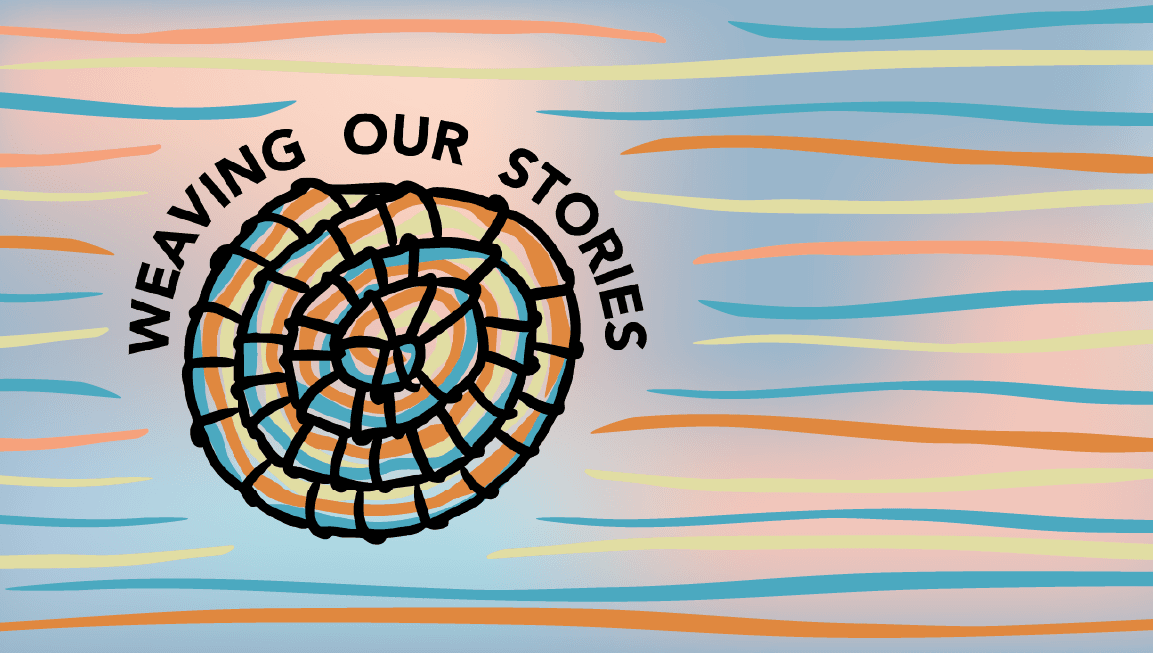
Image developed by Glen Hayres and drawn by Associate Professor Abbey MacDonald.
In doing so, we identified and highlighted a real danger: when relational language is taken up without Indigenous grounding, it can be depoliticised and stripped of its power.
Exploring this threat further, we identify three patterns in scholarship and practice — absence, exclusion and critical engagement — that help us see where work runs shallow and where it might run deep. These patterns act as a practical diagnostic for educators and leaders who want to do better.
Policy and professional standards often translate relationality into competencies or discrete programs, which fragments its meaning and severs it from responsibilities to Country, kin and more‑than‑human relations. The paper names three structural barriers to deep transformation: short institutional timelines, epistemic gatekeeping that sidelines Indigenous knowledge, and institutional control over decision‑making.
We proffer Ngarrngga as an example of Indigenous‑led practice that centres living, place‑based knowledge and treats relationship as a way of being.
In doing so, we are clear to acknowledge that Ngarrngga is not a finished model to be copied but a site of ongoing work that faces real tensions: scaling responsibly, protecting Indigenous leadership, and resisting performative metrics.
In short, the paper calls educators and system leaders to shift orientation — to redistribute authority, accept unrushed timelines and build mechanisms for communities to hold institutions accountable. For non‑Indigenous practitioners, the work is ethical as much as technical: speak differently, listen accountably, and accept correction as part of repair.
Repair in education is not a program to be delivered. It is a reorientation of relationships and obligations that must be resourced, protected and sustained across generations. We hope this paper offers clarity and a practical honesty that can help guide that long, necessary journey.
Read Reframing relationality’s boundaries: engagement with Indigenous relationalities towards reparative praxis in education here: https://www.frontiersin.org/journals/education/articles/10.3389/feduc.2026.1879998/fullhttps://www.frontiersin.org/journals/education/articles/10.3389/feduc.2026.1879998/full