Home/Stories and news/The Living Classroom: Connecting Curriculum, Country, Culture and Community

The Living Classroom: Connecting Curriculum, Country, Culture and Community
Transforming school environments into meaningful spaces for applied learning, Indigenous knowledge sharing and environmental responsibility.
What if the school grounds were more than a place to play or a landscape to maintain? What if they became an extension of the classroom, where curriculum comes to life, cultural knowledge is shared, and students develop a deeper connection to Country, community and their own learning?
The Living Classroom offers an opportunity to rethink how and where education happens. By transforming underutilised school environments into purposeful learning spaces, schools can connect curriculum knowledge with practical application, authentic cultural engagement and environmental responsibility.
Led by educator Anthea Rafferty through GreenPrint Projects, this approach positions school gardens as dynamic educational environments where students learn through action, observation, curiosity and collaboration. Its significance extends beyond environmental education, offering a meaningful framework for embedding Aboriginal and Torres Strait Islander Knowledges within Australian education and recognising Traditional Owners as knowledge holders.
Rethinking the Educational Environment
After more than a decade as a creative arts educator, Anthea Rafferty began reflecting on how conventional classroom environments could better support diverse learners and strengthen connections between curriculum and Aboriginal and Torres Strait Islander students.
As curriculum and study designs evolved, opportunities emerged to build authentic relationships with local Traditional Owners and integrate cultural knowledge into everyday teaching and learning.
This prompted a shift in practice: moving beyond teaching about culture towards creating opportunities for cultural knowledge to be shared through open dialogue and lived experience.
The Living Classroom developed from this commitment to reconsider both how students learn and where learning takes place. By extending the classroom into the school grounds, students could engage with curriculum through practical activities, sensory experiences and real-world challenges.
For Anthea, this meant creating spaces for deep listening, honest conversations and respectful questions, while acknowledging that meaningful cultural sharing requires humility, trust and a willingness to continue learning.
The intention was not to replace existing curriculum, but to enrich it through applied learning that supports diverse capabilities, interests and learning styles. Starting with small projects and building relationships with colleagues enabled the approach to develop across subject areas, connecting curriculum planning with authentic, interdisciplinary experiences.
An edible garden extends the Living Classroom into Food Studies, where students harvest and cook with native and culturally significant plants. This connects Indigenous knowledge with sustainable food practices, agriculture and food systems, providing a tangible and ongoing way for students to explore food through cultural, environmental and practical perspectives.
Learning Through Country: The Six Seasons Garden
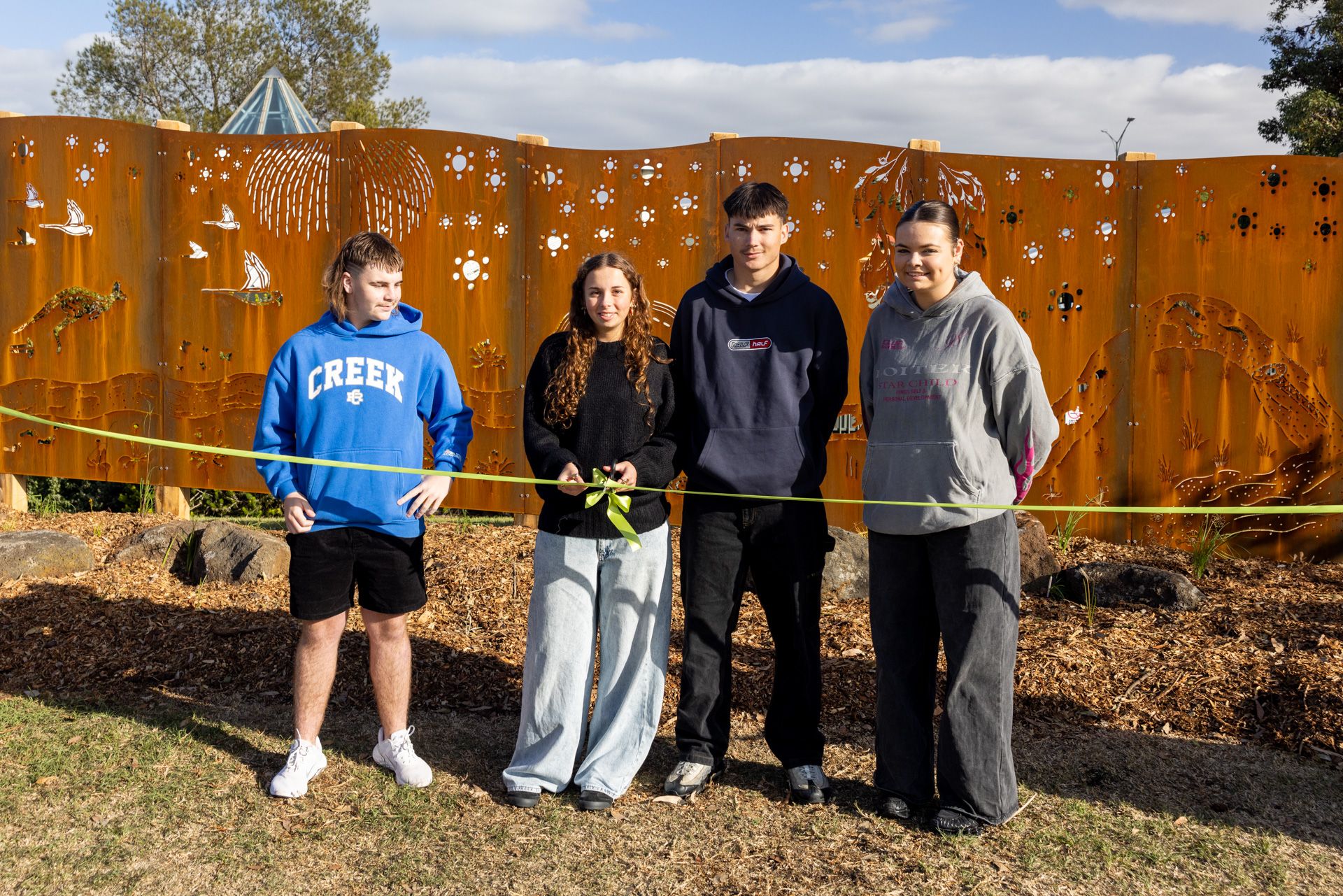
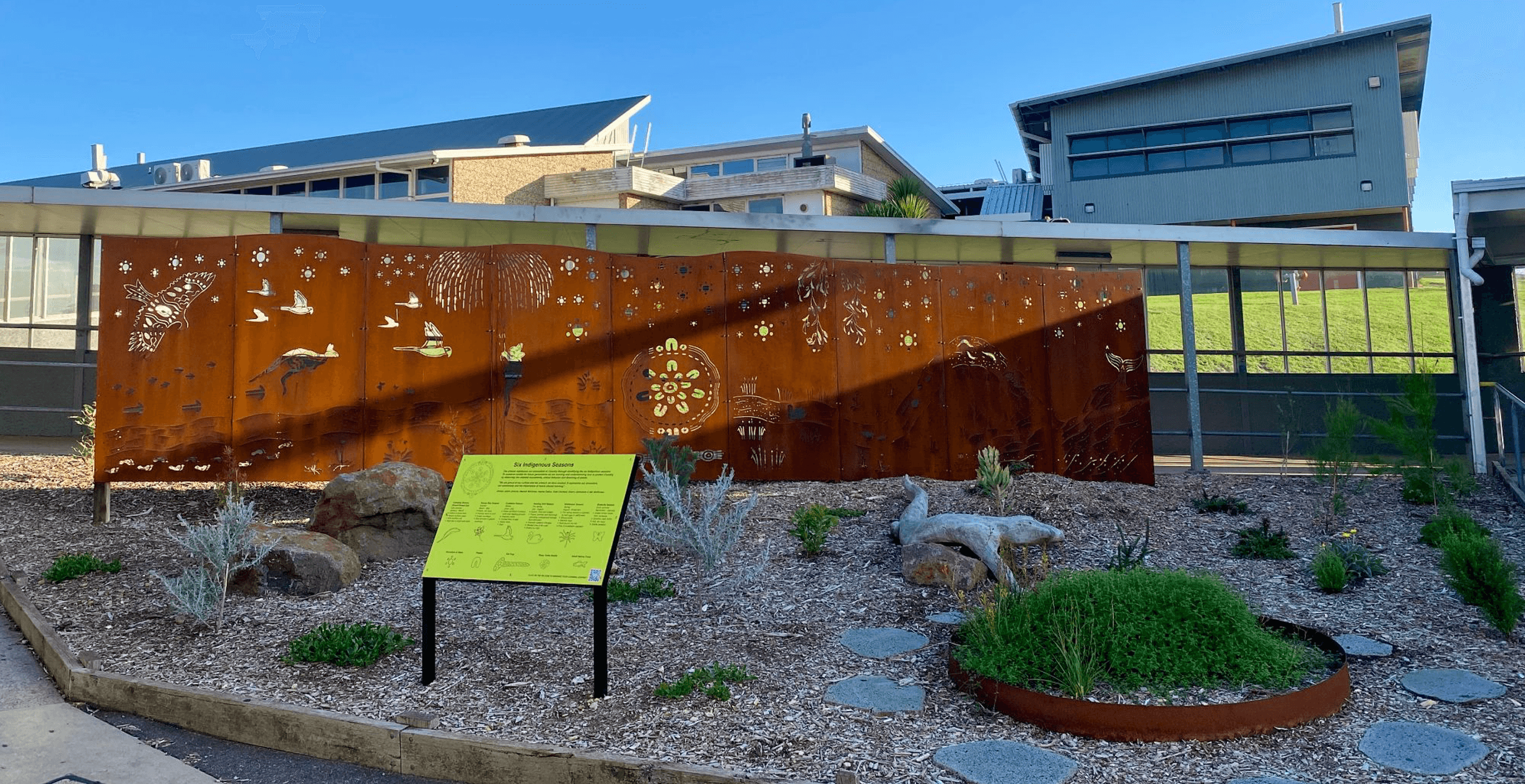
A significant development at Warrnambool College was the creation of an Indigenous Garden incorporating a nine-panel Corten steel artwork depicting the Six Seasons.
As the Eastern Maar Country Plan explains: “The seasons are guided not by dates but by what was happening in the surrounding environment.”
This perspective invites students to consider seasonal change through ecological indicators, including plant growth, animal behaviour and environmental conditions, rather than relying exclusively on standardised calendars.
Through a partnership with Sherry Johnstone, a proud Keerray Woorroong and Yorta Yorta artist, and Mel Steffensen, a proud Peek Whurrong/Wadawurrung woman, four Indigenous students participated in workshops that informed the development of the artwork.
The collaborative process positioned students as active contributors to the interpretation and representation of Country. The completed artwork provides a lasting educational resource, creating an accessible space for ongoing learning about Country, culture, seasonal knowledge and the relationships between people and place.
Applied Learning and Student Inclusion
The development of the Indigenous Garden also demonstrated how applied learning can support student participation, confidence and belonging.
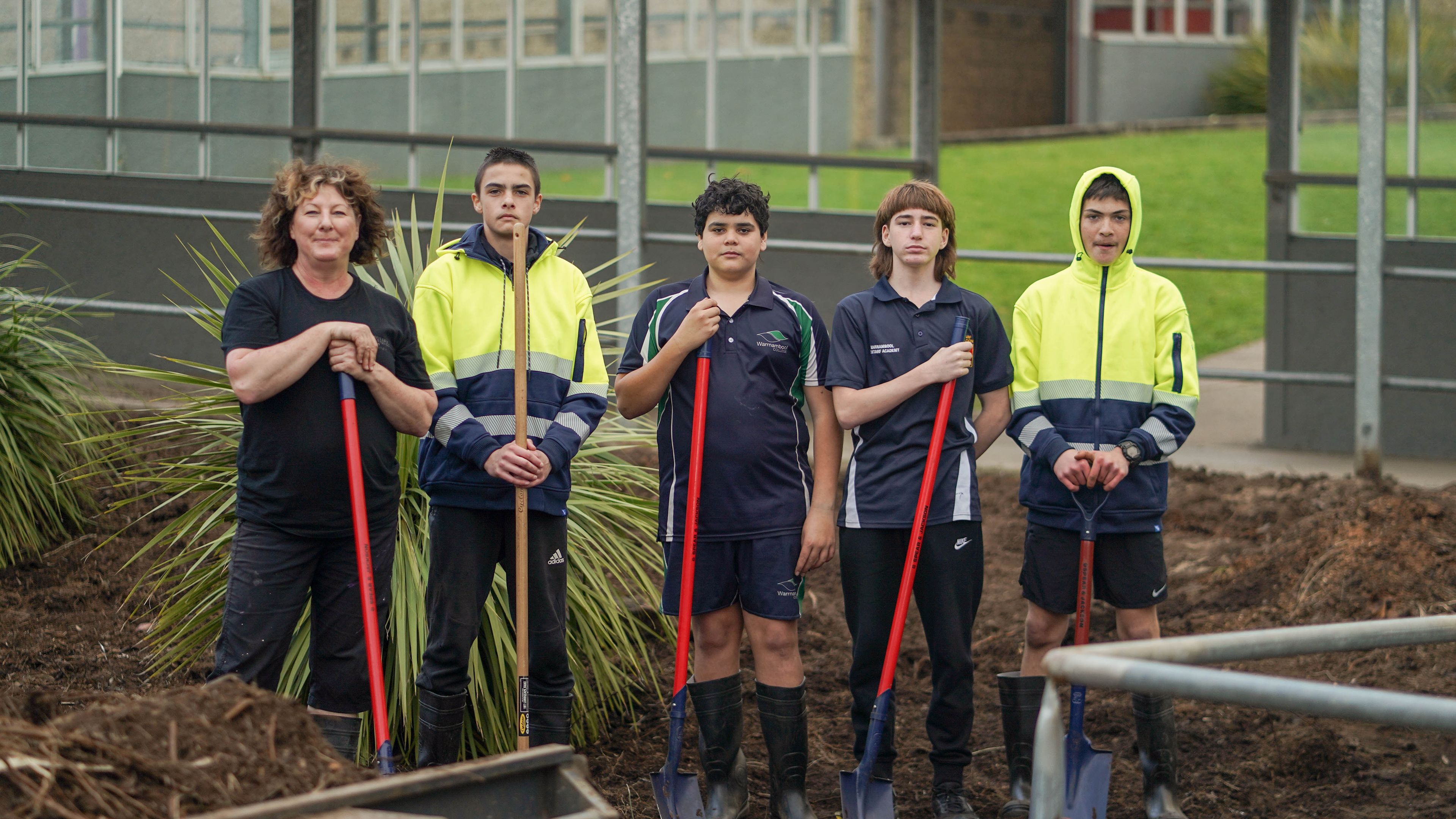
Clontarf students undertook site preparation and garden development, engaging in practical tasks and meaningful responsibilities that contributed to a shared outcome. Their involvement provided opportunities to develop skills, exercise agency and take pride in their contribution to the school community.
Anthea observed improvements in attendance among participating students, including students progressing from half-day garden sessions to full school days. While individual experiences cannot establish a universal relationship between garden-based learning and attendance, they illustrate the potential of purposeful learning environments to support renewed engagement.
These experiences highlight an important principle: inclusion involves more than providing access to existing educational structures. It requires environments that recognise diverse capabilities and provide meaningful opportunities for students to contribute, demonstrate their strengths and develop ownership of their learning.
When learning has a tangible purpose, students can see the relationship between their efforts and the outcomes they help create.
From School Gardens to Whole-School Learning
The Hawkesdale P–12 College ‘Eco Track’, developed in 2026, demonstrates how Living Classroom principles can be applied across a whole-school setting.
Through collaboration between GreenPrint Projects, students, educators, environmental practitioners and industry partners, the project incorporated 452 native plants, habitat creation through nesting boxes, Indigenous led cultural mapping and student leadership.
Students engaged with diverse ecological systems, applying their learning to authentic environmental challenges, including plant selection, fire-resilient garden design, habitat creation and the cultural and culinary uses of bush tucker plants. Integrating local cultural knowledge deepened connections to Country and community, fostering a shared understanding of environmental stewardship.
The educational significance lies not simply in the completed landscape, but in the learning processes through which it was developed. Students considered different perspectives, tested ideas, solved problems and evaluated outcomes.
The Eco Track demonstrates how collaboration between schools, Traditional Owners, community organisations and environmental practitioners can extend learning beyond the conventional classroom, connecting curriculum with meaningful, place-based action and environmental stewardship.
Interdisciplinary Learning and Assessment
Living Classrooms align with the STEAM framework, integrating Science, Technology, Engineering, Arts and Mathematics through applied, place-based learning. Students apply mathematical concepts to site measurement, scientific inquiry to biodiversity monitoring, engineering principles to habitat design, digital technologies to mapping and filmmaking, and artistic processes to communicate cultural knowledge and map making.
The garden incorporates native plant species that students can harvest and use in Food Studies, providing opportunities to explore their traditional culinary and medicinal applications. By engaging the senses through taste, touch, smell and observation, students connect cultural and ecological knowledge with practical experience, transforming abstract concepts into tangible, meaningful education.
These connections allow curriculum disciplines to operate together, supporting deeper understanding through authentic application. They also provide teachers with opportunities to gather evidence of student learning for assessment through observation, practical demonstration, discussion, design development and reflection.
The Living Classroom therefore does not diminish academic rigour. It provides additional contexts in which students can apply, deepen and communicate their learning.
Living Classrooms as Places of Cultural Learning
Meaningful inclusion of Indigenous knowledges is grounded in respectful relationships, cultural authority and a willingness to learn. When Traditional Owners are engaged as partners, schools can create learning that reflects local knowledge, place and community.
Living Classrooms provide a tangible setting for this approach, enabling students to learn through Country, practical experience and cultural exchange. This shifts Indigenous perspectives from curriculum content to lived, place-based learning.
Contributor Bio
Anthea Rafferty, GreenPrint Projects Executive Officer Educator, gardening specialist and creative artist
Anthea is a dedicated educator and creative leader with over a decade of experience teaching the arts in secondary schools. She is passionate about fostering environmental awareness and creative engagement through strong school and community partnerships.
GreenPrint Projects grew from Anthea’s vision to connect education, environment and creativity through meaningful, real-world learning, particularly through the development of Living Classrooms. Based in Warrnambool with her family, Anthea combines her passions for sustainability, youth empowerment and the arts to create opportunities that inspire lasting change.