Home/Stories and news/Celebrating the release of the Early Learning Needs Analysis at the ECMS annual conference
Celebrating the release of the Early Learning Needs Analysis at the ECMS annual conference

Professor Melitta Hogarth
Professor Melitta Hogarth is a Kamilaroi woman and the Director of Ngarrngga. She is Professor of Indigenous Ed...
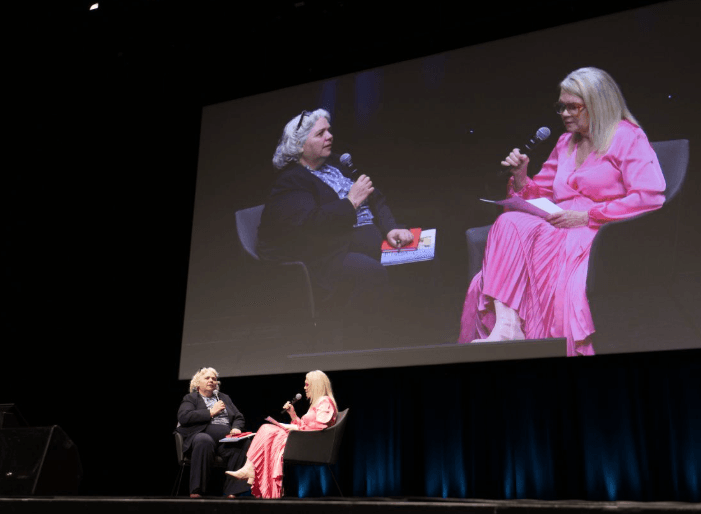
The release of the Early Learning Needs Analysis (ELNA) at the Early Childhood Management Services (ECMS) annual conference marked an important moment in a growing and respectful partnership between Ngarrngga and ECMS.
Commissioned by Ngarrngga and prepared by the Assessment and Evaluation Research Centre (AERC), the ELNA report captures the work of a study conducted from July 2023 to April 2024 that explored how ECMS staff understand and embed Aboriginal and Torres Strait Islander knowledge systems, histories and cultures in early childhood practice. Unveiled to an audience of educators, leaders and community partners, the report is not merely a snapshot of current practice; it is a considered roadmap for deeper, sustained change across ECMS’s 58 kindergartens and eight early learning centres.
ECMS, as a for-purpose organisation committed to high-quality early learning and care across Victoria, provided in-kind support for the needs assessment, including access to its workforce of 736 staff members and participation in an expert advisory panel. That contribution reflects an organisational readiness to engage in the hard work of reconciliation, as ECMS simultaneously builds the threshold conditions for anti-bias practice and develops a Reconciliation Action Plan.
The ELNA report revealed a foundation of commitment within ECMS while identifying clear areas for growth. Many staff reported having only limited knowledge about how to embed Aboriginal and Torres Strait Islander perspectives, with 92 per cent describing their level of knowledge as little to fair. Yet this apparent gap coexists with a strong willingness to learn: 92 per cent of respondents expressed confidence that they could grow their knowledge and apply it in their work.
Staff also reported confidence in considering cultural identity to support inclusive learning for Aboriginal and Torres Strait Islander children and in understanding their needs, suggesting an appetite for meaningful development rather than token gestures. Leadership staff tended to show a higher degree of commitment than some educators, signalling a positive enabling environment for change at the organisational level.
Despite high self-reported confidence, the ELNA report exposed a gap between intention and practice. Educators frequently engaged with national and cultural celebrations and employed anti-bias approaches, but fewer felt they were able to draw upon local community knowledge or consistently translate their understanding into age-appropriate curriculum activities.
Concerns about doing the wrong thing, uncertainty about where to turn for culturally appropriate resources, and limited time to source or implement materials were recurrent themes. One educator’s reflection captured the tension succinctly: they had reconsidered how they presented “Aboriginal science” and whether the words they used were genuinely local language or simply borrowed from elsewhere. This illustrates both the conscientiousness of staff and the need for clearer, locally grounded guidance.
The analysis emphasised the practical supports needed to close the gap between aspiration and action. Time to develop and implement materials, access to high-quality, non-tokenistic resources held in a trusted central repository, and professional development co-designed with and led by Aboriginal and Torres Strait Islander educators were repeatedly identified.
Mentoring and peer learning were regarded as particularly effective approaches, with Learning Circles and network meetings offering opportunities for shared reflection and practice. Staff described existing peer-learning systems within ECMS, including the roles of nominated supervisors and practice coaches, as enabling; however, they also noted the risk that responsibility for cultural work can fall unevenly on individual staff members unless there is clearer organisational direction.
Beyond immediate service-level supports, the ELNA pointed to systemic issues that require collective attention across the early childhood sector. Initial teacher education that inadequately addresses embedding Aboriginal and Torres Strait Islander perspectives has left many early years educators with low confidence, producing a ripple effect that professional development alone cannot entirely remedy. Staff suggested there should be continuity of practice through transition to primary and secondary schooling, and hoped for sector-wide measures that reinforce the importance of cultural continuity from early learning onwards.
Unveiling the ELNA report at the ECMS conference was both a celebration and a call to action. The report validates the importance of Ngarrngga’s work in designing culturally responsive resources and professional learning, and it affirms ECMS’s commitment to leading by example through structural supports, hiring practices and a formal reconciliation agenda.
Moving forward, the partnership has a clear set of priorities: co-designing curriculum materials; embedding mentoring and peer-learning systems; creating dedicated organisational roles and systems to support cultural work; increasing Aboriginal and Torres Strait Islander representation within ECMS; and advocating for deeper, practice-orientated content in initial teacher education.
The release of the ELNA report represents the beginning of a sustained, practical journey rather than its end. It is a statement of shared intent between Ngarrngga and ECMS to ensure that young children across Victoria and Australia more broadly encounter Aboriginal and Torres Strait Islander knowledge in ways that are authentic and pedagogically robust.
As educators and community partners respond to the report’s findings, the hope is that these collaborative efforts will translate into everyday learning experiences that honour First Nations knowledge systems and foster a generation of learners who understand and appreciate the depth and diversity of Australia’s cultures.
Read the Early Learning Needs Analysis (ELNA) report here.