Home/Curriculum resources/What is Country/Activity 5: Creating a whole class Acknowledgement of Country
Learning Areas:
Humanities and Social Sciences, English, Mathematics
Year level:
Foundation
Activity 5: Creating a whole class Acknowledgement of Country
This activity is a part of the What is Country resource.
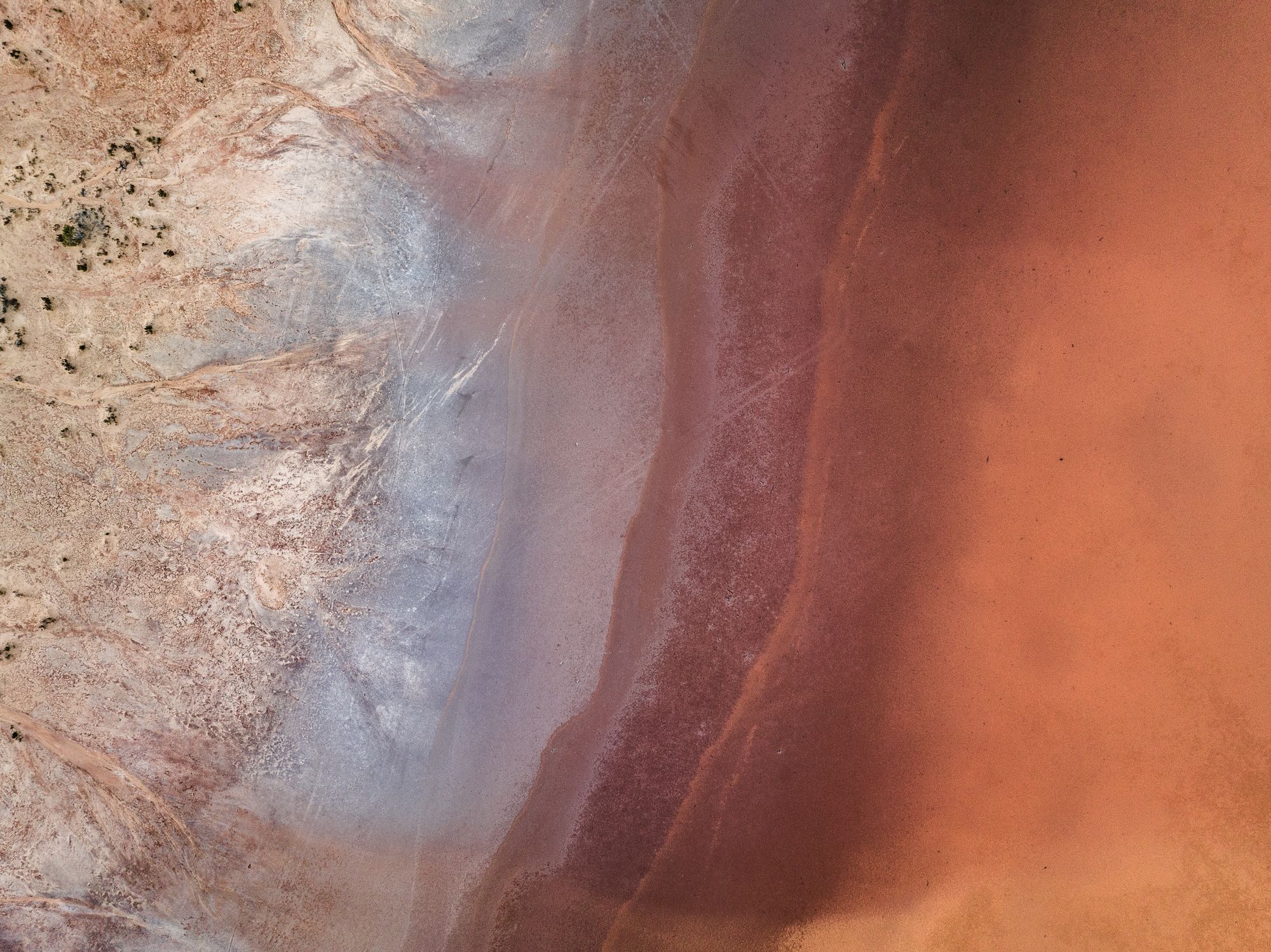
Edge of a Dry Lake. Western Australia. Photographer: Abstract Aerial Art. Source: Getty Images. Used under Licence.

Activity 5: Creating a whole class Acknowledgement of Country
Focus: Expressing respect for Country based on the local environment.
Possible overarching question: How can we show respect for the Country where we learn and play?
Step by Step Guide
Step 1: Connecting to students' prior learning
Step 2: Mini lesson – What is a Welcome to Country and Acknowledgement of Country
Step 3: Learn the local Country and the Traditional Custodians of your school location
Step 4: Brainstorming key ideas for our Acknowledgement
Step 5: Creating and writing the Acknowledgement
Step 6: Reflection and sharing
Required Resources
Teacher Support Material
Mini lesson Resource – What is a Welcome to Country and Acknowledgement of Country
Step 1: Connecting to students' prior learning
Review the class map, observation records, and anchor charts from the previous activities. Discuss with students:
What parts of Land, Water, and Sky Country did we observe at our school?
Why is it important to respect and care for these places?
Step 2: Mini lesson – What is a Welcome to Country and Acknowledgement of Country
Use the mini-lesson Resource to teach students about What is a Welcome to Country and Acknowledgement of Country.
Step 3: Learn the local Country and the Traditional Custodians of your school location
Please note the if you are unsure about the Country your school is located on, the Teacher Support Material provides some guidance.
If you have access to a map of your state or territory that shows the Indigenous nations, bring this up on a screen for students to view, you could also use the AIATSIS map of Indigenous Australia. Use this to facilitate a discussion about the state/territory, the number of Indigenous nations that are represented and then zoom in on the location of your school.
Point out the school’s location and introduce the name(s) of the Traditional Owners of this Country (e.g., “We are on ____ Country. The lands of the ____ people”). Invite students to say the name(s) aloud together. Explain that we live and learn on their Country and that we want to acknowledge the Traditional Owners.
You may also like to explore the 50 Words Project website to learn some local language with your students.
Step 3: Brainstorming key ideas for our Acknowledgement
Explain that as "Yawa" mentioned an Acknowledgement of Country is a way we show respect and gratitude. You may invite students to answer if they have heard or seen an Acknowledgment of Country or a Welcome to Country before and the parts they remember.
Work with students to create an Acknowledgement of Country unique to your context.
Guide students to brainstorm words, phrases, and ideas that they feel are important to include. Possible question prompts:
From our school walk and map making, what are some of the living things we found that are special?
What would we like to thank Country for?
What parts of Country do we want to respect?
What promises can we make about caring for Country?
Capture student ideas on chart paper or a digital mind map.
Step 4: Creating and writing the Acknowledgement
Using the brainstormed ideas, collaboratively draft a class Acknowledgement of Country. Model combining short student contributions into a respectful statement. Keep the language simple, caring and respectful.
Example structures:
"We would like to thank the Land Country, Water Country, and Sky Country."
"We promise to care for the trees, the water, the animals, and the sky."
"We pay our respects to the (Traditional Owners) of this Country."
Students could work to co-construct a display of a whole class Acknowledgement of Country. This could then be used at the start of each day during a morning meeting.
Step 5: Reflection and sharing
Invite students to reflect:
What did we learn about Country from this unit?
Why is it important to keep caring for Country every day?
Related activities within this resources:
Activity 1: Introduction to Country
This activity introduces students to the idea of Country as a living, interconnected system that includes land, water, sky, people, plants, animals, and stories. It supports the development of shared language about types of Country and encourages personal connections to place, laying the foundation for deeper understanding of its significance to many Aboriginal and Torres Strait Islander Peoples.
Activity 2: Learning about different types of Country
Building on Activity 1, students will deepen their understanding of Country by further exploring Land Country, Water Country, and Sky Country through visual examples, collaborative sorting, and creative “Countryscape” constructions. This will prepare students to recognise and describe these parts of Country in their own school environment.
Activity 3: Exploring Country in our school environment
Building on Activities 1 and 2, where students explored the concept of Country and types of Country, this activity provides students with the opportunity to experience and observe Land, Water, and Sky Country in their immediate school environment. Students engage their senses to notice features around them and begin to see the interconnectedness of the spaces they move through every day.
Activity 4 (Part one of two): Mapping our school
Building on observations from the school sensory walk in Activity 3, students collaborate to create a large wall map or floor display representing Land, Water, and Sky Country in their school environment.
Activity 4 (Part two of two): Using positional language
Using students’ collaborative map of their school environment from Activity 4 (Part one), students describe the position of features using positional language.