Home/Curriculum resources/What is Country/Activity 2: Learning about different types of Country
Learning Areas:
Humanities and Social Sciences, English, Mathematics
Year level:
Foundation
Activity 2: Learning about different types of Country
This activity is a part of the What is Country resource.
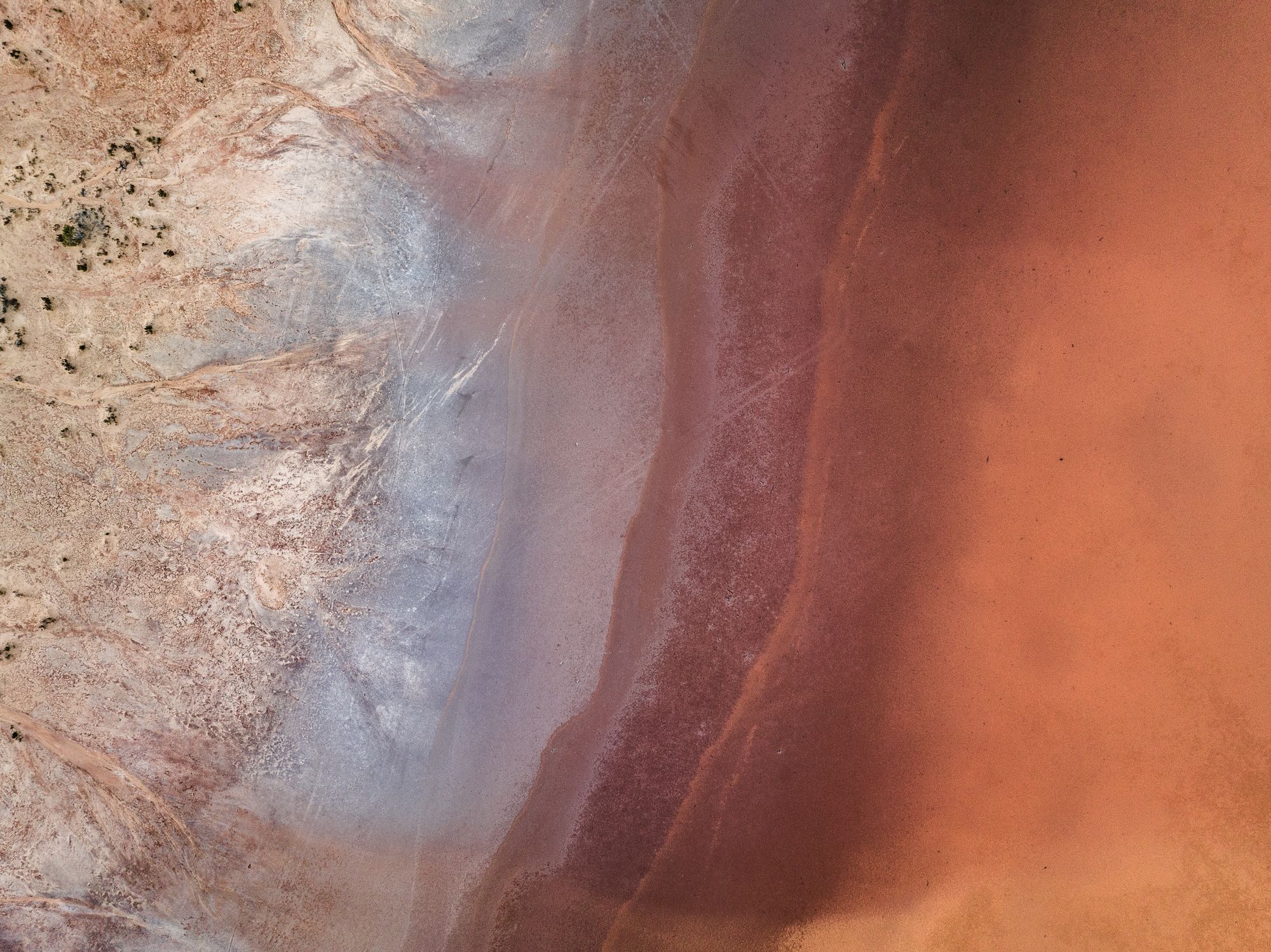
Edge of a Dry Lake. Western Australia. Photographer: Abstract Aerial Art. Source: Getty Images. Used under Licence.

Activity 2: Learning about different types of Country
Focus: Building vocabulary and recognising the distinct yet connected parts of Country.
Possible overarching question: How can we recognise Land Country, Water Country, and Sky Country all around us?
Step by step guide
Step 1: Connecting to students' prior learning
Step 2: Exploring examples of Land, Water, and Sky Country
Step 3: Sorting cards, creating a “How Country Connects” story or creating a Countryscape
Step 4: Reflection and sharing
Required Resources:
Teacher Support Material
What is Country Poster
“How Country Connects” story example
Features of Country images
Sorting cards
Craft supplies, small toys, sorting cards, for “Countryscape” building
Step 1: Connecting to students' prior learning
Gather students around the classroom display created in Activity 1, which includes the co-constructed images from the text Country. Prompt them to recall one element from their drawings or the class list of living things, for example, a kookaburra or a creek. Ask, “Which part of Country did we find that on?”. As students respond, gesture towards the headings Land, Water, and Sky on the display. Reinforce the idea that these parts are not separate, they work together as a living system. Use the “What is Country” poster as a visual aid to support the discussion.
Step 2: Exploring examples of Land, Water, and Sky Country
Show students a series of images that represent different features of Country, or use the provided resource. Examples may include:
Land Country: desert, forest, rocks, mountain
Water Country: lake, ocean, creek
Sky Country: clouds, moon, stars, sun
Living things: plants, animals, insects
Discuss each image briefly:
What do you notice?
Which part of Country do you think this belongs to?
Highlight how all parts of Country work together (e.g., rain from Sky Country falls on Land Country).
Use the visual story “How Country Connects” to explain to students an example of how the different parts of Country may be connected.
Step 3: Sorting cards, creating a “How Country Connects” story or creating a Countryscape
Option A: Sorting cards
Divide the class into small groups and give each a stack of mixed picture cards and the headings Sky Country, Land Country, Water Country. Invite students to lay out the headings and work together to place each card in the correct category. Once finished, each group selects one card from each pile to share with the class and explain why they chose that part of Country. Listen for thoughtful connections, perhaps a tree roots in soil (Land Country), yet its leaves drink rain (Water Country).
Option B: Creating a “How Country Connects” Story
Students can use the cards to create a “How Country Connects” story like the one shared as a whole class. They can include their own drawings, writing if able to, voice record, or retell to others. This could be undertaken after the sorting engagement.
Option C: Building a Countryscape
Alternatively, invite students to transform their sorting into a three-dimensional display. Provide trays, paper backdrops (or students create their own), craft materials and small toys. Individually, pairs or small groups, students choose a zone, land, water, sky, or combine different parts of Country and create a “Countryscape”. They might glue sand for dunes, place a toy frog by a paper creek, or hang cotton-ball as clouds above painted hills.
Step 4: Reflection and sharing
Undertake a whole class Gallery Walk, stopping at each group’s product, and facilitate a sharing conversation with the class about the sorting, story or Countryscape.
Related activities within this resources:
Activity 1: Introduction to Country
This activity introduces students to the idea of Country as a living, interconnected system that includes land, water, sky, people, plants, animals, and stories. It supports the development of shared language about types of Country and encourages personal connections to place, laying the foundation for deeper understanding of its significance to many Aboriginal and Torres Strait Islander Peoples.
Activity 3: Exploring Country in our school environment
Building on Activities 1 and 2, where students explored the concept of Country and types of Country, this activity provides students with the opportunity to experience and observe Land, Water, and Sky Country in their immediate school environment. Students engage their senses to notice features around them and begin to see the interconnectedness of the spaces they move through every day.
Activity 4 (Part one of two): Mapping our school
Building on observations from the school sensory walk in Activity 3, students collaborate to create a large wall map or floor display representing Land, Water, and Sky Country in their school environment.
Activity 4 (Part two of two): Using positional language
Using students’ collaborative map of their school environment from Activity 4 (Part one), students describe the position of features using positional language.
Activity 5: Creating a whole class Acknowledgement of Country
In this culminating activity, students bring together their learning about Land, Water, and Sky Country to collaboratively create a whole-class Acknowledgement of Country that reflects their observations and developing understanding of the Country they learn and play on. As part of this process, students are guided in learning the name of the local Country and the Traditional Custodians of the land on which their school is located, so this can be respectfully included in the Acknowledgement.