Home/Curriculum resources/What is Country/Activity 4 (Part two of two): Using positional language
Learning Areas:
Humanities and Social Sciences, English, Mathematics
Year level:
Foundation
Activity 4 (Part two of two): Using positional language
This activity is a part of the What is Country resource.
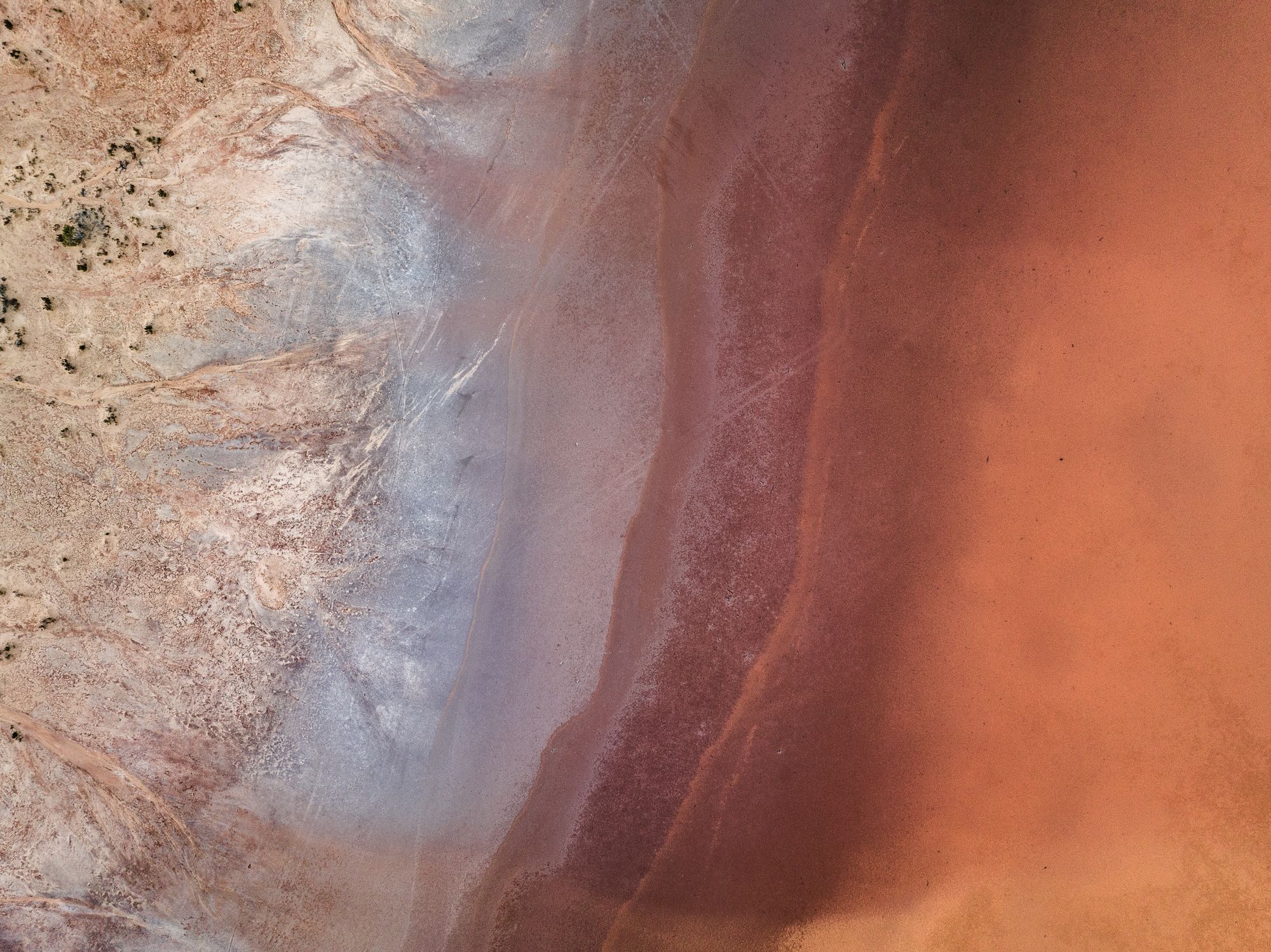
Edge of a Dry Lake. Western Australia. Photographer: Abstract Aerial Art. Source: Getty Images. Used under Licence.

Activity 4 (Part two of two): Using positional language
Focus: Using positional language to describe aspects of Country in our school environment
Possible overarching question: How can we show the different parts of Country that exist around our school?
Step by Step Guide
Step 1: Connecting to students' prior learning
Step 2: Introduce positional language
Step 3: Using positional language to describe features on our school map
Step 4: Reflection and sharing
Required Resources
Teacher Support Material
“Rosie’s Walk” by Pat Hutchins
What is Country Poster
Step 1: Connecting to students' prior learning
Come back to the “What is Country” Poster and the school environment map to remind students about, how all the sections of the map join together to tell the story of the school environment as Country.
Step 2: Introduce positional language
Read “Rosie’s Walk” by Pat Hutchins with students recording the positional language that features in the book on a digital board or whiteboard. You could include symbols or have these pre-printed ready to make visible when students recall them. Go through the list and add any other positional language students may know.
To get students moving play a quick game using positional language. Call out different statements and ask students to follow these. A possible list is provided in the Teacher Support Material.
Step 3: Using positional language to describe features on our school map
Have students come back to the class map and ask questions using positional language.
For example:
What is behind the library?...Yes, the water tank is behind the library.
What is next to the oval?...Yes, the hall is next to the oval
Once students understand this have them work in pairs to come up with statement/s.
Step 4: Reflection and sharing
Invite students to share their statements. Recording these statements so they can be displayed alongside the map. Conclude the activity by reinforcing that section of the map joins together to tell the story of the school environment as Country.
Related activities within this resources:
Activity 1: Introduction to Country
This activity introduces students to the idea of Country as a living, interconnected system that includes land, water, sky, people, plants, animals, and stories. It supports the development of shared language about types of Country and encourages personal connections to place, laying the foundation for deeper understanding of its significance to many Aboriginal and Torres Strait Islander Peoples.
Activity 2: Learning about different types of Country
Building on Activity 1, students will deepen their understanding of Country by further exploring Land Country, Water Country, and Sky Country through visual examples, collaborative sorting, and creative “Countryscape” constructions. This will prepare students to recognise and describe these parts of Country in their own school environment.
Activity 3: Exploring Country in our school environment
Building on Activities 1 and 2, where students explored the concept of Country and types of Country, this activity provides students with the opportunity to experience and observe Land, Water, and Sky Country in their immediate school environment. Students engage their senses to notice features around them and begin to see the interconnectedness of the spaces they move through every day.
Activity 4 (Part one of two): Mapping our school
Building on observations from the school sensory walk in Activity 3, students collaborate to create a large wall map or floor display representing Land, Water, and Sky Country in their school environment.
Activity 5: Creating a whole class Acknowledgement of Country
In this culminating activity, students bring together their learning about Land, Water, and Sky Country to collaboratively create a whole-class Acknowledgement of Country that reflects their observations and developing understanding of the Country they learn and play on. As part of this process, students are guided in learning the name of the local Country and the Traditional Custodians of the land on which their school is located, so this can be respectfully included in the Acknowledgement.