Home/Curriculum resources/Indigenous astronomy and the solar system/Case Study 1: Venus
Learning Areas:
Science, English
Year levels:
Level 5, Level 6
Case Study 1: Venus
This case study is a part of the Indigenous astronomy and the solar system resource.
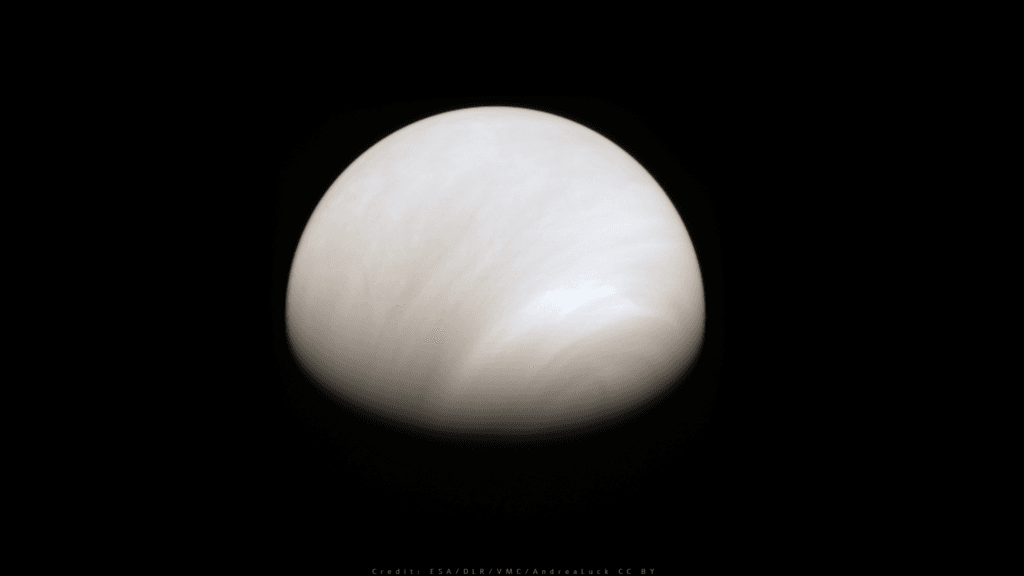
Venus from Mariner. Photographer: Andrea Luch. Source: Wikimedia Commons. Used under licence: CC BY 2.0.

Case Study 1: Venus
Figure 1: The Planet Venus - Associate Professor Duane Hamacher
Venus is commonly described in Aboriginal traditions, where it is often referred to as the Morning and Evening Star, as the third brightest object in the sky. Aboriginal traditions involving Venus often carry social meaning rather than subsistence or calendric applications, due to its wandering nature in the sky.
As an inferior planet, situated closer to the Sun than Earth, Venus is commonly associated with both the Sun and the Moon. Its tighter orbit around the Sun compared to Earth's causes it to appear close to the Sun in the sky, either trailing or leading it. Venus is often called the Morning Star or the Evening Star, depending on when it is visible. The following sections provide examples of how Venus is interpreted and incorporated into the stories, ceremonies, and landscapes of some Aboriginal Peoples across Australia. These examples highlight the perspectives of the Kamilaroi and Euahlayi Peoples, Yolŋu People, Yangkaal People, and Arrernte People, offering insights into their deep connection to the sky.
Kamilaroi and Euahlayi Peoples
For the Kamilaroi and Euahlayi Peoples, Venus, especially when low on the horizon, is seen as an old man laughing heartily after telling a rude joke 0 . These communities also tell the story of the Eaglehawk, Mullyan, who resided in a yarran tree and hunted people near the Barwon River. In retaliation for his actions, a group of young men set his home on fire, killing him. Mullyan then rose into the sky as Mullyangah, the Morning Star. This story is reflected in the landscape, with waterholes named after it at Morgan’s Wells near the Glengarry opal fields in northern New South Wales 0 . The Kamilaroi and Euahlayi Peoples also describe Venus and Mars as the eyes of the celestial father 0 .
During special ceremonies held near Quilpie in western Queensland, the Euahlayi met with the Arrernte of the MacDonnell Ranges in central Australia. The Arrernte brought a red opal, signifying Mars, while the Euahlayi brought a green and blue opal, representing Venus. Elders explain that during the day, the eyes of Maliyan (the eaglehawk) are the eyes of Baayami. At night, Maliyan’s eyes become Venus and Mars, which are seen as the eyes of Baayami in the sky. Because one is red and the other is blue and green, the two opals are brought together for ceremonies: the red opal from Quilpie, QLD, and the green and blue opal from the Euahlayi. When placed together, they symbolise Venus and Mars on Earth.
Venus is also connected to sacred ceremonies in these communities. The disappearance of the Evening Star serves as a sign to light the sacred fire, which is re-lit every night until Venus appears as the Morning Star. At this time, the ceremony takes place, and the sacred fire is doused.
Yolngu People
In Yolngu traditions of Arnhem Land in the Northern Territory, Venus as the Morning Star is a common feature and plays a major role in ceremony 0 . In some Yolngu communities, Venus is perceived as a spirit taking the form of a lotus flower atop a stem 0 . A song explains that Venus is:
“Shining on to the fore-heads of all those head-men.
On to the heads of all those Sandfly [clan] people.
It sinks into the place of the white gum trees, at Milingimbi” 0 .
When Venus reappears in the sky as the Morning Star after disappearing as the Evening Star eight days earlier, the Yolngu People hold the Banumbirr ceremony. Banumbirr (Venus) is an ancestral woman who journeys across the sea from the east in the Dreaming, naming and creating animals as she travels. During the Banumbirr (Morning Star) ceremony, the Yolngu People observe Venus rising between the mainland and Baralku—the sacred island of the dead—in the east. They communicate with ancestors living on Baralku through Banumbirr, who uses a faint rope to maintain her connection to the Sun, represented on the Morning Star Pole. The ceremony begins at dusk and continues through the night, requiring careful planning. The Yolngu People understand Venus’s movements well enough to predict its reappearance precisely. It has been recorded that the Yolngu track the planet’s motions, recognising that Venus never strays far from the Sun. They observe that Venus appears as the Morning Star for 263 days before disappearing for 50 days, then re-emerges as the Evening Star for another 263 days before disappearing again—this time for just 8 days before returning as the Morning Star. This full cycle takes 584 days, a period known to astronomers as the synodic cycle, the time it takes for Venus to return to the same position relative to the background stars. When asked by an astronomer how they knew when to hold the Morning Star Ceremony, a Yolngu Elder simply replied: "We count the days" 0 .
The white rope attaching Banumbirr to the Sun, preventing her from floating away, is what astronomers call the zodiacal light, a faint white glow caused by dust in the plane of the solar system reflecting sunlight. Venus appears within this light, resembling a rope tethering it to the Sun.
Yangkaal People
In the traditions of the Yangkaal People along the Gulf of Carpentaria, Venus is both the Morning and Evening Star. Venus is described as a woman who was promised to the Sharkman but did not want to marry him. She escaped into the sea, only to be pursued by the Sharkman. Desperate not to be caught, she fled into the sky and became the Evening Star. The Sharkman can still sometimes be seen in the waters around Mornington Island.
Arrernte People (sometimes referred to as the Aranda, Arunta or Arrarnta)
The Arrernte People live on Arrernte lands at Mparntwe (Alice Springs) and the surrounding areas. In Western Arrernte tradition, during the creation period, a group of women took the form of stars and danced a corroboree (ceremony) in the Milky Way. One of the women, carrying her baby, placed him in a wooden basket (turna) near the edge of the Milky Way. As the women danced, they shook the Milky Way, causing the baby to fall. He tumbled down as a star, striking the ground while still covered by the turna. The impact drove the surrounding rocks upwards, forming a ring-shaped mountain range 5 km wide and 150 m high, about 160 km west of Alice Springs.
In Arrernte tradition, this place is called Tnorala. The turna can still be seen in the sky—tumbling from the Milky Way—as the western constellation Corona Australis (the Southern Crown). The baby’s parents, the Morning and Evening Stars, continue searching for their lost child to this day. Parents warn children not to stare at the Morning or Evening Star, as the baby’s celestial parents may mistake them for their lost child and whisk them away to the sky 0 .
Related case studies within this resources:
Case Study 2: Mars
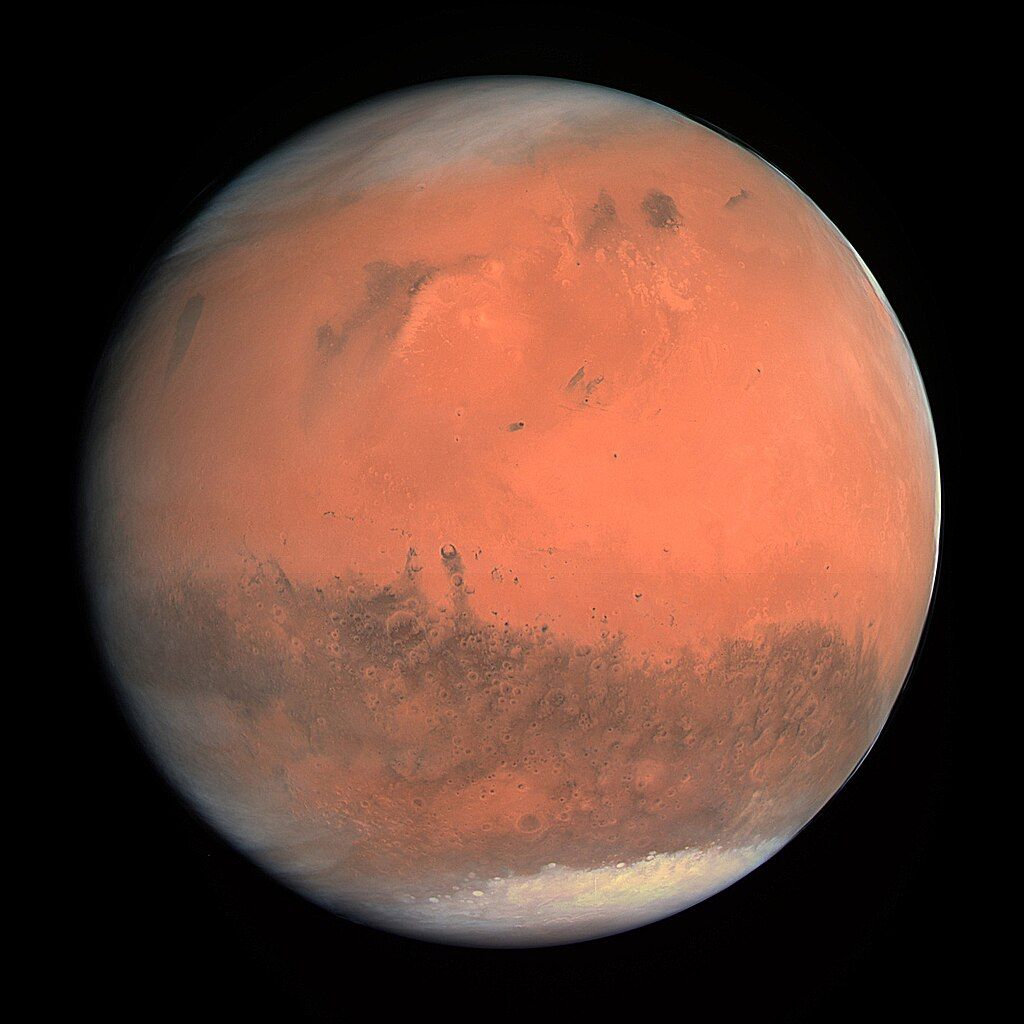
Mars, recognised for its distinctive red colour, holds significant meaning in Aboriginal traditions across Australia. This case study explores how different communities, including the Kamilaroi, Anmatyerre, Kolkatha, and Palawa Peoples, interpret Mars through language, storytelling, and cultural beliefs. These traditions highlight the deep connection between celestial observations, ancestral knowledge, and the enduring relationship between the sky and the land.
Case Study 3: Jupiter
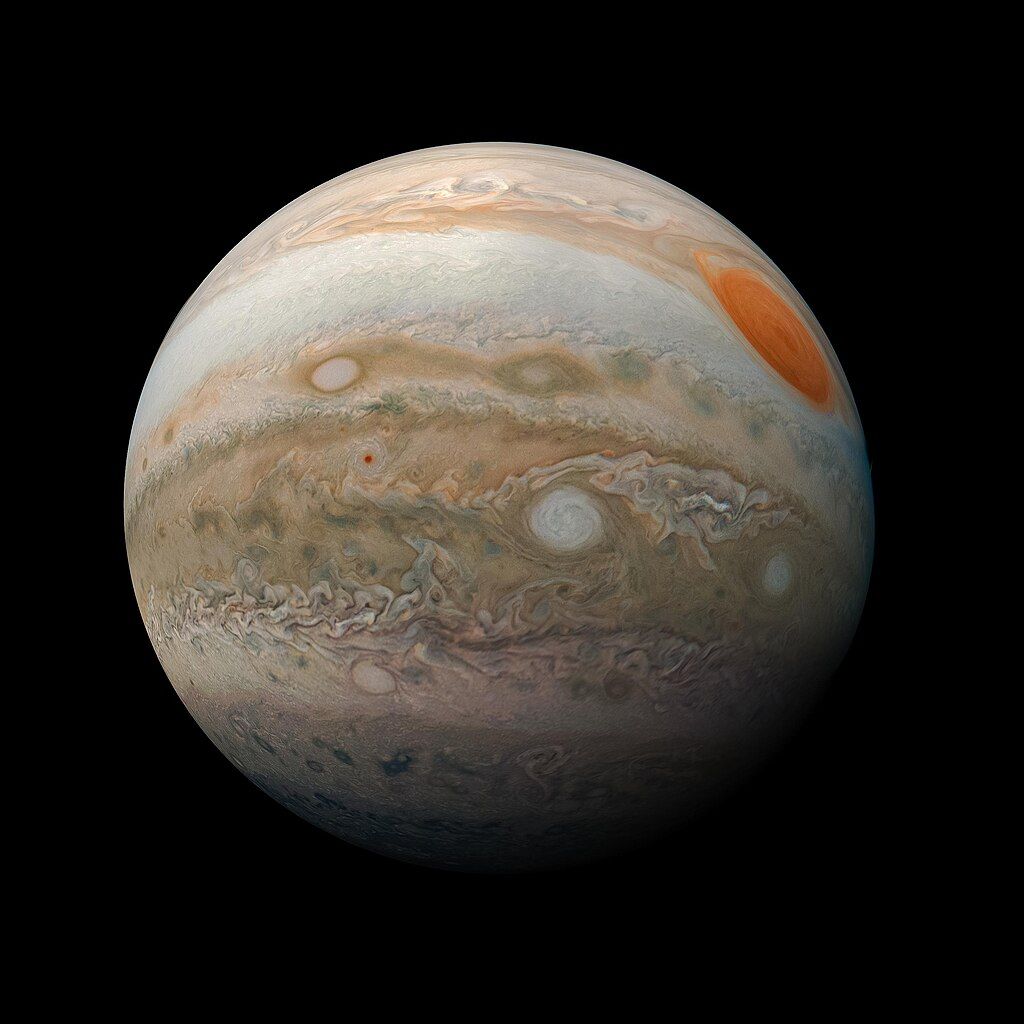
Jupiter, the largest planet in the solar system, is recognised in the traditions of many Aboriginal groups across Australia for its distinct colour and movement in the night sky. This case study examines how Jupiter is interpreted within different Aboriginal cultures, exploring its associations with ancestral figures, cultural teachings, and environmental observations.