Home/Curriculum resources/Indigenous Ecological Knowledge and celestial objects/Resource 1: Visible Thinking Routines to explore the Milky way and Celestial Emu
Learning Areas:
Science, English, Mathematics
Year levels:
Level 5, Level 6
Resource 1: Visible Thinking Routines to explore the Milky way and Celestial Emu
This activity is a part of the Indigenous Ecological Knowledge and celestial objects resource.
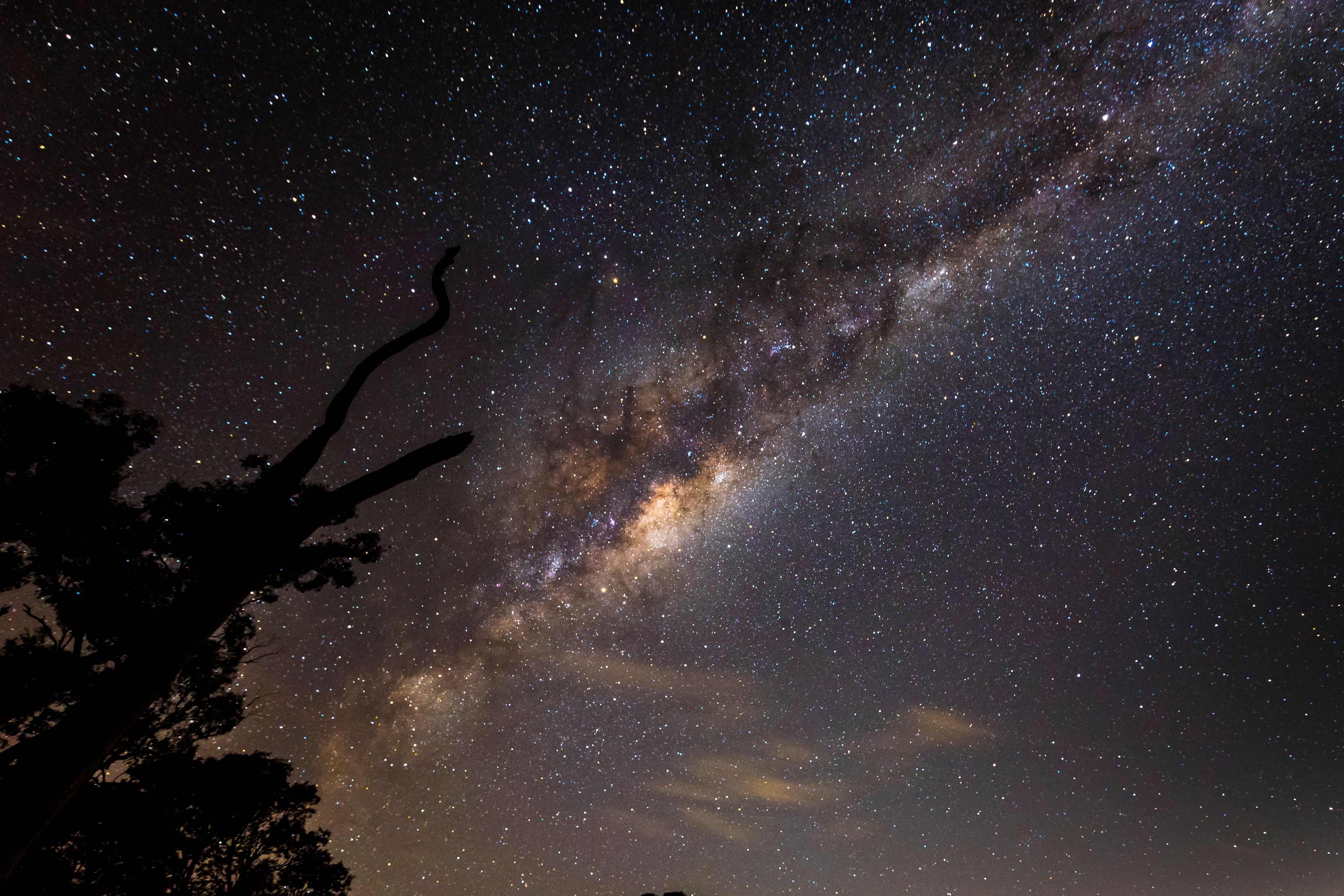
Black Tree and Night Sky, Diggers Rest, Wurundjeri Country. Tiffany Garvie. Source: Ngarrngga. © Tiffany Garvie 2023. Used under licence.

Resource 1: Visible Thinking Routines to explore the Milky way and Celestial Emu
Context for Implementation
You can select one of the following thinking routines—Think-Puzzle-Explore, Zoom In, or Claim-Support-Question—or a routine of your choice to help students explore the Milky Way and develop their understanding of the night sky. These routines will guide students in activating prior knowledge, generating curiosity, and making observations about celestial patterns.
Once students have engaged with the chosen routine, transition to the final section, Application to Indigenous Perspectives, where they will examine the Celestial Emu. This will encourage students to compare different perspectives on the night sky, deepen their understanding of dark constellations, and recognise the significance of Aboriginal and Torres Strait Islander astronomical knowledge.
At the end of this resource, you will find supporting information for a final discussion on Indigenous Knowledge and the Night Sky. This has been intentionally placed at the end to allow student thinking to emerge naturally through the Visible Thinking Routines, rather than being influenced from the outset.
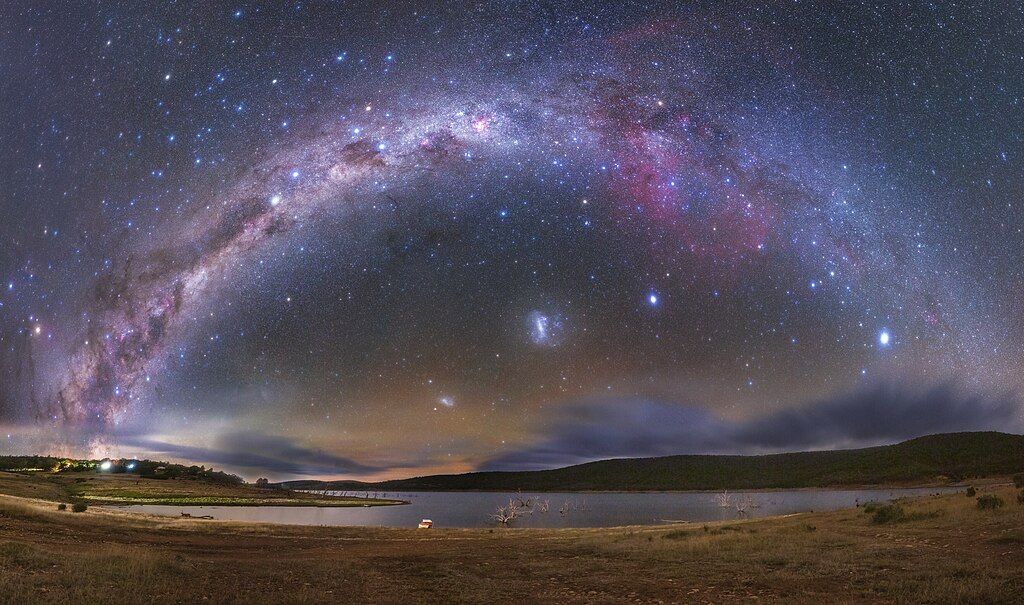
Figure 1: The Milky Way over Anglers Reach New South Wales. Photographer: Lucy Yunxi Hu/IAU OAE. Source: Wikimedia Commons. Used under licence: CC BY 4.0.
Visible Thinking Routine Option 1: Think – Puzzle – Explore
Share Figure 1 and explain to students they will be using a thinking routine called "Think-Puzzle-Explore".
Think: Have students write down what they think they know about the night sky and constellations.
Prompt questions:
What do you already know about the stars and constellations?
Have you heard of any constellations before? Which ones?
What do you notice about the patterns in the sky?
Have students share their thoughts with a partner or in small groups.
Puzzle: Have students consider and record what puzzles or confuses them about the image and the night sky.
Prompt questions:
What do you find puzzling or confusing about this image?
Are there any patterns or shapes that you don’t understand?
What questions do you have about the stars and the dark areas?
Have students share their puzzles with the class or in small groups.
Explore: Have students think about how they can explore the questions and puzzles they have.
Prompt questions:
What could we do to find out more about the night sky and these patterns?
Where could we look for answers to our questions?
How can we investigate these puzzles further?
Have students brainstorm ideas for exploration and share with the class.
Visible Thinking Routine Option 2: Zoom In
Explain to students they will be using a thinking routine called "Zoom In". Show a small, zoomed-in section of the night sky image from the Zoom In Thinking Routine provided.
Observation: Have students observe the zoomed-in section carefully.
Prompt questions:
What do you notice in this small part of the image?
What details stand out to you?
Inference: Have students make inferences based on their observations.
Prompt questions:
What do you think this is part of?
What could this detail tell us about the larger picture?
Reveal More: Gradually reveal more of the image in stages, allowing students to update their observations and inferences each time.
Discussion: Facilitate a discussion about how their understanding changed as more of the image was revealed.
Prompt questions:
How did your ideas change as you saw more of the picture?
What new things did you notice?
Visible Thinking Routine Option 3: Claim-Support-Question
Explain that students will be making claims about what they see, supporting those claims with reasoning, and asking questions that arise from their observations.
Claim: Have students write down a claim about the image. This could be something they think is true about the sky, stars, or patterns they see.
Prompt questions:
What do you think is happening in this image?
What patterns or shapes can you identify?
Have students share their claims with a partner or small group.
Support: Have students provide support for their claims with evidence or reasoning.
Prompt questions:
Why do you think that?
What evidence from the image supports your claim?
Have students share their support with a partner or small group.
Question: Have students write down questions they have based on their claims and the image.
Prompt questions:
What questions do you have about the patterns you see?
What more do you want to know about this image and the night sky?
Have students share their questions with the class.
Application to Indigenous Perspectives
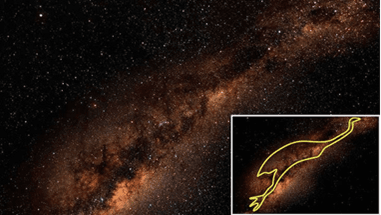
Figure 2: The Celestial Emu seen in the dark bands of the Milky Way. Image: Ray Norris, Barnaby Norris. Used with permission.
After using the thinking routines with the initial night sky image, show students Figure 2: The Celestial Emu and repeat the thinking routine with a focus on dark constellations. This will deepen their understanding of how Aboriginal and Torres Strait Islander Peoples interpret the night sky.
Supporting information for final discussion: Indigenous Knowledge and the Night Sky
Conclude with a discussion about, how Aboriginal and Torres Strait Islander Peoples have long studied and interpreted the night sky. Astronomy has been a central part of Indigenous Knowledge systems for thousands of years, used for navigation, seasonal knowledge, ceremony, and storytelling.
Unlike Western astronomy, which focuses on bright stars to form constellations, many Aboriginal and Torres Strait Islander groups also recognise dark constellations, which are shaped by the gaps between stars. The Celestial Emu is one of the most well-known examples—it appears in the dark dust clouds of the Milky Way, rather than being formed by bright stars. For many Aboriginal groups, particularly in southeastern Australia, the Celestial Emu is an important seasonal marker. Its position in the sky signals different times of the year, including when it is time to collect emu eggs. This highlights how Indigenous astronomy is deeply connected to land, culture, and everyday life.
Related activities within this resources:
Resource 2: Exploring the Celestial Emu case study
The following multimodal resources and possibilities outline how to support student engagement and understanding of the Celestial Emu, incorporating Aboriginal and Torres Strait Islander perspectives. These resources will help students explore dark constellations, understand different ways of viewing the sky, and appreciate the rich history of Aboriginal astronomy.
Resource 3: Exploring Indigenous Ecological Knowledge and the sky case studies
These multimodal resources are designed to support student engagement and understanding of how Aboriginal and Torres Strait Islander Peoples use celestial objects and events to understand the behaviours of living things. Through five different case studies, students will explore stars and the moon, learn different perspectives on the sky, and find out about the rich history of Aboriginal and Torres Strait Islander astronomy.